
2663555
Description

Quiz by Adam Mackie, updated more than 1 year ago

|
Created by Adam Mackie
over 10 years ago
|
|
Question 1
Question
Module G1 refers to which subject area ?
Answer
-
General safety responsibilities and personal track safety
-
Dealing with a train accident
-
Single line working
-
Wrong directions moves
Question 2
Question
What must be placed on a defective rail vehicle in a siding/depot?
Answer
-
NOT TO BE MOVED BOARD
-
WET FLOOR SIGN
-
STOP BOARD
-
WARNING BOARD
Question 3
Question
If a overhead electric power cable were to fall on to a line who must be contacted immediately ?
Answer
-
Signaller, then the ECO
-
ECO, then signaller
-
Operations control
-
ECO
-
Signaller
Question 4
Question
You must not go closer than ____ metres to the fallen power line or anything in contact with it, until it has been confirmed by the electricity company that it is safe to do so.
Answer
-
5
-
1.25
-
2
-
3
Question 5
Question
How far must you stand from detonators placed on a line you expect a train to pass over?
Other recommended actions:
- tell anyone else standing close by to also keep this distance away
- as the train passes over them, turn away
Answer
-
30m
-
10m
-
20m
-
15m
Question 6
Question
If you have to stop a train in an emergency, how would you do so during daylight?
Answer
-
Hand danger signal, both arms raised above your head
-
Red Light
-
Red flag at arms length
-
Hand danger signal, both arms extended horizontally
-
Hand danger signal, one arm raised above the head
Question 7
Question
You are on or near the line in a position of safety, a train is approaching and sounds its horn, in order to acknowledge the train you must ?
Answer
-
Face the train, Raise one arm above the head
-
Raise both arms above your head
-
wave
-
continue with what you are doing
Question 8
Question
If you have to stop a train in an emergency during darkness or in poor visibility, you must?
Answer
-
You must show a red light to the driver or wave any light violently
-
Raise a red flag
-
raise both arms above your head
-
display a flashing light of any colour
Question 9
Question
How must you start an emergency conversation ?
Answer
-
"this is an emergency call"
-
"help"
-
state your name and company
-
describe the accident
Question 10
Question
To avoid confusion, difficult names and locations can be spelt using which technique?
Answer
-
The phonetic alphabet
-
Sound the letters
-
code
-
anagrams
Question 11
Question
How should the signal number 'B107' be communicated ?
Answer
-
Bravo one zero seven
-
Beta one zero seven
-
Bravo one hundred and seven
-
Beta one hundred and seven
Question 12
Question
The terms 'clear' and 'NOT clear' when describing the status of a line are accepted railway terms ?
Answer
- True
- False
Question 13
Question
You have received instructions from the signaller regarding passing a certain signal at danger, in order to ensure the signaller knows you have understand the instructions, you must ?
Answer
-
Repeat the essential information
-
say "confirmed'
-
tell him you have taken notes
-
make the assumption he knows
Question 14
Question
When a driver communicates with signaller, who takes the lead responsibility ?
Answer
-
Signaller
-
Driver
Question 15
Question
Phrases to use when using a radio or telephone: 'I have finished my message and am expecting a reply' =
Answer
-
Over
-
Out
-
thanks
-
goodbye
Question 16
Question
Phrases to use when using a radio or telephone: 'I have finished my message no reply is expected' =
Answer
-
Out
-
Over
-
goodbye
-
thanks
Question 17
Question
Phrases to use when using a radio or telephone: 'This message provides information which needs immediate action to prevent death, serious injury or damage' =
Answer
-
This is an emergency call
-
Help
-
Danger
Question 18
Question
Phrases to use when using a radio or telephone: 'I have made a mistake and will now correct the word or phrase just said' =
Answer
-
Correction
-
Mistake
-
oops
-
I meant
Question 19
Question
Skill Test: spell your name or another using the phonetic alphabet.
Answer
-
Complete
-
Skip, -1
Question 20
Question
You are located on the lineside if ?
Answer
-
you are between the railway boundary fence and the area called on or near the line, and you can be seen by the driver of an approaching train
-
on the line itself.
-
within 3 metres (10 feet) of a line and there is no permanent fence or structure between you and the line
-
you are on a station platform
Question 21
Question
You are located on or near the line if ?
Answer
-
within 3 metres (10 feet) of a line and there is no permanent fence or structure between you and the line or on the line itself
-
crossing the line, at a level crossing
-
on a station platform
-
you are between the railway boundary fence and the area called on or near the line
Question 22
Question
You are not on or near the line if you are on a station platform unless you are carrying out engineering or technical work within 1.25 metres (4 feet) of the platform edge?
Answer
- True
- False
Question 23
Question
If the maximum speed is 100 mph or less, you are in a position of safety if you are at least ______ metres from the nearest line on which a train can approach.
Answer
-
1.25m
-
3
-
5
-
6 Foot
Question 24
Question
If the maximum speed of a line is over 100 mph, you must be stood how many metres from the live line to be in a position of safety?
Answer
-
2m
-
1.25m
-
3m
-
5m
Question 25
Question
When on or near the line, when is it acceptable to use a mobile phone ?
Answer
-
When in a position of safety
-
when facing on coming traffic
-
when there is a look out or site warden on site
-
walking along a position of safety
Question 26
Question
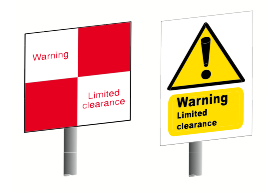
(See image) The sign indicates what ?
Answer
-
There is no position of safety on this all side of the railway for the length of concerned the structure
-
There is a limited clearance between two running lines
-
necessary clearance must be obtained before entering the area
Question 27
Question
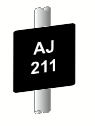
This is an example of what type of sign?
Answer
-
Controlled
-
Automatic
-
Distant
-
Semi-automatic
Question 28
Question
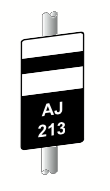
This is an example of which type of signal?
Answer
-
Semi-automatic
-
Controlled
-
Distant
-
Co-acting
Question 29
Question
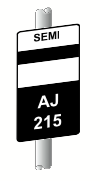
This is an example of which type of signal?
Answer
-
Semi-automatic
-
Controlled
-
Automatic
-
Distant
Question 30
Question
This is an example of which type of signal?
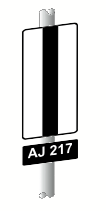
Answer
-
Intermediate block
-
Controlled
-
Distant
-
Automatic
Question 31
Question
This is an example of which type of signal?
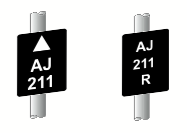
Answer
-
Distant
-
Automatic
-
Co-acting
-
Semi-automatic
Question 32
Question
This is an example of which type of signal?
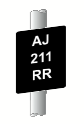
Answer
-
Outer distant
-
Distant
-
Banner repeater
-
Controlled
Question 33
Question
This is an example of which type of signal?
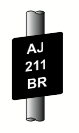
Answer
-
Banner repeater
-
Co-acting
-
Semi-automatic
-
Distant
Question 34
Question
This is an example of which type of signal?
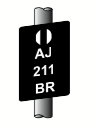
Answer
-
3 state banner repeater
-
banner repeater
-
controlled
-
semi-automatic
Question 35
Question
This is an example of which type of signal?
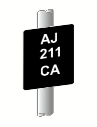
Answer
-
Co-acting
-
Semi-automatic
-
Controlled
-
Distant
Question 36
Question
The normal sequence of a four-aspect signalling is:
Answer
-
Green, Double yellow, yellow, Red
-
Green, Double yellow, flashing single yellow, Red
-
Green, yellow, double yellow, Red
Question 37
Question
A double yellow signal aspect indicates what?
Answer
-
Proceed: Be prepared to stop at the next signal
-
Proceed: Be prepared to find the next signal displaying a single yellow aspect
-
Next signal displaying proceed aspect
Question 38
Question
A single yellow signal aspect indicates what ?
Answer
-
Proceed: Be prepared to stop at the next signal
-
Proceed: Be prepared to find the next signal displaying a single yellow aspect
Question 39
Question
Junction indicators: When the straight route is obvious, there is normally no junction indicator provided for this route.
Answer
- True
- False
Question 40
Question
Junction indicators: Where there is no obvious straight route, a junction indicator will be provided for all signalled routes.
Answer
- True
- False
Question 41
Question
Junction indicators: Where the straight route is not the highest-speed route, the junction indicator will normally apply to the lower-speed route.
Answer
- True
- False
Question 42
Question
Where the diverging routes ahead are both of equal speed, a junction indicator will not be provided for each route.
Answer
- True
- False
Question 43
Question
Junction indicators will always be illuminated, even if the straight route is obvious?
Answer
- True
- False
Question 44
Question
A flashing yellow aspect means facing points at a junction ahead are set for a diverging route and the speed of the train must be reduced.
Answer
- True
- False
Question 45
Question
A single yellow aspect displayed together with a junction indictor may indicate what?
Answer
-
That the next signal along the chosen route may be at Danger
-
The next signal along the chosen route will be showing a proceed aspect
Question 46
Question
The normal sequence of four-aspect flashing yellow signalling is:
Answer
-
Green, Double flashing yellow, single flashing yellow, steady yellow, Red
-
Green, double flashing yellow, steady yellow, Red
-
Green, double flashing yellow, single flashing yellow, Red
Question 47
Question
Which colour light aspects indicated STOP on a ground position light?
Answer
-
Two horizontal red
-
One white, one red
-
No lights illuminated
-
Single red
-
Yellow and white, when proceeding onto a running line
-
Yellow and white, when proceeding to a shunt neck
Question 48
Question
The driver may pass a ground position signal in the ‘stop’ position when the movement is being made towards the shunt neck or siding and not the running line.
Answer
- True
- False
Question 49
Question
Position-light shunting signals that display a yellow aspect are stop signals applying only to movements in the direction to which the signal can be cleared. Other movements can pass the signal without it being cleared.
Answer
- True
- False
Question 50
Question
A ground position light is displaying a single white light in the bottom right hand corner, this gives the driver authorisation to pass the signal and enter a siding
Answer
- True
- False
Question 51
Question
An unlit position light associated with a main signal indicates what?
Answer
-
obey the main signal
-
The position light is faulty
-
Proceed aspect to the line the position light is associated with
Question 52
Question
The position light in the picture shown indicates what?
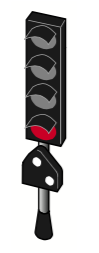
Answer
-
The train or movement may proceed past the signal as the position-light signal shows proceed.
-
The main aspect is displaying Red, therefore the movement is not yet authorised
-
The signal is faulty
Question 53
Question
When not in use, main and position-light signals are covered up with?
Answer
-
Large black bag displaying a white X
-
High visibility bag
-
Large white bag displaying a black X
Want to create your own Quizzes for free with GoConqr? Learn more.