
Flashcards
Physiology / Intro psychology
Cards in this deck (67)
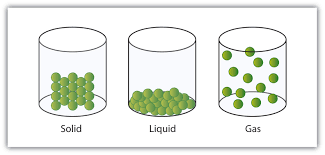
- 1What is the Kinetic theory?The idea that all molecules and ions are constantly moving.
Explains how substances can exist in different states - 2What is an ion and what are the two types?Ions are electrically charged particles formed when atoms lose or gain electrons
Cation = + (Na+)
Anion = - (Cl-) - 3Define the following terms; Molecule MatterMolecule = Two or more atoms which have been chemically combined (CO2)
Matter = All material that exists is composed of small particles - 4Define the following terms; AtomAtom = A basic unit of matter with the same number of protons as electrons.
- 5Define the following terms; ProtonProtons = Are found in the nucleus of atom and they have a positive charge
- 6Define the following terms; ElectronElectron = Orbit the nucleus and they have a negative charge
- 7What is diffusion?Diffusion is the net movement of molecules or atoms from a region of high concentration to a region of low concentration. This is also referred to as the movement of a substance down a concentration gradient.
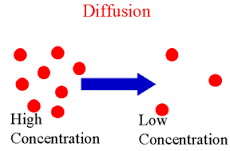
- 81. Do molecules diffuse in all directions equally? 2. During diffusion in a cell, what substance moves in and what substance moves out?1. Yes
2. Oxygen moves into the cell and carbon dioxide moves out - 9What are the three main techniques that help us study physiological psychology?1. Invasive techniques
2. Clinical observation
3. Neuroimaging - 10Name and define 3 invasive techniques1. Ablation - The removal of an area of the brain
2. Transection - The destruction of pathways connecting brain areas
3. Stimulation - Inter-cranial stimulation - electrodes are inserted into the brain and a stimulus can be applied / or Cannulas which is where a fine glass tube is inserted allowing substances to be added into the brain tissue or removed for analysis - 11What is clinical observation and give two exampleExamining and observing individuals with brain injuries or diseases
Phineas Gage
Tan - damage to the left frontal cortex, Broccas area - 12What are the Neuroimaging techniques?1. CT or CAT scan
2. PET scan
3. MRI
4. FMRI
5. EEG
6. MEG
7. TMS - 13What is a CAT / CT scan ?Computerised Axial Tomography
combines a series of X-ray images taken from different angles and uses computer processing to create cross-sectional images, or slices, of the bones, blood vessels and soft tissues inside your body.
The amount of X-rays absorbed is dependant on the density of the tissue. An image can be built up based on amount of absorption / transmission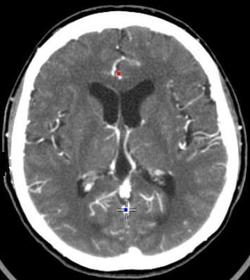
- 14What are the negatives of CT / CAT scans?- Harmful, cannot x-ray someone without a valid reason
- Cannot give someone multiple x-rays as risk increases - 15What is a PET scan?Positron Emission Topography
ppt's are given a radioactive substance (often glucose) which emits particles called positrons
E.g Brain cells use glucose as their energy supply, so the more active a region of the brain is, the , more glucose it will use. By capturing photons emitted an image of diff activity levels in brain. - 16What are the positives and negatives of PET scans?+ Measures more than just structure ( i.e. activity)
- Costly due to short shelf life of substances and therefore must be made onsite
- Cannot repeatedly PET scan someone as risk increases each time - 17What is an MRI scan?Magnetic Resonance Imaging
Relies on some molecules (protons) acting as mini magnets when places in strong magnetic field. When stimulated with radio waves they emit signals. Signals differ from each type of tissue. - 18What are the positives of an MRI scan?+ Provides very detailed diagnostic pictures of most of the important organs and tissues in your body, enormous anatomical detail.
+ Can be repeated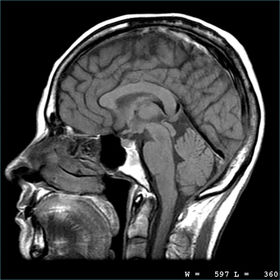
- 19What is EEG?Electroencephalography
- Electrodes are placed on the scalp and record changes in voltage
-Event related potentials (ERP'S)
(McKinney et al 2009 research) - 20What is FMRI?Functional MRI scans use same technique as MRI but can measure changes in blood flow / oxygen uptake in tissues.
Gives more detail of physiological processes and brain activity during tasks. - 21What is MEG?Magnetoencephalography
Records flow of current along neuronal pathways using very sensitive magnetic field detectors.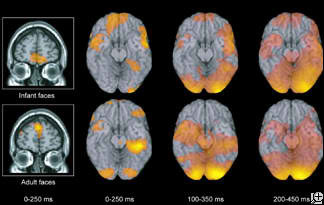
- 22What is TMS?Transcranial Magnetic Stimulation
Magnets are applied to outside of the skull to change neuronal activity inside.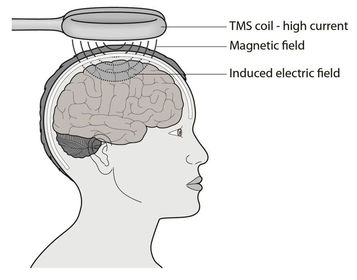
- 23Hydrophilic means...?POLAR
Soluble in water
Phosphate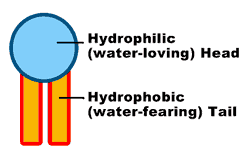
- 24Hydrophobic means...?NON POLAR
Not soluble in water
Lipid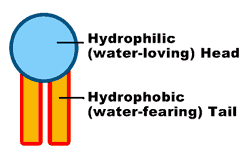
- 25What is the function of the cell membrane?The cell membrane is selectively permeable to ions and organic molecules and controls the movement of substances in and out of cells. The basic function of the cell membrane is to protect the cell from its surroundings. It consists of the phospholipid bilayer with embedded proteins.
- 26What are the types of movement of substances in and out of a cell?Active - Active transport
Passive - Diffusion and osmosis - 27What is active transport?Active transport is the process by which dissolved molecules move across a cell membrane from a lower to a higher concentration. In active transport, particles move against the concentration gradient - and therefore require an input of energy from the cell.
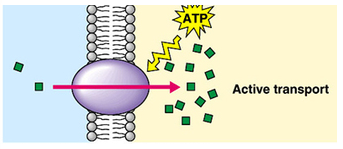
- 28What are the two types of diffusion which can occur?Simple Diffusion - Therefore, simple diffusion is the unassisted passage of small, hydrophobic, non-polar molecules from higher concentration to a lower concentration.
Facilitated diffusion - is the process of spontaneous passive transport of molecules or ions across a biological membrane via specific transmembrane integral proteins. - 29What is Osmosis?The movement of water molecules through a semi permeable membrane
- 30Units of measure...µm = micrometre e.g width of a cell / neuron
cm = length of a brain lobe
mm - width of a spinal cord nerve
Nanometres - Width of a synapse or cell membrane - 31What are the two types of microscope?Light microscope
Electron microscope ; SEM ( scanning) and TEM ( transmission )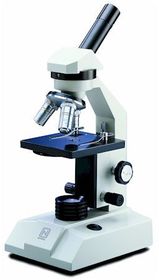
- 32Cell membrane proteins; Receptors Channels Transporters Enzymes
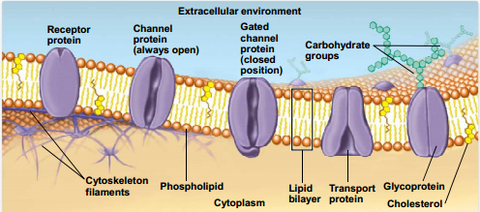
- 33What are the 6 levels of organisation by Tortora & Grabowski?1. Chemical level
2. Cellular level
3. Tissue level
4. Organ level
5. System level
6. Organismal level - 34Describe the features of a voluntary muscle and where they can be foundVoluntary muscle, skeletal, striped, striated
Long cylindrical cells containing many nuclei.
Has stripes (striations).
Location - attached to skeleton by tendons
Function - contracts when stimulated by a motor neurone ( contraction for voluntary movement) - 35Describe the features of a involuntary muscle and where they can be foundInvoluntary muscle, visceral, smooth
-Flat cells found in sheets
-No stripes
Location - Intestines, iris, blood vessels, bladder
Function - Propulsion of substances along internal passageways ( contracts under control of ANS) - 36Describe the features of a cardiac muscle and where they can be foundIndividual cells, striped, individual nuclei, connected by cross branches.
Location - Heart (myocardium)
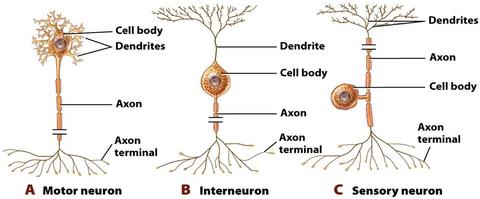
Function - Contract stimulus is myogenic ( muscle has its own pacemaker tissue) and neurogenic ( controlled by ANS sympathetic and para sympathetic neurones, aka pumping of blood - 37What does the motor neuron do?Also known as the Efferent neuron, it carries impulses from CNS to the muscles or glands
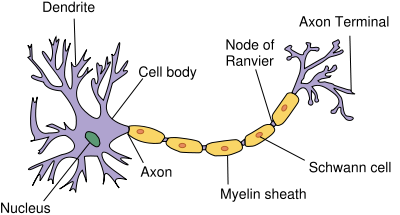
- 38What is a sensory neuron?Also known as an afferent neuron, it carries impulses from sensory receptors to CNS
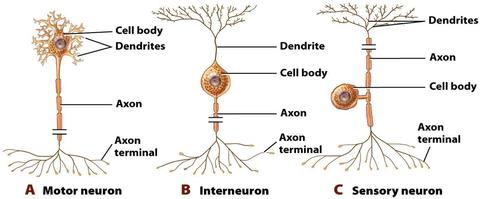
- 39What is an interneuron?Also known as connector / relay neurons, they are found in the CNS and carry impulses from one neurone to another
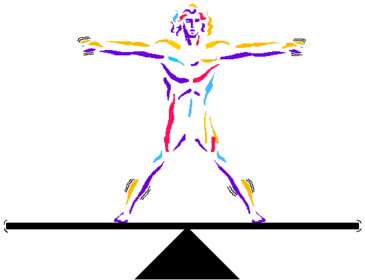
- 40What is homeostasis?Condition of equilibrium in the body's internal environment. Occurs due to the ceaseless interplay of all the bodys regulatory processes.
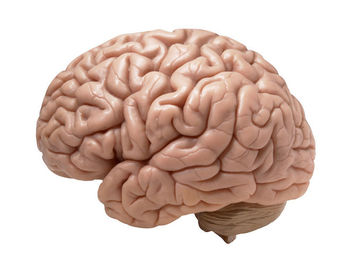
- 41What is an organ?A collection of tissues that perform a particular function, i.e. brain or adrenal gland
- 42What are the factors required for life?- Oxygen
- A source of nutrients ( glucose for energy, proteins for growth / repair )
- Removal of waste products
- Temperature
- Water ( osmotic pressure)
- PH - 43What is nervous tissue?Nervous tissue is specialised to react to stimuli and to conduct impulses to various organs in the body which bring about a response to the stimulus. Nerve tissue (as in the brain, spinal cord and peripheral nerves that branch throughout the body) are all made up of neurons
- 44What are glial cells?Glial cells, sometimes called neuroglia or simply , are non-neuronal cells that maintain homeostasis, form myelin, and provide support and protection for neurons in the central nervous system and peripheral nervous system. These include Schwann cells, oligodendrocytes, astrocystes.
- 45What is negative feedback?Occurs when a response produces a change when opposes the direction of the original stimulus. E.g temperature goes up, triggering sweating and vasodilation which then produce a fall in temp
- 46What is a positive feedback loop?Positive feedback is the process in which an initial change will bring about an additional change in the same direction
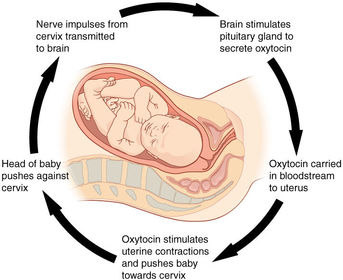
- 47What is the endocrine system?A collection of glands which use negative feedback to control the production and action of hormones. Integration between the nervous and endocrine systems control homoeostasis.
- 48What is the difference between eukaryote and prokaryote?
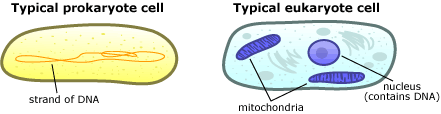
- 49What does the nucleus do?It controls all cell activities. It contains 23 pairs of chromosomes. Each chromosome contains a long strand of DNA. DNA codes for genes, which is written in chemical letters. Genes are templates for constructing proteins ( contains instructions for putting together protein molecules from amino acids.
- 50What is the role of DNA and the genes?DNA controls protein synthesis ( i.e which proteins a cell produces)
Gene = a small portion of DNA that controls formation of a particaular protein.
Production occurs in the ER. To have an effect on the phenotype, a gene must actually be used to make the protein it codes for = gene expression - 51Describe gene expressionGene expression is the process by which information from a gene is used in the synthesis of a functional gene product. A cell does not use every gene to make a proteins, almost every cell contains some genes, but different cells express different selections of genes
GENES ARE EITHER EXPRESSED OR SILENCED. - 52What is the difference between mono zygotic and dizygotic?
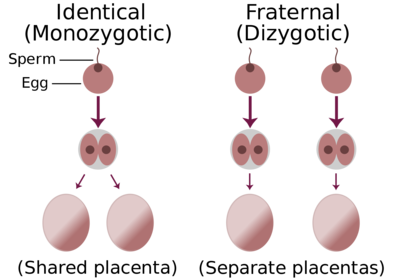
- 53What are the two processes involved in protein synthesis?Transcription - a small portion of DNA is copied into RNA
Translation - The instructions on RNA are translated into new proteins formed by the ribosomes. - 54Describe smooth ER and rough ERSmooth ER - Formation of steroids and fatty acids. Inactivates or de-oxifies drugs. It stores and releases calcium in the muscle cells.
Rough ER - contains ribosome s. It is the site of protein synthesis. - 55What is the golgi complex?It accepts proteins from the rough ER. Molecules are then modified and processed. They are packed into vesicles which then move through the cell.
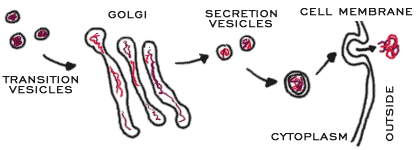
- 56Describe mitochondria...The site of internal respiration energy release in the cell. Contains enzymes which regulate aerobic respiration. Formation of ATP. Contains lipid bilayer with many folds called Cristae for a large surface area.
- 57How are vesicles formed?Endocytosis - Plasma membrane captures substances (engulfs) in vesicles and brings them to the cell
Exocytosis - Vesicles move to cell edge and fuse with membrane.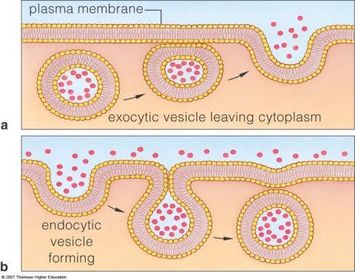
- 58What are lysosomes?An organelle in the cytoplasm of eukaryotic cells containing proteolytic enzymes enclosed in a membrane.
Autolysis - When lysosomes breaks their enzyme then digests that cell
Phagocytosis - Method by which some WB engulf then destroy foreign particles using lysosomes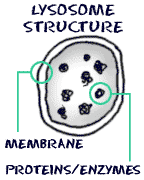
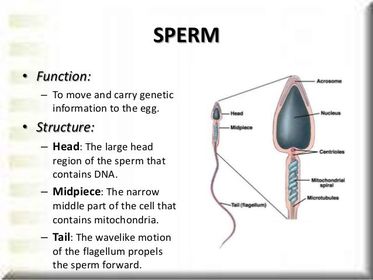
- 59How is the sperm cell ( spermatozoa) relate structure to function?
- 60How do red blood cells relate structure to function?Small size Lets red blood cells pass through narrow capillaries
Flattened disc shape Provides a large surface area, allowing rapid diffusion of oxygen
Contains haemoglobin Haemoglobin absorbs oxygen in the lungs and releases oxygen in the rest of the body
Does not contain a nucleus Increases amount of space inside the cell for haemoglobin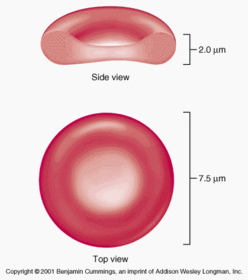
- 61Describe simple epithelial tissueSingle layer of flat squamous cells
Location - the heart, blood vessels and alveoli
Function - to facilitate diffusion, they provide smallest distances so substances can pass through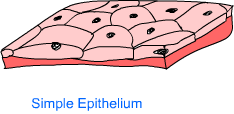
- 62Describe compound epithelial tussue...Multiple layer of cells. Basal layer cells divide to produce new ones. Their main function is to provide protection. Location - skin, mouth
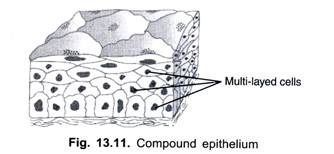
- 63What is ciliated simple columnar epithelium?Single layer of ciliated column shaped cells
Small bronchiole oviducts
Function - Movement of mucus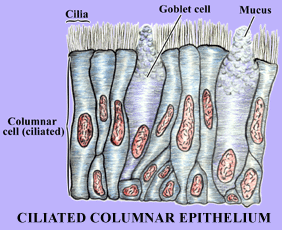
- 64What category of tissue does blood belong to and what is its function?CONNECTIVE TISSUE
- Consists of plasma and formed elements (ethroocytes, leucocyes and thrombocytes) RBC, WBC, Platelets.
Location - within blood vessels and chamber of heart
Function - Transport and protection - 65What is connective tissue?Extracellular matrix made up of collagen or elastic / ground substance ( the material between the cells and fibres). There are different types of cells in different connective tissue e.g adipocytes / ethrocytes
- 66What is bone and which family of tissue is it from?CONNECTIVE TISSUE
Contains bone cells, osteocytes and ground substances including calcium phosphate.
Function - Support, protection and storage. - 67Adipose tissueCONNECTIVE TISSUE
Consists mainly of fat cells (adipose cells). Each adipocyte cell is filled with a single large droplet of triglyceride (fat). As this occupies most of the volume of the cell, its cytoplasm, nucleus, and other components are pushed towards the edges of the cell. Location - sub cutaneous layer, also surrounding vital organs
Function - Insulation and energy storage.
Information
- Description
- Degree Psychology (Physiology) Flashcards on Physiology / Intro psychology, created by Molly Macgregor on 29/10/2015.
- Created by
- Molly Macgregor
- Views
- 441
- Rating