
8132174
Description

Flashcards by Henry Sokol, updated more than 1 year ago

|
Created by Henry Sokol
almost 9 years ago
|
|
| Question | Answer |
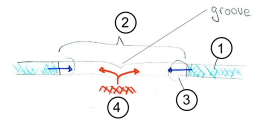
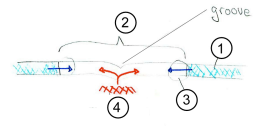
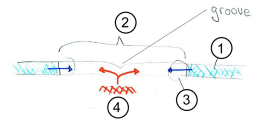
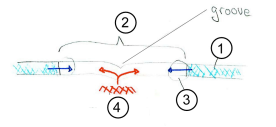
| 1 | epidermis |
| 2 | neural plate |
| 3 | neural crest |
| 4 | mesoderm |
| The neural groove becomes the ________ plate of the neural tube. | floor plate |
| The floor plate secretes __________. | Shh (Sonic hedgehog) |
| The roof plate secretes _________. | BMP |
| The neural crest gives rise to the _________. | PNS |
| Sensory neurons in the dorsal root ganglia are part of the CNS (T/F). | FALSE |
| Motor neurons in the ventral spinal cord are part of the CNS (T/F). | TRUE |
| Vasoconstriction is monitored by which brain region? | hypothalamus |
| Shivering is monitored by which brain region? | hypothalamus |
| Burrowing under wood shavings is monitored by which brain region? | cerebrum |
| Vasodilation is monitored by which brain region? | hypothalamus |
| Water retention is monitored by which brain region? | hypothalamus |
| Panting is monitored by which brain region? | hypothalamus |
| Moving to a cooler part of the cage is monitored by which brain region? | cerebrum |
| Where is ACTH made? | anterior pituitary |
| Where is cortisol made? | adrenal cortex |
| Where is corticotropin releasing hormone (CRH) made? | hypothalamus |
| Orexigenic (hunger) or catabolic tone is monitored by which neuropeptide? | alpha melanocyte-stimulating hormone |
| Which neuropeptide is released in childbirth? | oxytocin |
| The PRIMARY AUDITORY CORTEX (A1) is in which lobe? | temporal |
| The PRIMARY MOTOR CORTEX (M1) is in which lobe? | frontal |
| The PRIMARY SOMATOSENSORY CORTEX (S1) is in which lobe? | parietal |
| The PRIMARY VISUAL CORTEX (V1) is in which lobe? | occipital |
| The HIGHER AREAS OF THE VENTRAL VISUAL STREAM (THE WHAT?) is in which lobe? | temporal |
| The HIGHER AREAS OF DORSAL VISUAL STREAM (THE WHERE?) is in which lobe? | parietal |
| Broca's area/speech production is in which lobe? | frontal |
| Wernicke's area/speech comprehension is in which lobe? | temporal |
| Gustatory area within lateral sulcus is in which lobe? | insular |
| Border of the cerebral cortex is in which lobe? | limbic |
| What structure connects the left and right hemispheres? | corpus callosum |
| What structure separates the left and right hemispheres? | sagittal fissure |
| What structure separates the allocortex and neocortex? | cingulate sulcus |
| What structure separates the frontal and parietal lobes? | central sulcus |
| What structure separates the temporal from the other lobes? | lateral sulcus |
| Which type of cell is a type of myelinating neuroglia that is affected in multiple sclerosis? | oligodendrocyte |
| Which type of cell is a type of myelinating neuroglia of the peripheral nervous system? | Schwann cell |
| Which type of cell is a neuroepithelial cell forming the cerebral spinal fluid? | ependymal cell |
| Which type of cell is a neuroepithelial cell that supports radial migrations? | radial glia |
| Which type of cell are phagocytes of the central nervous system? | microglia |
| Which type of cell is a star-shaped neuroglia that recycles transmitters of glutamate (L-glutamic acid and GABA)? | astrocyte |
| Which molecule is the major EXCITATORY neurotransmitter in the brain? | L-glutamic acid |
| Which molecule is the major INHIBITORY neurotransmitter in the brain? | GABA |
| Which molecule is the neurotransmitter of pyramidal cells of cerebral cortex? | L-glutamic acid |
| Which molecule is the neurotransmitter of Purkinje cells of the cerebral cortex? | GABA |
| Which molecule is the enzyme that makes GABA? | GAD |
| Which molecule is the enzyme that degrades GABA? | GABA transaminase |
| Dendritic spines are presynaptic compartments (T/F). | FALSE |
| Dendritic spines are found only on dendrites of glutaminergic neurons (T/F). | FALSE |
| Dendrites integrate and propagate post-synaptic signals to the cell body (T/F). | TRUE |
| The diameter of axons tapers going away from the neuron cell body (T/F). | FALSE |
| Nodes of Ranvier on myelinated axons are sites of synaptic excitation (T/F). | FALSE |
| Pyramidal cells that target the association to other areas of ipsilateral hemisphere? | L2 |
| Pyramidal cells that target commisure to like areas of contralateral hemisphere? | L3 |
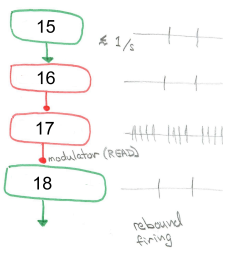
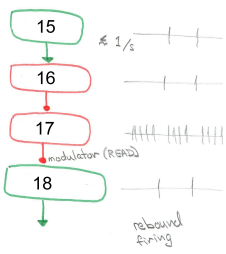
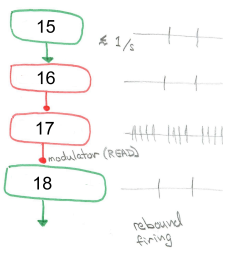
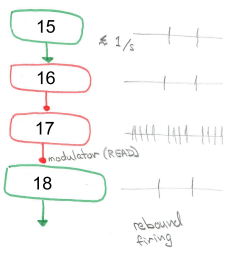
| Pyramidal cells that target reciprocal modulator (READ) of thalamic input? | L6 |
| Pyramidal cells that targets the same as the "granular layer"? | L4 |
| Pyramidal cells that target the subcortical target and non-reciprocal driver (WRITE) of higher-order thalamic relays? | L5 |
| Where does FIRST-ORDER THALAMIC VISUAL RELAY occur? | lateral geniculate nucleus (LGN) |
| Where does HIGHER-ORDER THALAMIC VISUAL RELAY occur? | pulvinar |
| Where is the CORTICAL SITE OF COLOR BLINDNESS? | V4 |
| Where is the CORTICAL SITE OF FACE AGNOSIA? | fusiform face area |
| Where is the CORTICAL SITE OF MOTION BLINDNESS? | MT/V5 |
| Where is the RETINAL SITE OF COLOR BLINDNESS? | cone cell |
| Where is the RETINAL SITE OF NIGHT VISION? | rod cell |
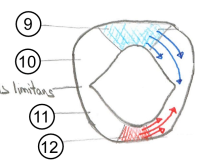
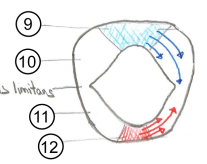
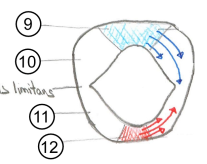
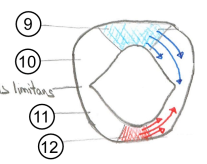
| 9 | roof |
| 10 | alar |
| 11 | basal |
| 12 | floor |
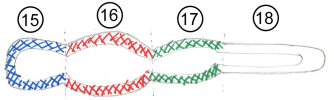
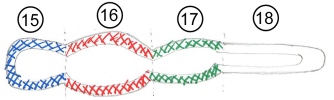
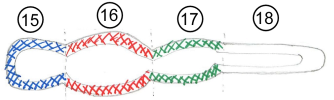
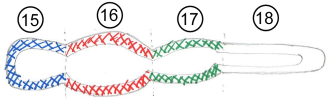
| 15 | forebrain |
| 16 | midbrain |
| 17 | hindbrain |
| 18 | spinal cord |
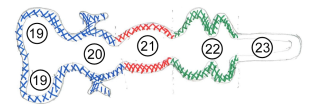
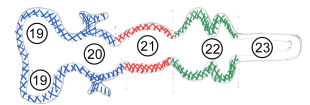
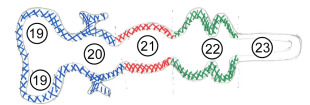
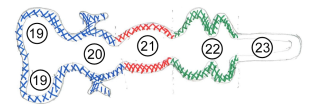
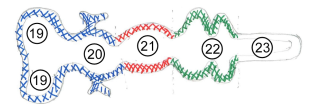
| 19 | lateral ventricles |
| 20 | third ventricle |
| 21 | cerebral aquadeuct |
| 22 | fourth ventricle |
| 23 | central canal |
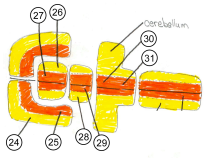
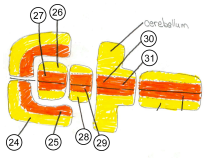
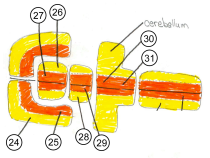
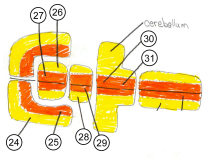
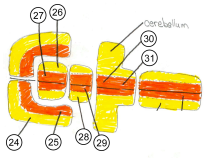
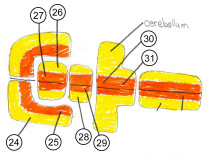
| 24 | cerebral cortex |
| 25 | basal ganglia |
| 26 | thalamus |
| 27 | hypothalamus |
| 28 | tectum |
| 29 | tegmentum |
| 30 | pons |
| 31 | medulla |
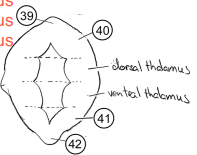
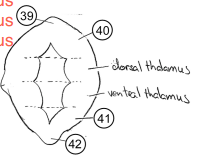
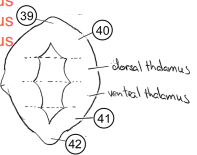
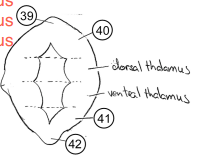
| 39 | pineal gland |
| 40 | epithalamus |
| 41 | hypothalamus |
| 42 | posterior pituitary |
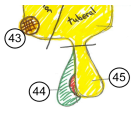
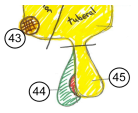
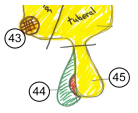
| 43 | optic chiasm |
| 44 | anterior pituitary |
| 45 | posterior pituitary |
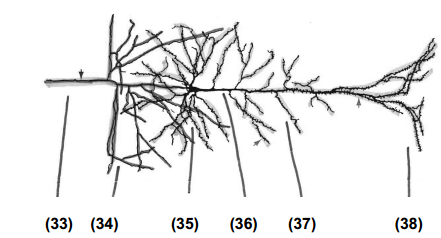
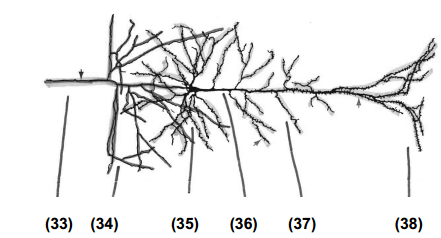
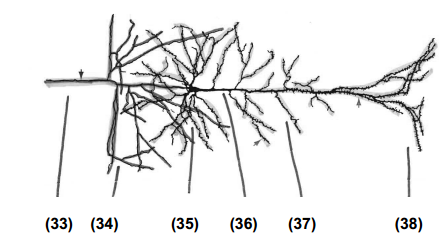
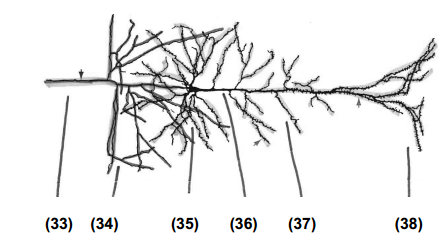
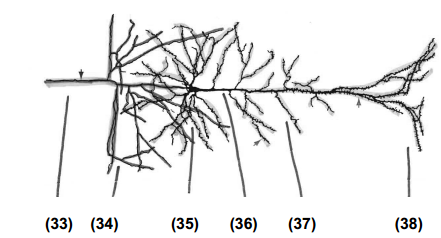
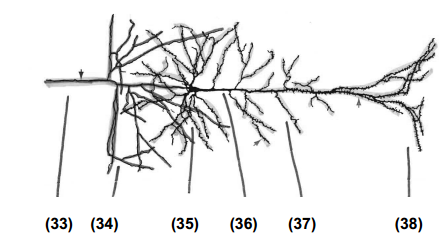
| 33 | major axon |
| 34 | collateral axons |
| 35 | basal dendrites |
| 36 | apical dendrite |
| 37 | oblique branches |
| 38 | apical tuft |
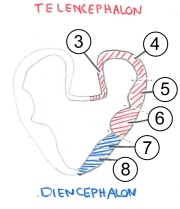
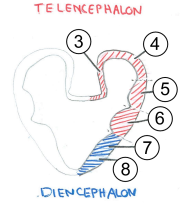
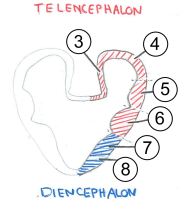
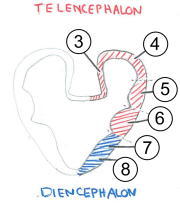
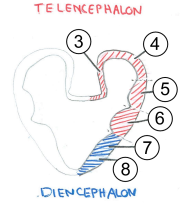
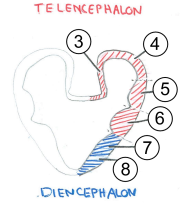
| 3 | hippocampus |
| 4 | neocortex |
| 5 | striatal ridge |
| 6 | pallidal ridge |
| 7 | thalamic eminence |
| 8 | hypothalamus |
| Which nucleus is NOT part of the striatum? | pallidum |
| Which projection neurons do NOT use GABA? | thalamic |
| (Direct or Indirect paths) D1 dopamine receptors on striatal neurons | direct |
| (Direct or Indirect paths) D2 dopamine receptors on striatal neurons | indirect |
| (Direct or Indirect paths) Relays via the external segment of globus pallidus (GPe) | indirect |
| (Direct or Indirect paths) Outputs via the internal segment of globus pallidus (GPi) | both |
| 15 | cortex |
| 16 | striatum |
| 17 | pallidum |
| 18 | thalamus |
| Dominant mutation in Huntingtin gene. | Huntington |
| Drug-induced choreoathetosis. | dyskinesia |
| Drug stimulation of dopamine neurons in VTA or synapses in nucleus accumbens. | drug addiction |
| Injury of subthalamic nucleus. | hemiballismus |
| Loss of nigral dopamine neurons | Parkinson |
| Loss of striatal neurons | Huntington |
| Marche à petits pas, or festinating gait | Parkinson |
| Micrographia, decreasing amplitude and slowing rate when handwriting | Parkinson |
| Motor and vocal tics. | Tourette |
| Recurrent intrusive thoughts and ritualistic behavior. | OCD |
| Tremor while resting. | Parkinson |
| Tremor during active movement. | essential tremor |
| Chorea has graceful, dance-like movements (T/F) | true |
| Chorea has stereotyped, repeated movements (T/F) | false |
| Chorea has a premonitory urge and sense of relief on completion (T/F) | false |
| Athetosis has writhing movement of the body or face. (T/F) | true |
| Compulsions have a premonitory urge and sense of relief on completion (T/F) | true |
| Tics are stereotyped, repeated movements and vocalizations. (T/F) | true |
| Tics have a premonitory urge and sense of relief on completion. (T/F) | true |
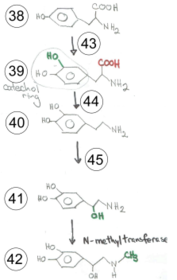
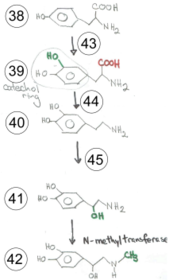
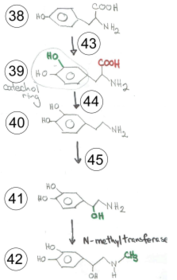
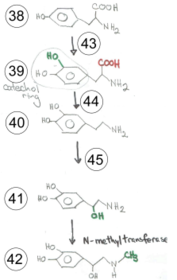
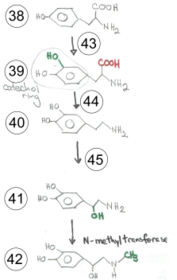
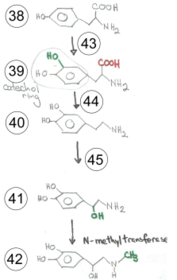
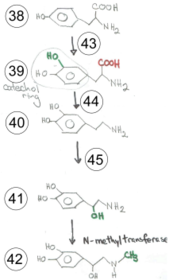
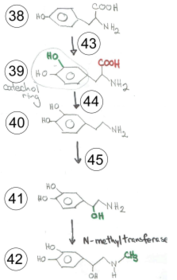
| 38 | L-tyrosine |
| 39 | L-dopa |
| 40 | dopamine |
| 41 | norepinephrine |
| 42 | epinephrine |
| 43 | tyrosine hydroxylase |
| 44 | DOPA decarboxylase |
| 45 | dopamine b-hydroxylase |
| Rate-limiting step in dopamine synthesis: | tyrosine hydroxylase |
| L-DOPA acts on dopamine receptors in Parkinson disease (True/False) | false |
| Knowing that reserpine depletes dopamine from synaptic vesicles, this drug should improve movement in Parkinson disease (True/False) | false |
| Dopamine is inactivated by: (a) decarboxylation (b) hydrolysis (c) reuptake | reuptake |
| Dopamine is optically active (True/False) | false |
Want to create your own Flashcards for free with GoConqr? Learn more.