Mind map
present simple
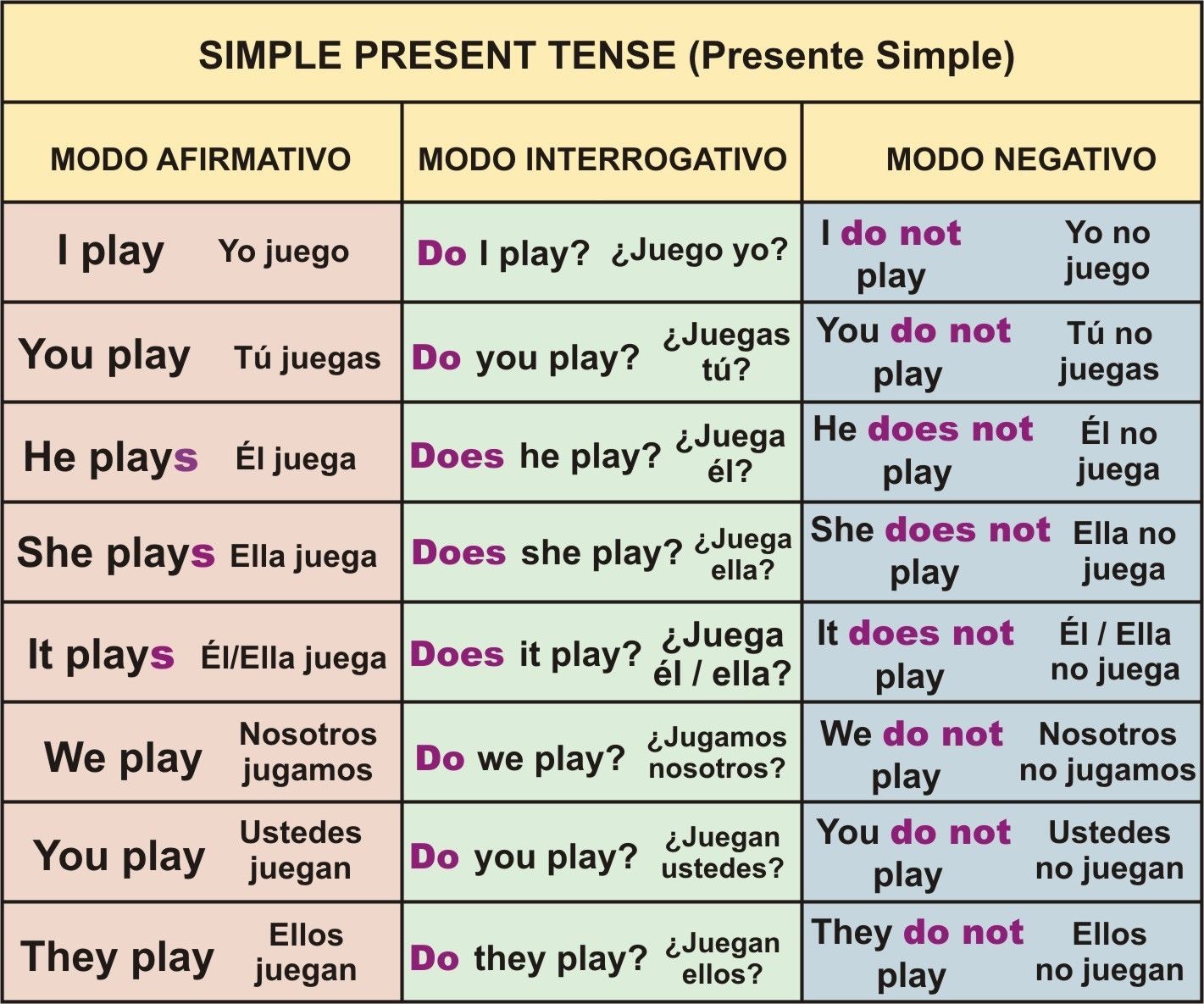
Map content
present simple
use
- To express habits and routines, general facts, repeated actions or permanent situations, emotions and desires
- To express habits and routines, general facts, repeated actions or permanent situations, emotions and desires
form
- To conjugate the present simple we use the infinitive for the subjects "I", "you", "we" and "they" and for the third persons "he", "she" and "it", we add a "-s" to the end of the verb.
- To conjugate the present simple we use the infinitive for the subjects "I", "you", "we" and "they" and for the third persons "he", "she" and "it", we add a "-s" to the end of the verb.
to be
- This verb is one of the most important in the English language, the most widely used, since it is used both as a main verb and as an auxiliary verb, as well as being irregular in the present and past tenses.
- present simple
- With this verb tense actions that happen regularly are described, events are frequent but are not happening at that precise moment.
- I am I am Mr.Pérez Yo soy el señor Pérez You are You are the teacher Tú eres el profesor He/She/It is It is a dog (Ello) Es un perro
- With this verb tense actions that happen regularly are described, events are frequent but are not happening at that precise moment.
- present simple
- This verb is one of the most important in the English language, the most widely used, since it is used both as a main verb and as an auxiliary verb, as well as being irregular in the present and past tenses.
to have
- l verb 'to have' in present simple 'To have' means to have, to have or to take.
- example
- Tengo un hermano. I have a brother. Tengo una madre. I have a mother. Tengo una tía. I have an aunt.
- example
- l verb 'to have' in present simple 'To have' means to have, to have or to take.