
1155244
Description

Mind Map by Kristi Brogden, updated more than 1 year ago

|
Created by Kristi Brogden
over 11 years ago
|
|
Enzyme-linked cell surface receptors
- Definition
- Transmembrane
proteins
- Extracellular ligand
binding domain
- Cytosolic domain has intrinsic
enzymatic activity or
associates with an enzyme
- Each subunit has
1 TM domain
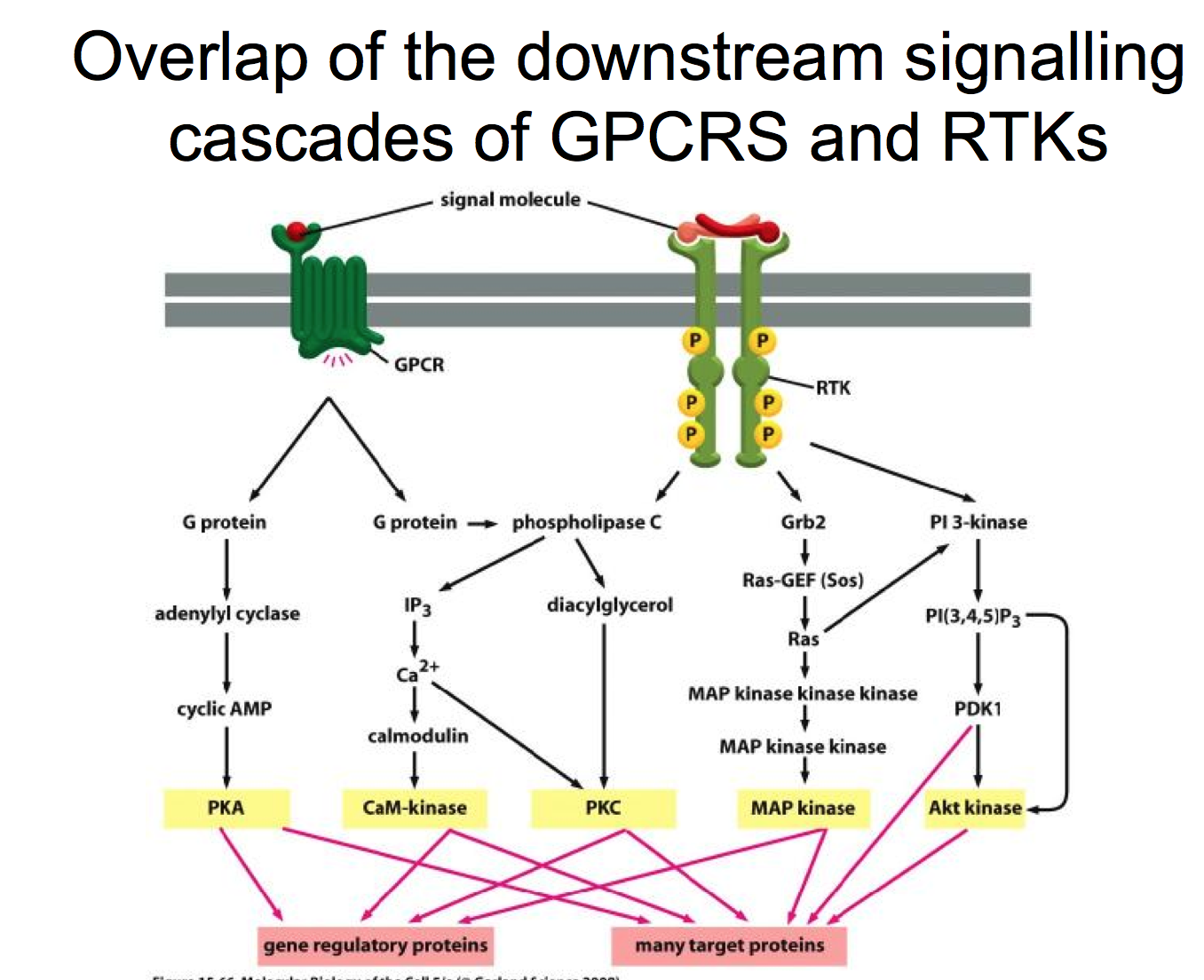
- Often activates
same signalling
pathways as
GPCR
- Transmembrane
proteins
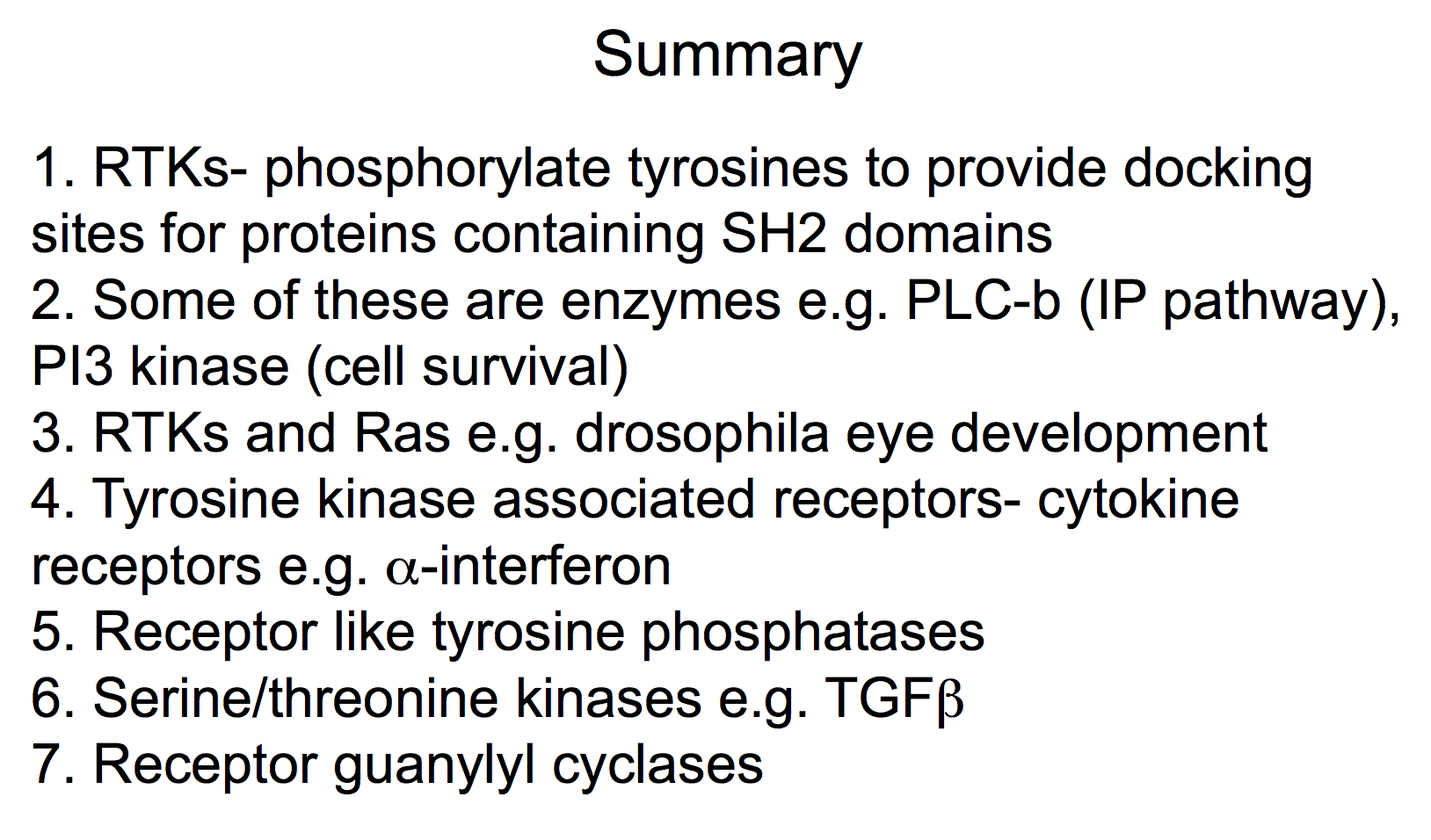
- At least 5 classes
- Receptor
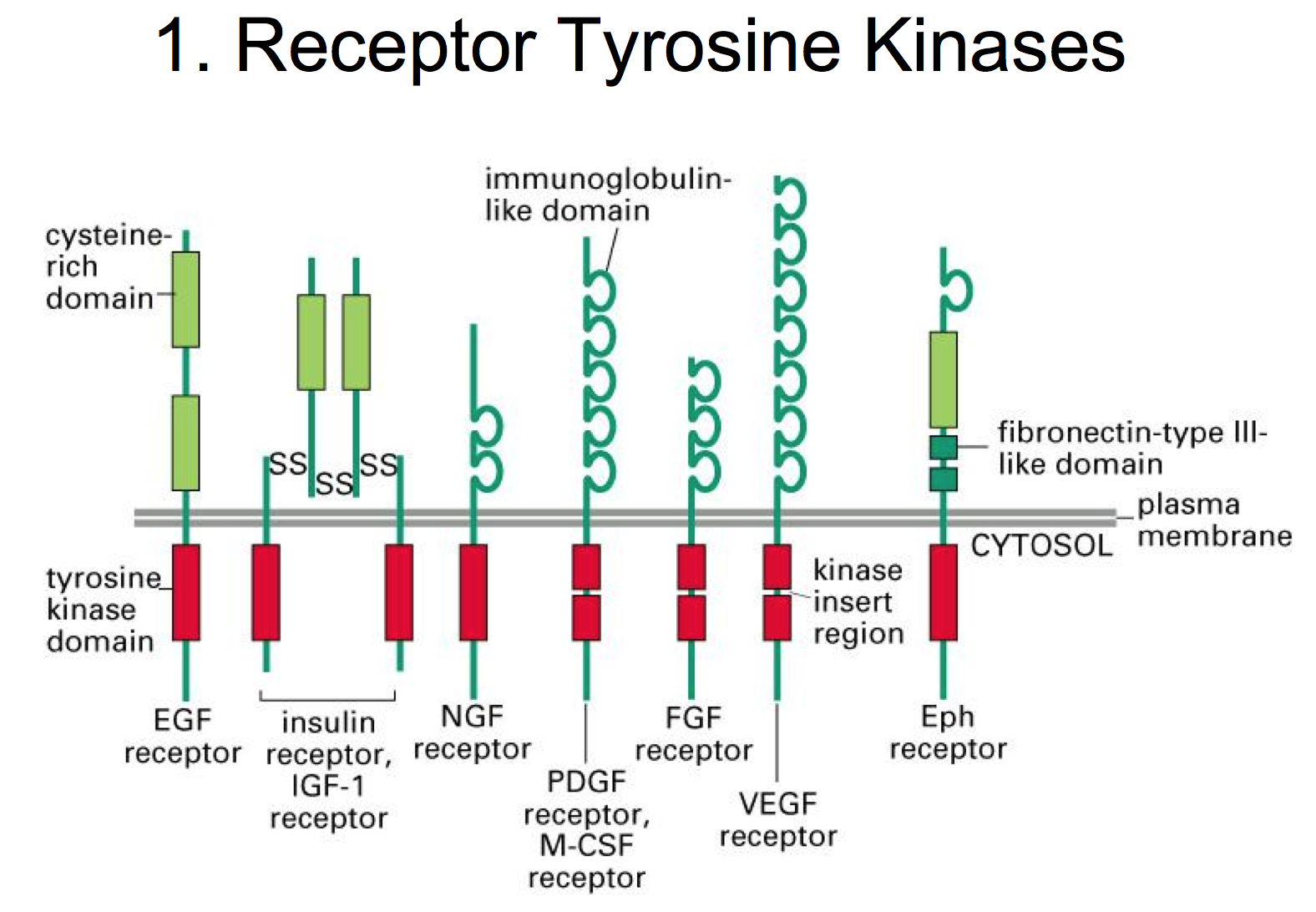
tyrosine
kinases
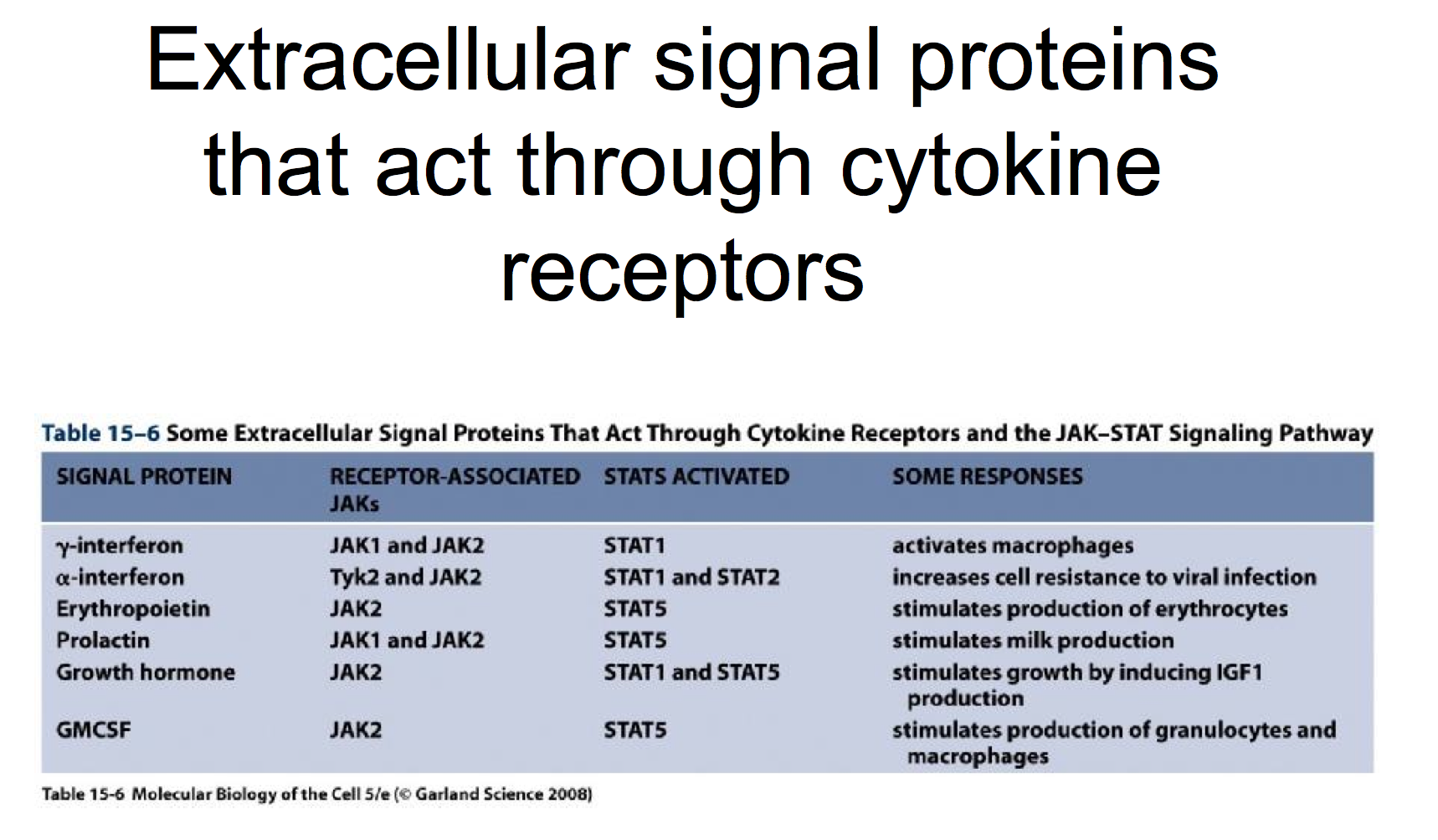
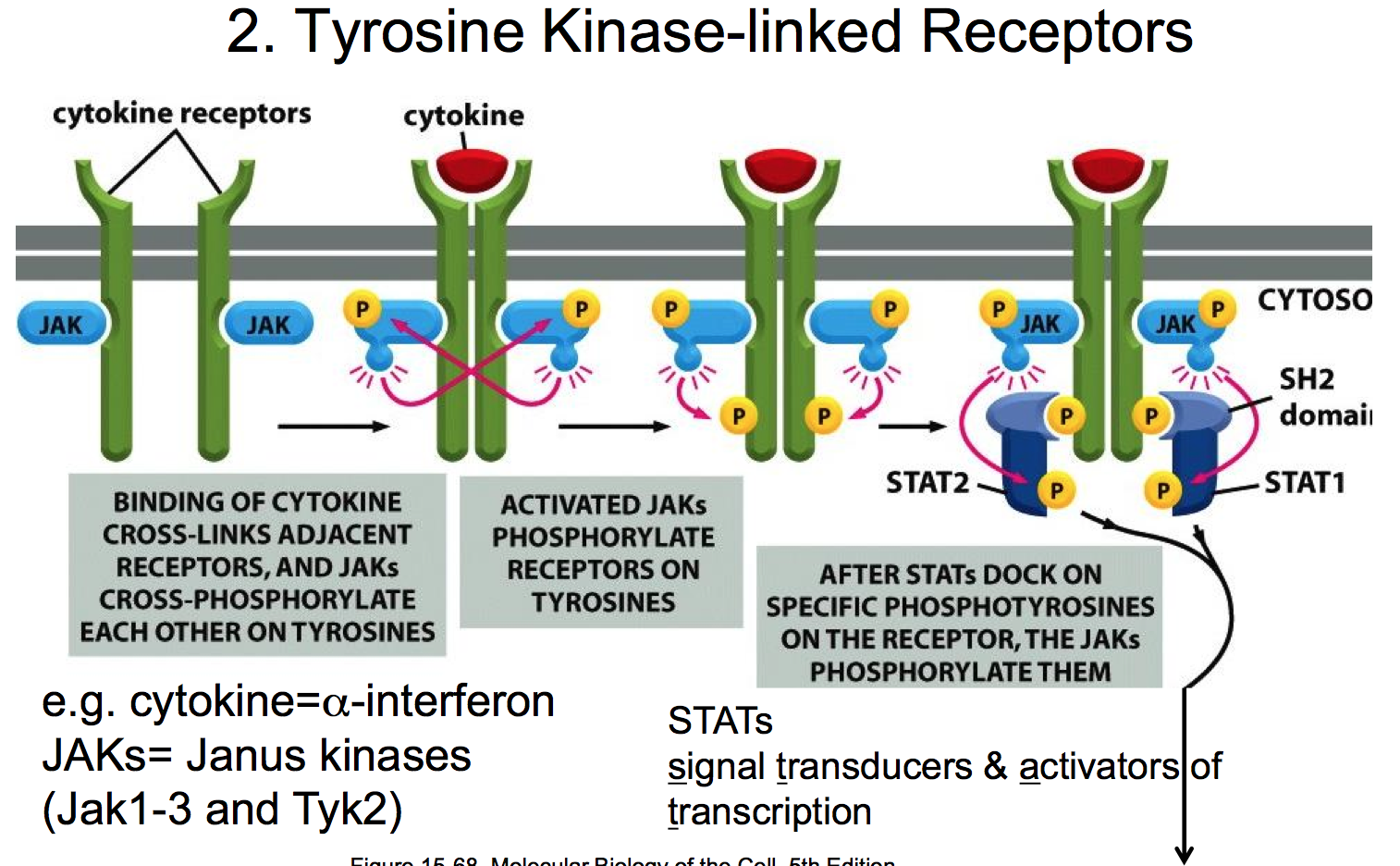
- Tyrosine-kinase
associated
receptors
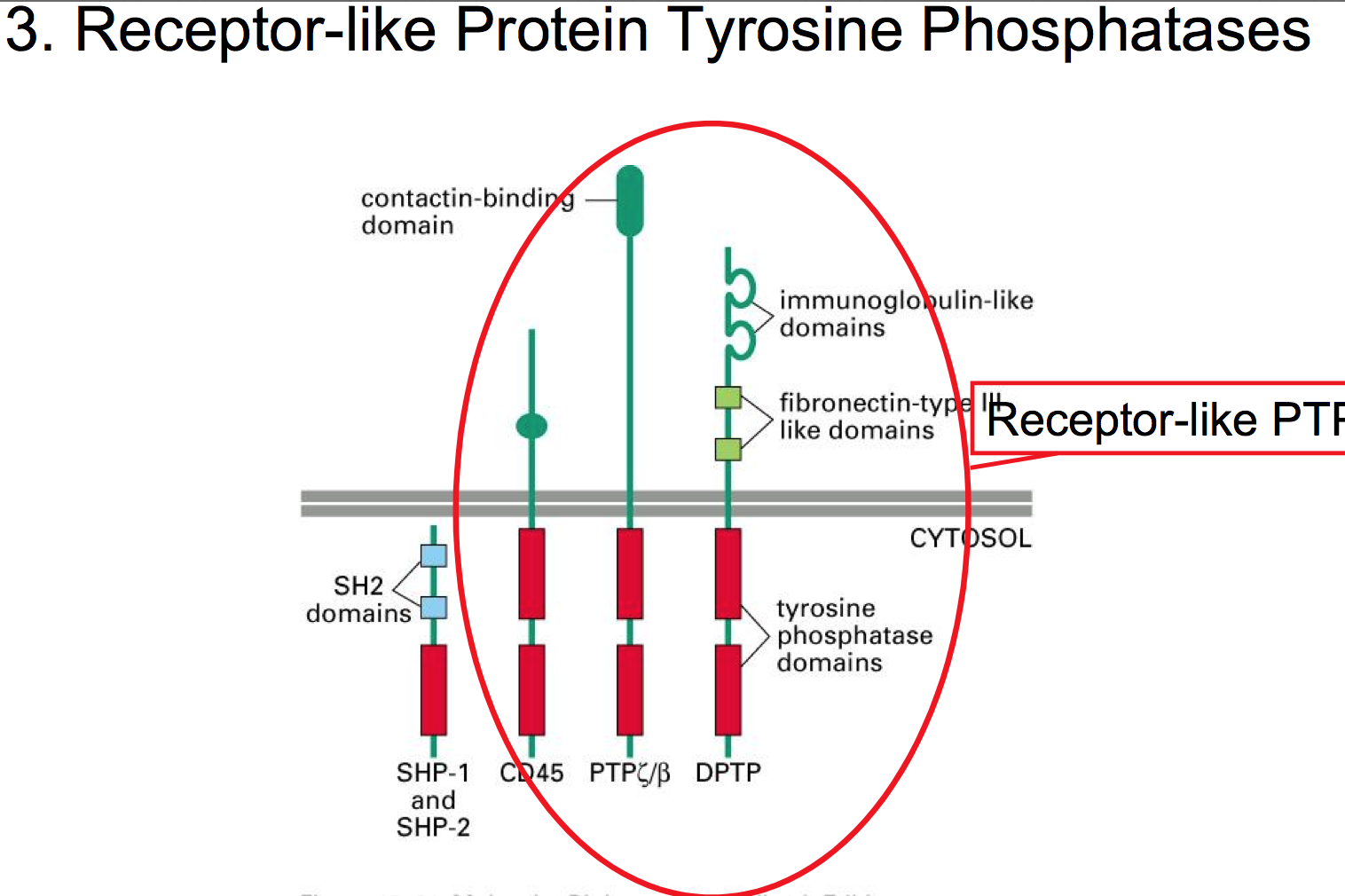
- Receptor-like
tyrosine
phosphatases
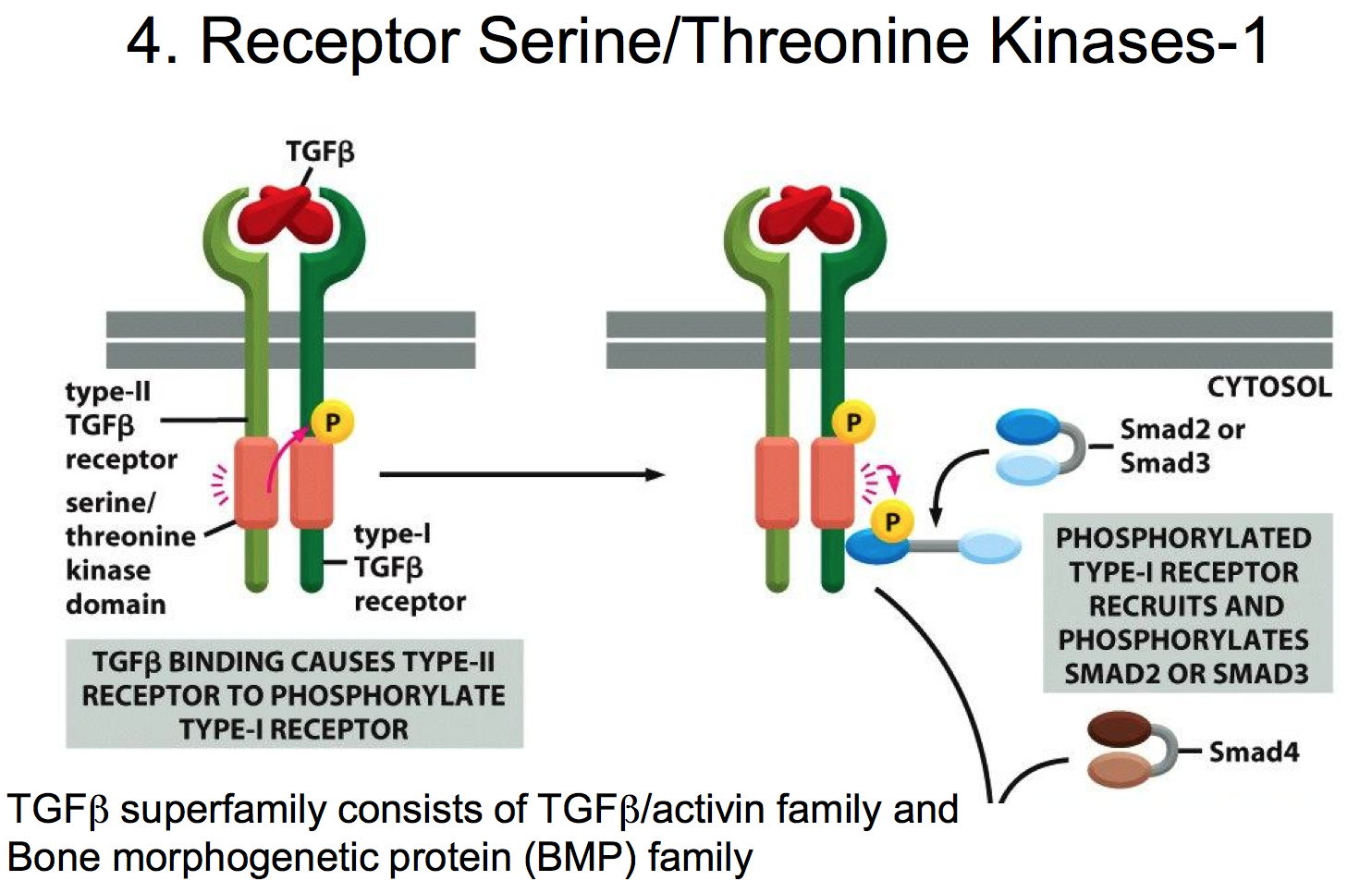
- Receptor
serine/threonine
kinases
- Receptor
guanylyl
cyclases
- Receptor
tyrosine
kinases
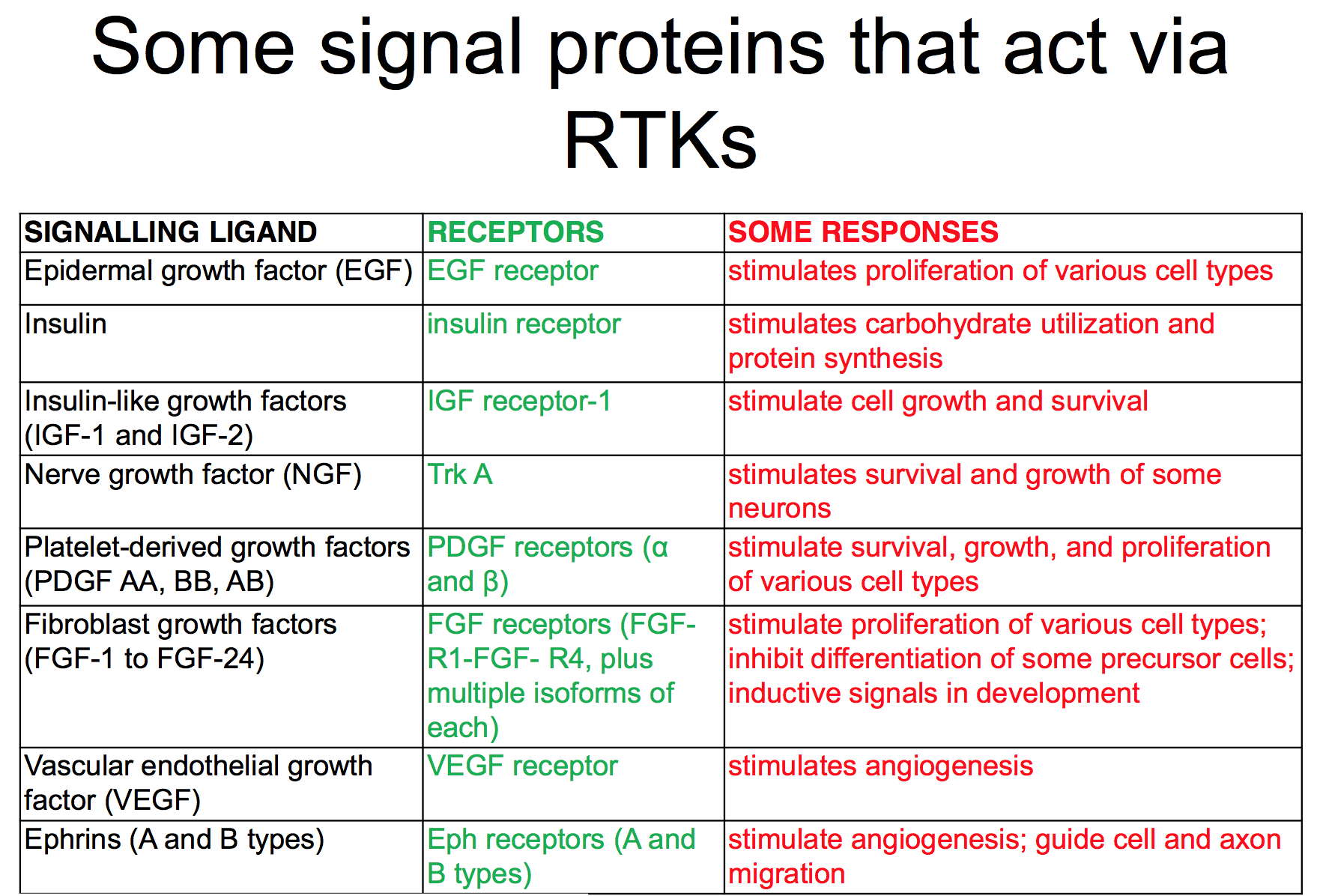
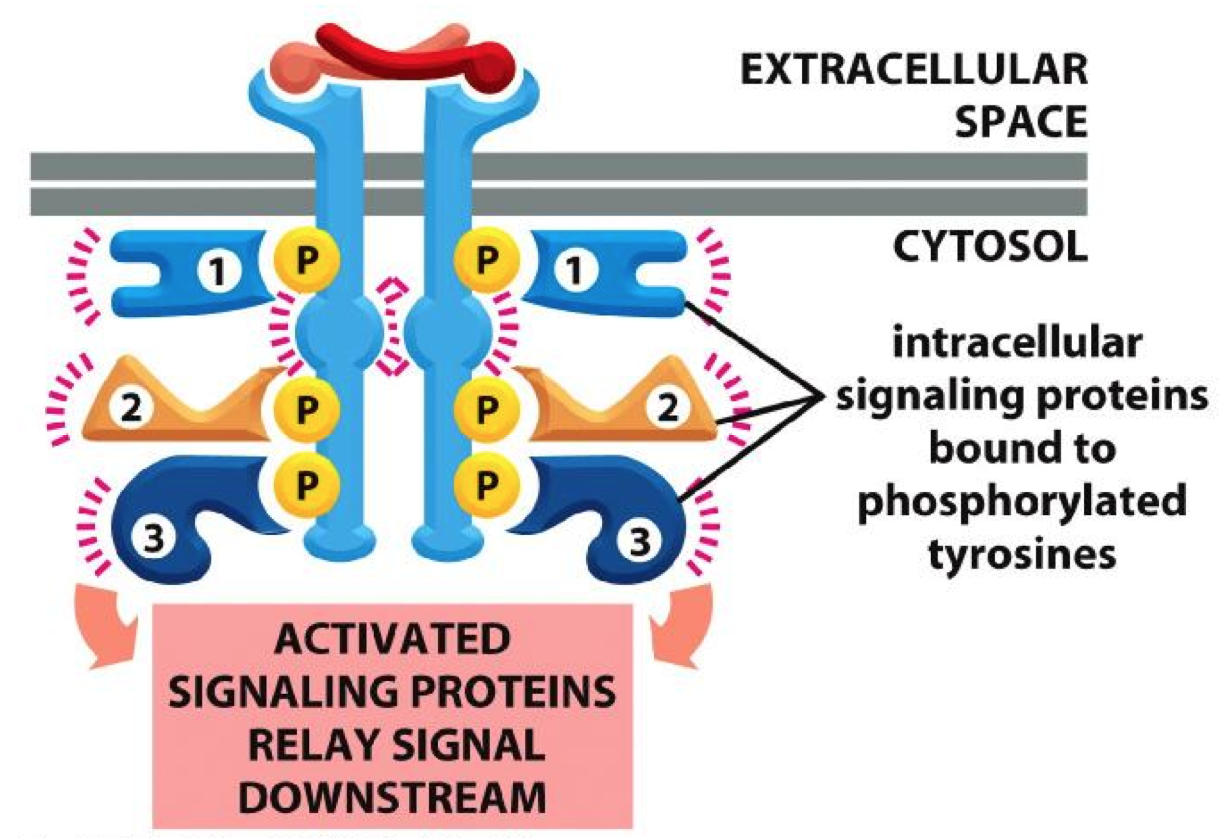
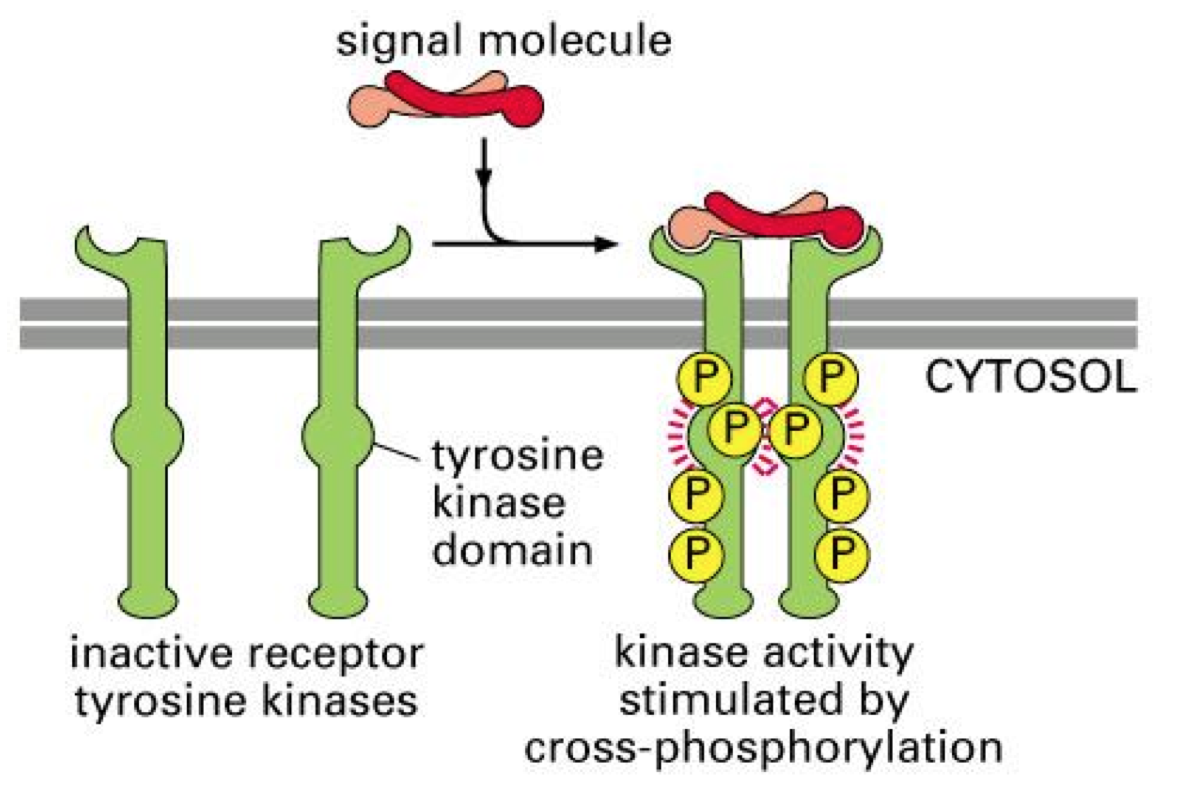
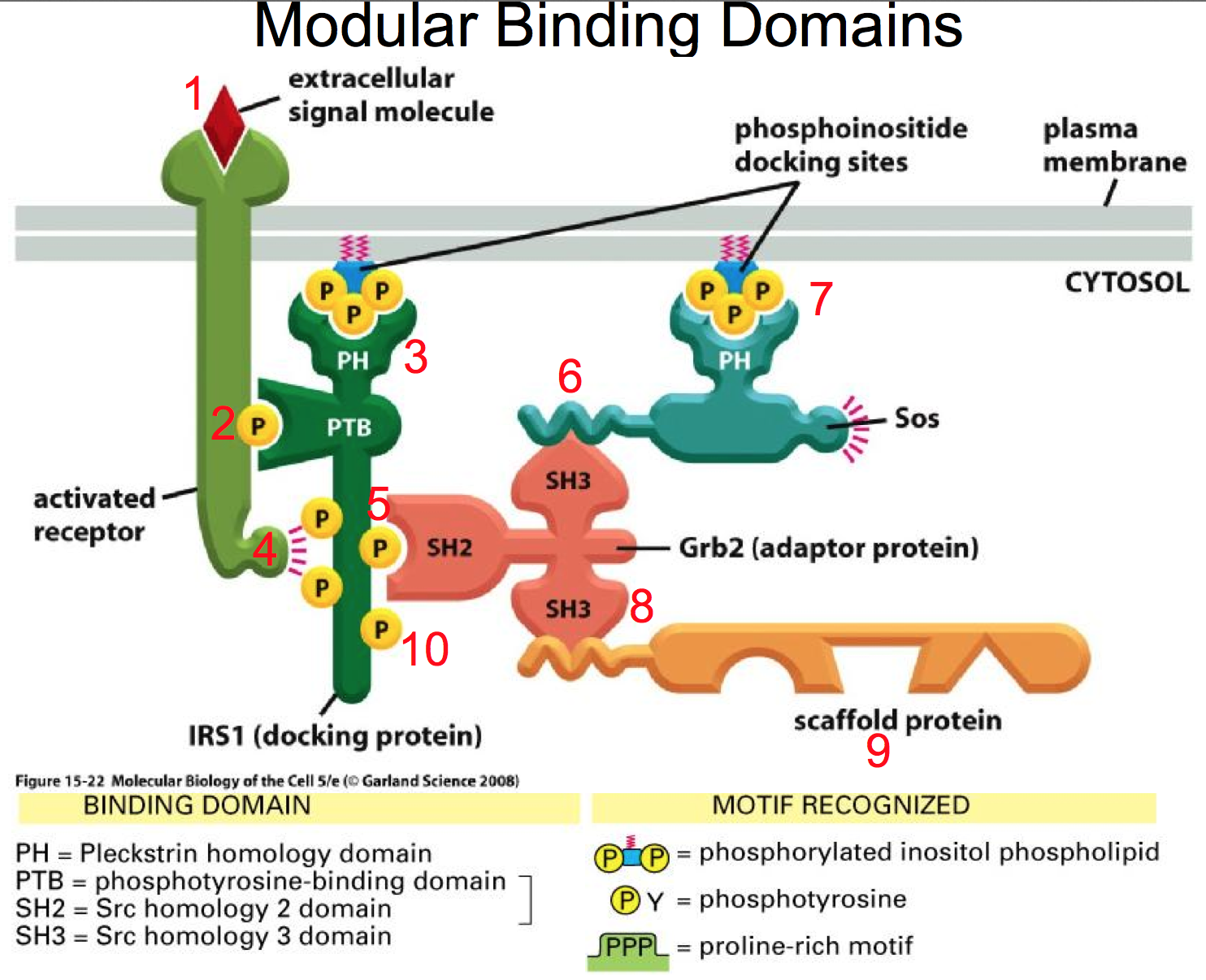
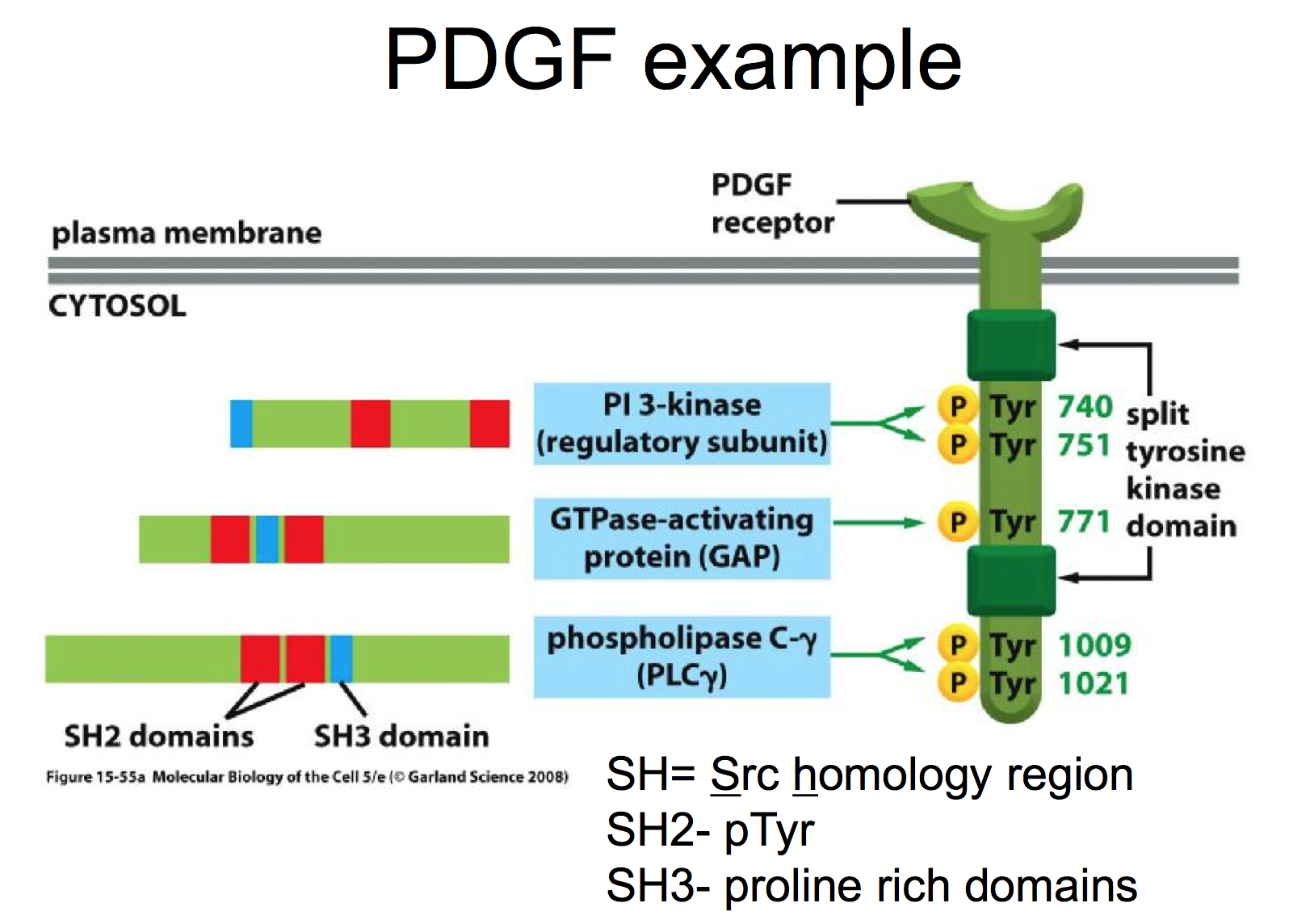
- Receptor tyrosine kinases
- What domains bind phosphorylated tyrosine residues?
- SH2
domains
- Modular binding domains
- SH2
domains
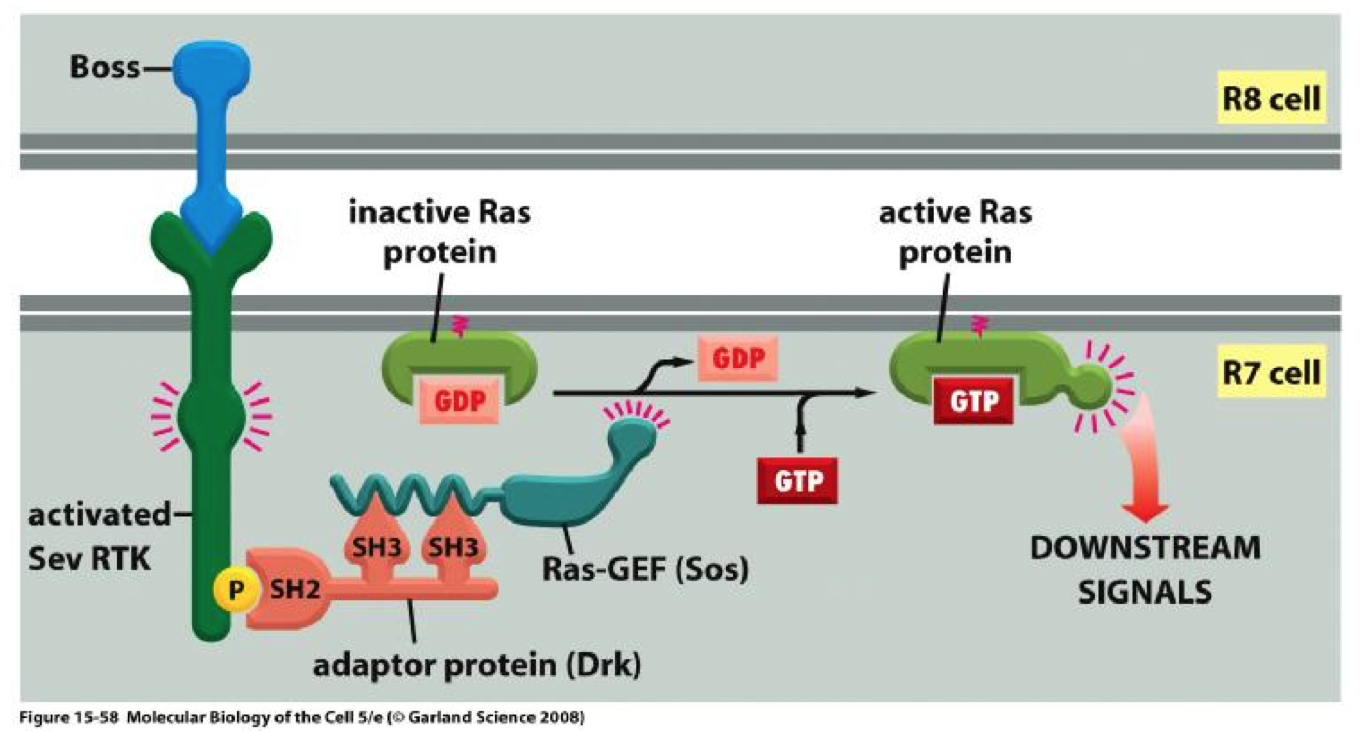
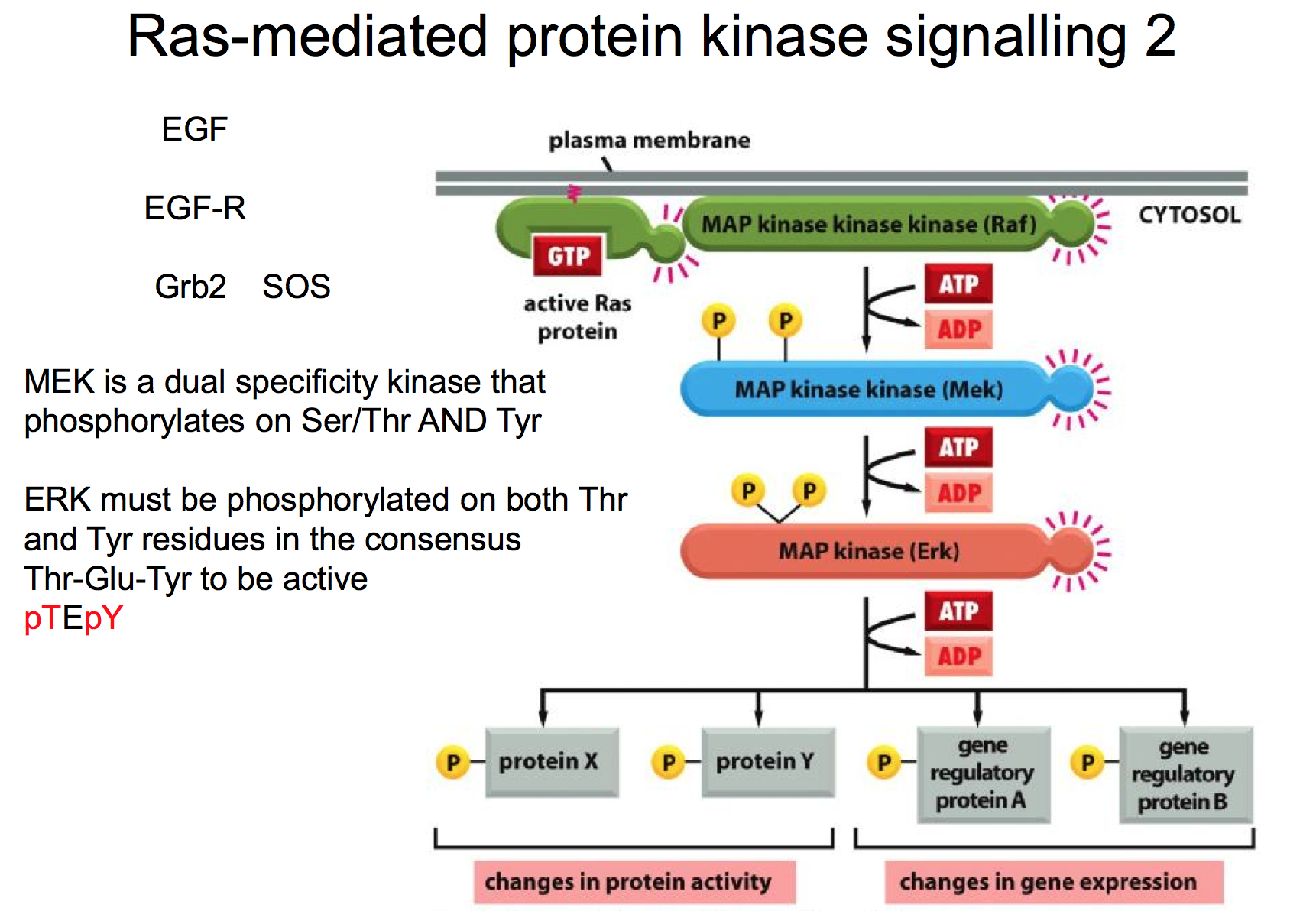
- Activate Ras-mediated
protein kinase signalling
- What domains bind phosphorylated tyrosine residues?
- Tyrosine-kinase associated receptors
- Receptor-like tyrosine phosphatases
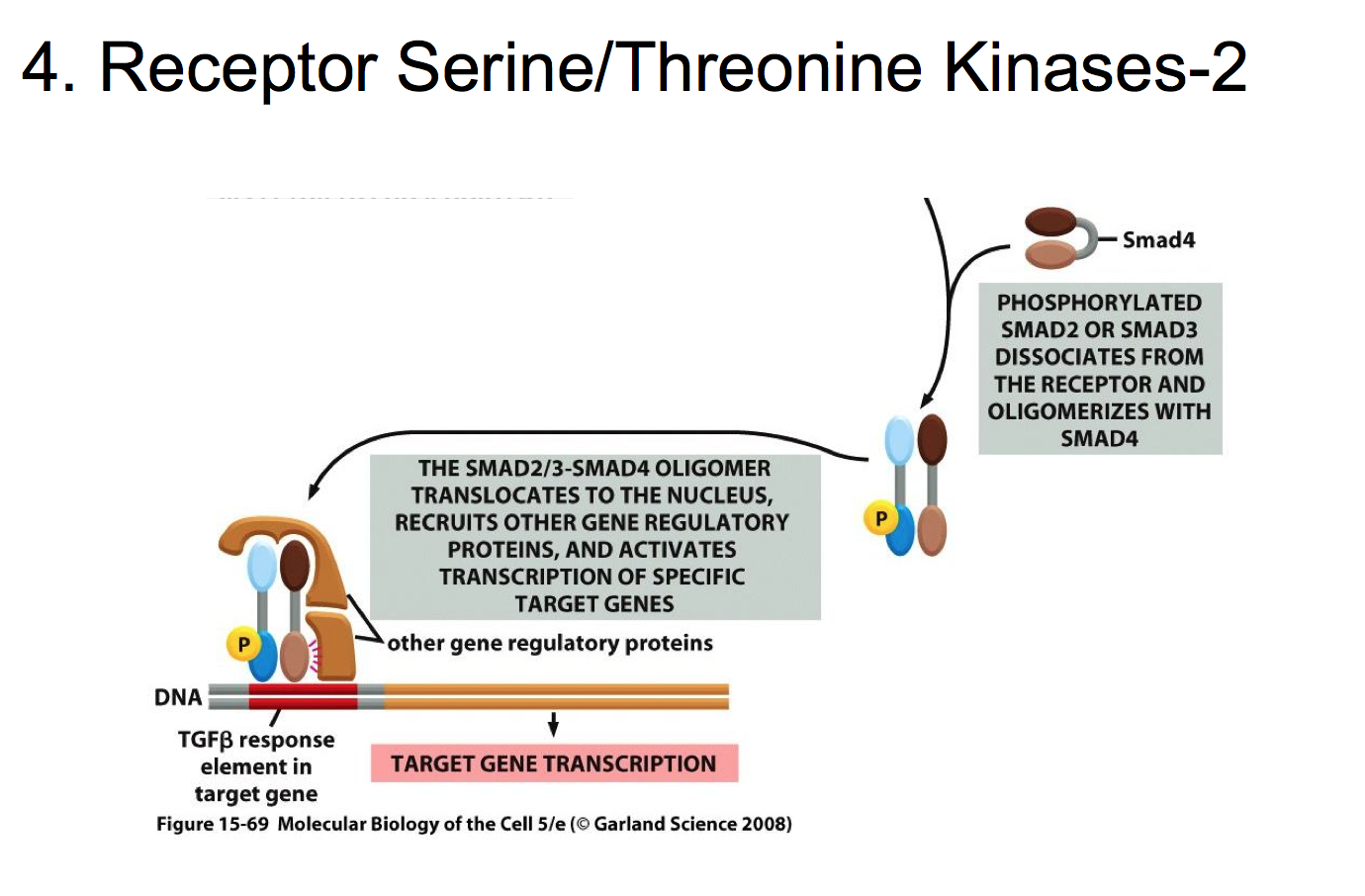
- Receptor serine/threonine kinases
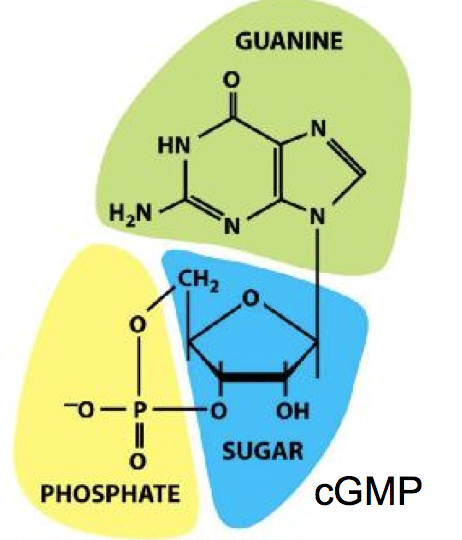
- Receptor guanylyl cyclases
- Single pass
transmembrane protein
with extracellular ligand
binding site
- Intracellular guanylyl cyclase
domain catalyses cyclic GMP
formation
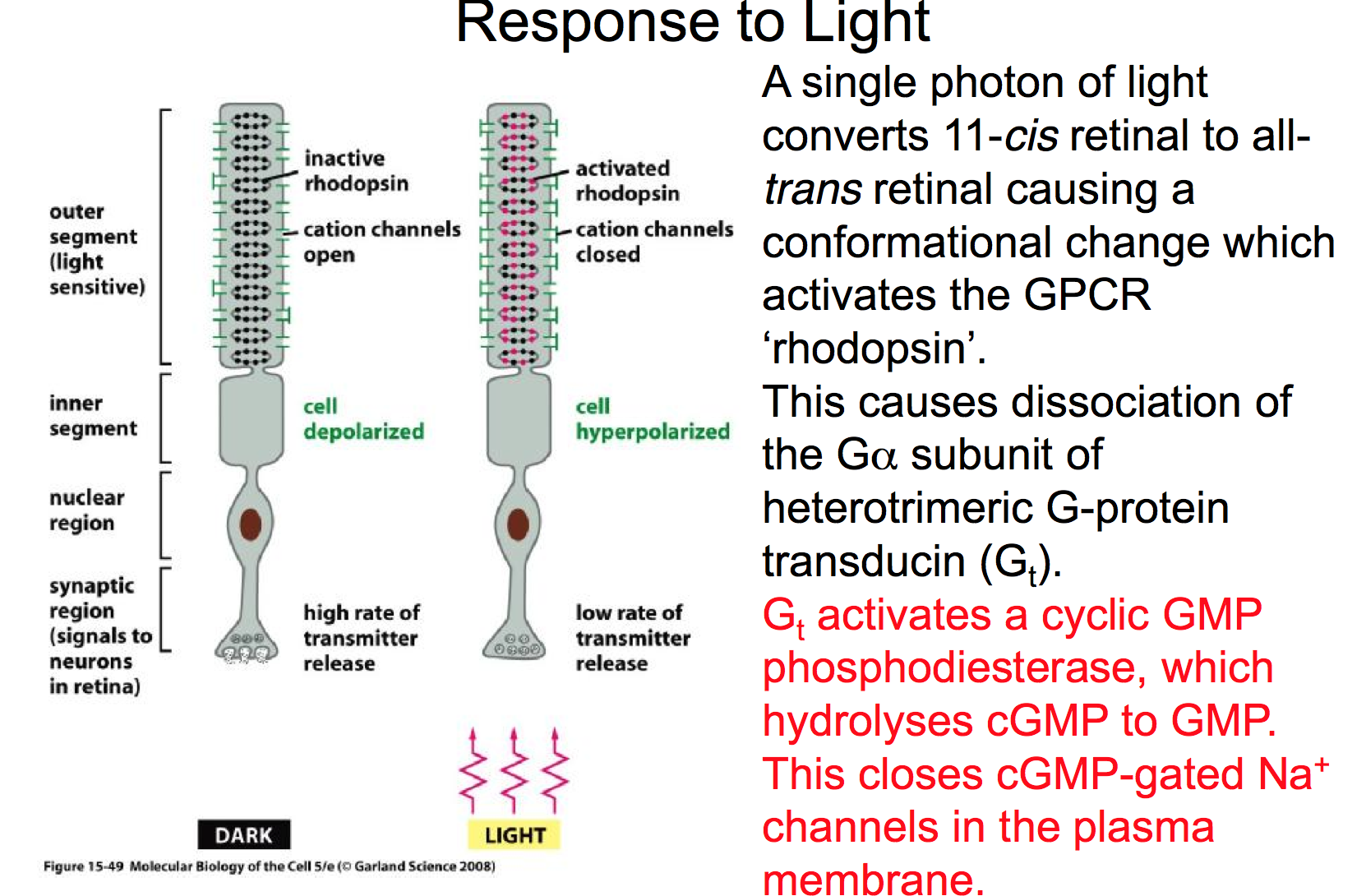
- cGMP binds and activates cyclic
GMP-dependent protein kinase
(PKG) or ion channels
- cGMP binds and activates cyclic
GMP-dependent protein kinase
(PKG) or ion channels
- Signal molecules
- Natriuretic peptides (NP's)
- Regulate salt and water balance and dilate blood vessels
- E.g.
- Atrial natriuretic peptide (ANP)
- Brain natriuretic peptide (BNP)
- Atrial natriuretic peptide (ANP)
- Involved in diseases such as hypertension
- Regulate salt and water balance and dilate blood vessels
- Natriuretic peptides (NP's)
- Single pass
transmembrane protein
with extracellular ligand
binding site
Media attachments
Want to create your own Mind Maps for free with GoConqr? Learn more.