
Mind map
Transpiration
Map content
Transpiration
The meaning of 'transpiration' in botanical terms is the passage of water through a plant from the roots through the vascular system to the atmosphere
In a plant, glucose and water travels through miniature tubes throughout the plant.
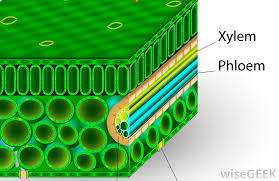
- The tube that carries the food is called the Phloem.
- The tube that carries the water is called the Xylem
- Both the Xylem and the Phloem are contained in one big tube called the Vascular Bundle
As water is getting transported around the plant through the xylem it will eventually reach the leaves
- When it does some water will be used in the process of photosynthesis by the chloroplasts
- However, a percentage of the water will be lost as it escapes through the stomata.
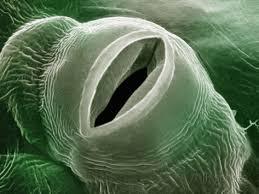
- The stomata is a hole bordered by guard cells that allows gas exchange. There are hundreds of these on a single leaf.
- The stomata opens and closes allowing carbon dioxide to come in and oxygen to come out.
- When the stomata does open the water can escape into the atmosphere and evaporate.
- The stomata is visible as pores on the leaf.
- Stomata
- The stomata opens and closes allowing carbon dioxide to come in and oxygen to come out.
- The stomata is a hole bordered by guard cells that allows gas exchange. There are hundreds of these on a single leaf.
- However, a percentage of the water will be lost as it escapes through the stomata.
- When it does some water will be used in the process of photosynthesis by the chloroplasts
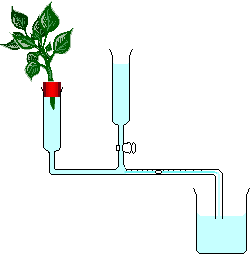
Transpiration in a plant can be measured by a potometer
- Potometer
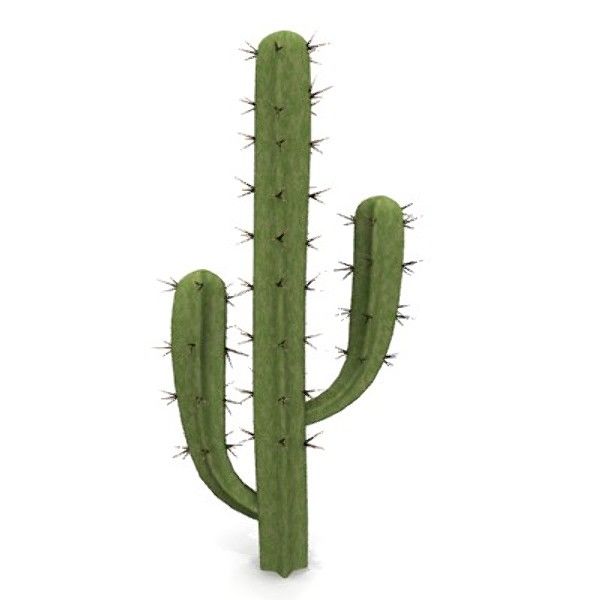
Plants in the desert, for example a cactus get very little water so they cannot afford to lose any through transpiration.
- The way they avoid this is that through a process of evolution, the leaves have curled up tightly over millions of years until the leaves have eventually become spikes.
- What this prevents is any water vapour getting lost; as because the leaves have curled so much there is no place for the water vapour to escape and so it stays in the leaf ready to be used for photosynthesis.
- Cactus
- What this prevents is any water vapour getting lost; as because the leaves have curled so much there is no place for the water vapour to escape and so it stays in the leaf ready to be used for photosynthesis.
- The way they avoid this is that through a process of evolution, the leaves have curled up tightly over millions of years until the leaves have eventually become spikes.
Images and files in the map
Information
- Description
- Mind Map on Transpiration, created by Arya Toleti on 27/09/2014.
- Created by
- Arya Toleti
- Views
- 63
- Rating