
4253562


Bonding and
Structure
- Ionic
- An Ionic compound is formed between METALS and NON-METALS
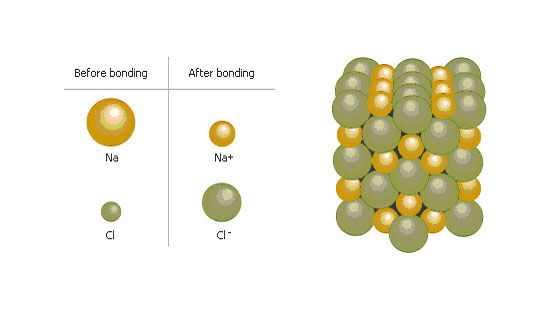
- An Ionic compound consists of a giant structure of ions arranged in a LATTICE.
- In a GIANT IONIC LATTICE, the OPPOSITELY CHARGED METAL and NON-METAL IONS are held together by STRONG ELECTROSTATIC FORCES OF ATTRACTION.
- Besides the elements in Groups 1 and 7, other elements that can form ionic compounds include those in Groups 2 and 6
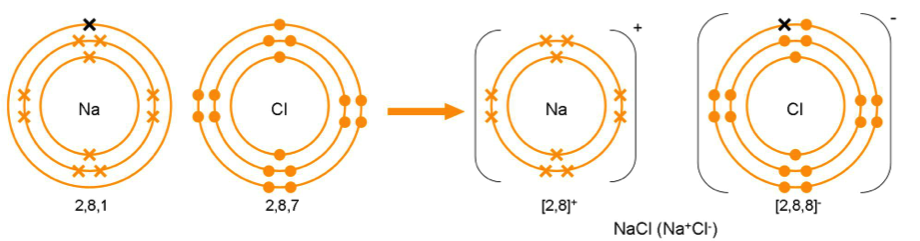
- DOT AND CROSS DIAGRAMS can represent the atoms and ions involved in IONIC BONDING.
- Charges in Dot and Cross Diagrams have to cancel each other.
- This is because the charges on the ions in an ionic compound always cancel each other out.
- This is because the charges on the ions in an ionic compound always cancel each other out.
- We have to draw all the shells in Ionic Bonding.
- Charges in Dot and Cross Diagrams have to cancel each other.
- The formula of an ionic compound shows the ratio of ions present in the compound.
- An ion is an atom with a charge,
- An Ionic compound is formed between METALS and NON-METALS
- Covalent
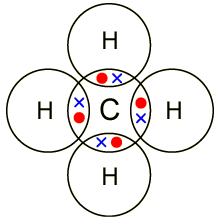
- When NON-METALS react together, their atoms SHARE PAIRS of ELECTRONS. This forms molecules.
- The atoms in the molecules are then held together by the shared pairs of electrons. These are Covalent bonds.
- There are weak forces between the molecules (INTERMOLECULAR FORCES)
- When a covalent substance melts or boils, the INTERMOLECULAR forces have to be overcome, NOT the Covalent Bonds.
- When a covalent substance melts or boils, the INTERMOLECULAR forces have to be overcome, NOT the Covalent Bonds.
- The atoms in the molecules are then held together by the shared pairs of electrons. These are Covalent bonds.
- Some covalently bonded substances have giant structures where huge numbers of atoms are held together by a network of covalent bonds.
- These are sometimes called macromolecules
- Examples include Diamond , Graphite and Silicon Dioxide
- These are sometimes called macromolecules
- When NON-METALS react together, their atoms SHARE PAIRS of ELECTRONS. This forms molecules.
- Metallic
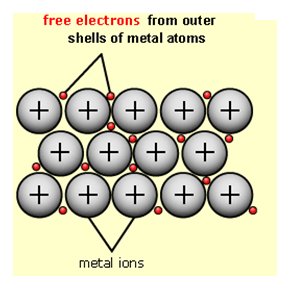
- Atoms in metals are tightly packed together which results in LOSS OF OUTERMOST ELECTRONS.
- This results in the metals being changed into metallic IONS which are then surrounded by a sea of DELOCALISED ELECTRONS
- This results in STRONG ELECTROSTATIC FORCES OF ATTRACTION between the ELECTRONS and IONS which are called METTALIC BONDS
- This results in STRONG ELECTROSTATIC FORCES OF ATTRACTION between the ELECTRONS and IONS which are called METTALIC BONDS
- Along a period, electrons increase in outer shells so they are lost more easily
- Down a group on the periodic table, Electrons are lost more easily due to an increase in distance from the nucleus.
- This results in the metals being changed into metallic IONS which are then surrounded by a sea of DELOCALISED ELECTRONS
- Metallic Bonding can exist in any Metallic element which can be in Groups 1 &3 as well as the Transition Metals
- Atoms in metals are tightly packed together which results in LOSS OF OUTERMOST ELECTRONS.
Media attachments
Want to create your own Mind Maps for free with GoConqr? Learn more.