
1435730
Beschreibung

Mindmap von Alex Manktelow, aktualisiert more than 1 year ago
|
|
Erstellt von Alex Manktelow
vor mehr als 11 Jahre
|
|
Atomic Structure:
Ionisation Energy
- Definition of
ionisation energy
- The minimum amount of energy
needed to remove 1g of electron
from 1 mol of gaseous atom to
form 1 mol of gaseous ion
- The minimum amount of energy
needed to remove 1g of electron
from 1 mol of gaseous atom to
form 1 mol of gaseous ion
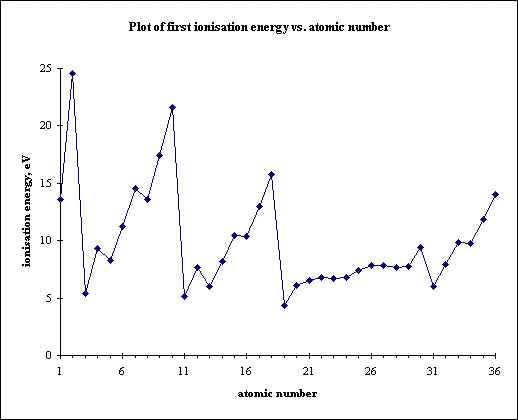
- Trend of ionisation energy
- down the group
- I.E. decreases
- Shielding effect
- nuclear attraction decreases
- size of atom increases
- Shielding effect
- I.E. decreases
- across the group
- I.E. increases
- # of protons increases
- nuclear attraction increases
- nuclear charge increases
- electron energy level will
be held tightly together
- # of protons increases
- I.E. increases
- down the group
- I.E. between shells
- as the electrons get closer to
the nucleus, I.E. increases
- log of ionisaion energy:
- log of ionisaion energy:
- as the electrons get closer to
the nucleus, I.E. increases
- Factors affecting I.E.
- atomic radius
- Smaller the atomic radius, the
higher is the atomic energy
- Smaller the atomic radius, the
higher is the atomic energy
- Nuclear charge
- the higher the positive charge of the nuceus,
stronger is it's attraction for the electrons
- the higher the positive charge of the nuceus,
stronger is it's attraction for the electrons
- Orbital penetration
- It's easier to remove electrons from p orbitals than
from s orbitals, because the s orbitals penetrate
towards the nucleus more closely than the p orbitals
- It's easier to remove electrons from p orbitals than
from s orbitals, because the s orbitals penetrate
towards the nucleus more closely than the p orbitals
- Electron pairing
- paired electrons are easier to remove than
unpaired ones because repulsion between
electrons in the same orbital is higher than
repulsion between electrons in different orbitals
- paired electrons are easier to remove than
unpaired ones because repulsion between
electrons in the same orbital is higher than
repulsion between electrons in different orbitals
- Shielding or screening
effect of the inner orbitals
- inner electron orbitals effectively shield
the outermost electrons from the nucleus
- inner electron orbitals effectively shield
the outermost electrons from the nucleus
- atomic radius
Medienanhänge
Möchten Sie kostenlos Ihre eigenen Mindmaps mit GoConqr erstellen? Mehr erfahren.