
Quiz
AQA AS Biology Questions
This quiz has question types that open in the usual player.
Questions in this quiz (40)
1During the Benedict's test for [blank_start]reducing[blank_end] sugars, copper(II) [blank_start]sulphate[blank_end] goes to copper(I) [blank_start]oxide[blank_end] and forms a [blank_start]red[blank_end] precipitate.
- Areducing
- Bsulphate
- Coxide
- Dred
2Maltose is formed from [blank_start]2[blank_end] [blank_start]alpha[blank_end] glucose
- A2
- B3
- C4
- Dalpha
- Ebeta
3Sucrose is made from:
- AGlucose + Glucose
- BGlucose + Fructose
- CGlucose + Galactose
4Glycogen is an [blank_start]energy[blank_end] source for [blank_start]animals[blank_end]. [blank_start]Starch[blank_end] is an energy source of plants. [blank_start]Celluose[blank_end] is a structural molecule for plants.
- Aanimals
- Benergy
- CStarch
- DCelluose
- Ewater
- Fplants
- Gbacteria
5Starch has [blank_start]unbranched[blank_end] chains and has a [blank_start]helical[blank_end] structure which means it is compact. You test for starch with the [blank_start]iodine test[blank_end] which uses [blank_start]potassium iodide[blank_end] solution. A positive result is [blank_start]blue-black[blank_end].
- Aunbranched
- Bbranched
- Chelical
- Dlinear
- Eiodine test
- Femulsion test
- Gbenedict's test
- Hpotassium iodide
- Iethanol
- Jblue-black
- Kred
- Lcloudy precipitate
6Which is not a function of lipids:
- AWaterproofing
- BInsulating
- CStructural support
- DProtection
7Collagen is a globular protein.
- ATrue
- BFalse
8Water molecules are polar.
- ATrue
- BFalse
9Label this diagram of ATP
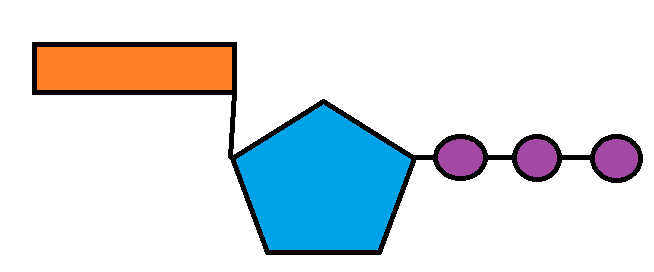
- AAdenoside
- BThymine
- CRibose
- DDyoxyribose
- EPhosphate
- FCalcium
- GHydrogen
10What type of enzyme inhibition is this?
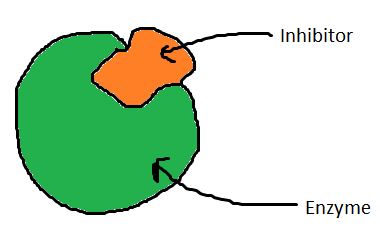
- ACompetitive
11What type of enzyme inhibition is this?
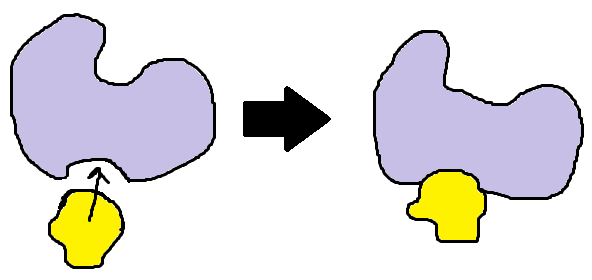
- ANon-competitive
12In DNA, the [blank_start]purine[blank_end] bases are adenine and guanine, and the [blank_start]pyrimidine[blank_end] bases are thymine and cytosine.
- Apurine
- Bpyrimidine
13DNA replicates conservatively.
- ATrue
- BFalse
14Label this diagram of a DNA nucleotide.
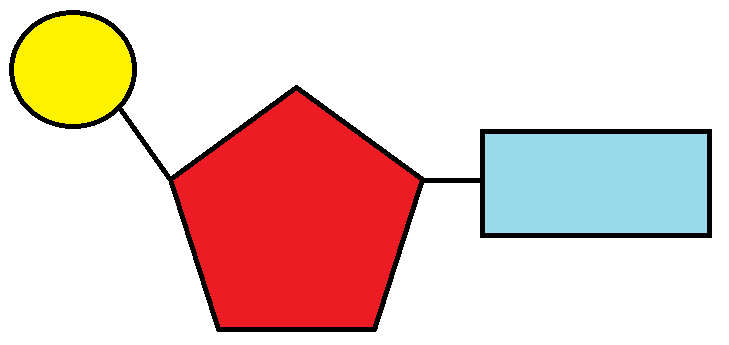
- APhosphate
- BDeoxyribose Sugar
- CBase
- DPhosphate
- EDeoxyribose sugar
- FBase
- GPhosphate
- HDeoxyribose sugar
- IBase
15Which stage of mitosis is this?
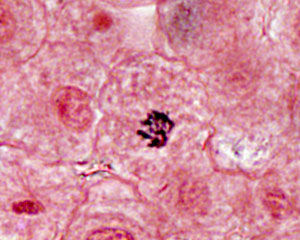
- AProphase
16Which stage of mitosis is this?
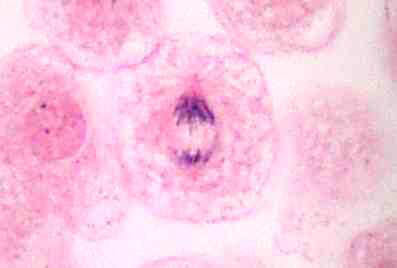
- AAnaphase
17Label these organelles
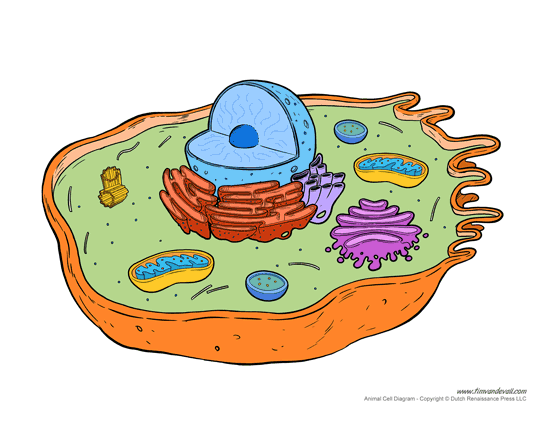
- AMitochondria
- BNucleolus
- CLysosome
- DRough endoplasmic reticulum
- ESmooth endoplasmic reticulum
- FGolgi apparatus
- GCytoplasm
- HCell Surface Membrane
18Active transport is the movement of molecules or ions in or out of a cell from a region on [blank_start]lower[blank_end] concentration to a region of [blank_start]higher[blank_end] concentration using ATP and [blank_start]carrier[blank_end] proteins.
- Alower
- Bhigher
- Ccarrier
19Which is not a physical barrier to pathogens
- ASkin
- BMucous membranes
- CWhite blood cells
- DGut flora
20Phagocytes are specific.
- ATrue
- BFalse
21The [blank_start]Cellular[blank_end] Immune Response:
1) Phagocyte becomes an [blank_start]antigen presenting cell[blank_end] after it has destroyed the pathogen
2) The antigen presenting cell releases cytokines and the helper [blank_start]T[blank_end] cell is activated
3) The helper T cell stimulates the production of [blank_start]cytotoxic[blank_end] T cells
4) Perforin is produced which cause [blank_start]lysis[blank_end] of the cells infected with pathogens
5) Exposure to the specific antigen causes [blank_start]memory[blank_end] cells to be produced- Alysis
- Bmemory
- Cantigen presenting cell
- DCellular
- Ecytotoxic
- FT
- GB
22[blank_start]Humoral[blank_end] Immune Response:
1) The phagocyte becomes an [blank_start]antigen presenting cell[blank_end] after it destroys the pathogen
2) The antigen presenting cell stimulates the helper T cell by releasing [blank_start]cytokines[blank_end]
3) The helper T cell stimulates the differentiation of [blank_start]B lymphocytes[blank_end]
4) Some B lymphocytes become [blank_start]plasma[blank_end] cells which release large quantities of specific [blank_start]antibodies[blank_end]
5) Some B lymphoctes become [blank_start]memory[blank_end] cells- AHumoral
- Bantigen presenting cell
- Ccytokines
- DB lymphocytes
- Eplasma
- Fantibodies
- Gmemory
23Select the statements that are true about Passive immunity
- ANo memory cells formed
- BIntroduction of antibodies from an outside source
- CGeneraly long lasting
- DNo direct contact with the pathogen required
- EBodies own immune system is stimulated
24Select the statements that are true about Active immunity.
- ABodies own immune system is stimulated to produce antibodies
- BThere are 2 types - natural and artificial
- CAntibodies come from an outside source
- DLong lasting immunity
- EShort lasting immunity
25In fish, the blood and water flow in [blank_start]opposite[blank_end] directions. This is called [blank_start]countercurrent[blank_end] flow. This means a diffusion gradient is maintained all the way along the gill lamellae so almost all the oxygen diffuses out of the [blank_start]water[blank_end] into the [blank_start]blood[blank_end].
- Aopposite
- Bcountercurrent
- Cwater
- Dblood
26Label this diagram of the lungs
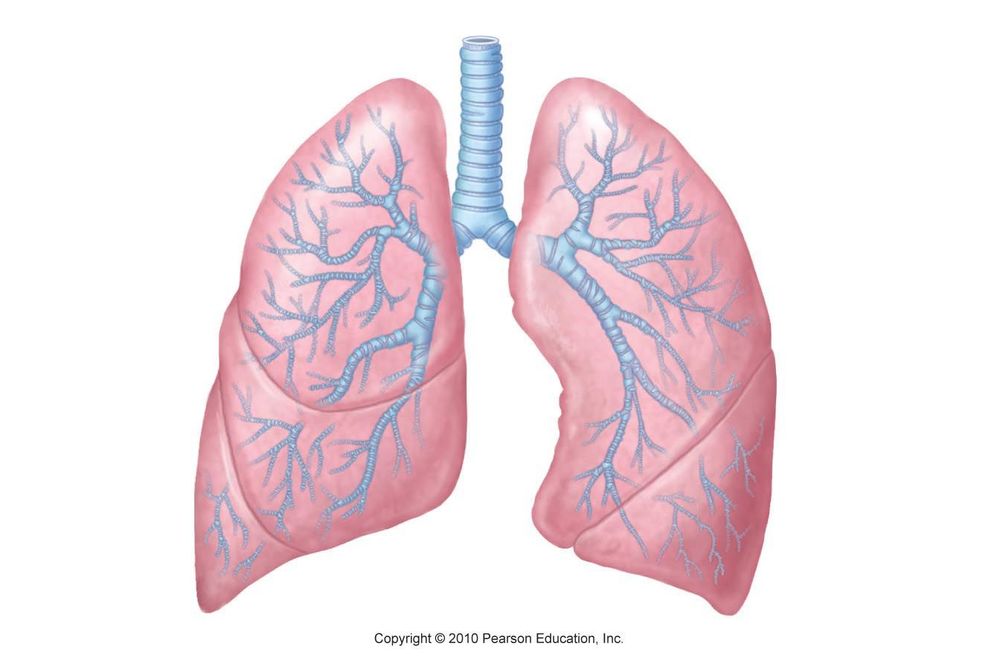
- ATrachea
- BC-shaped cartilidge
- CBronchi
- DBronchioles
- EAlveoli
27Which are not adaptations of the alveoli:
- AThin walls
- BSmall surface area
- CRed blood cells are slowed as they pass through pulmonary capillary
- DFluctuating blood supply
28A high affinity for oxygen in haemoglobin means that the haemoglobin takes up O2 less easily at lower partial pressures of O2.
- ATrue
- BFalse
29Label this diagram of the heart.
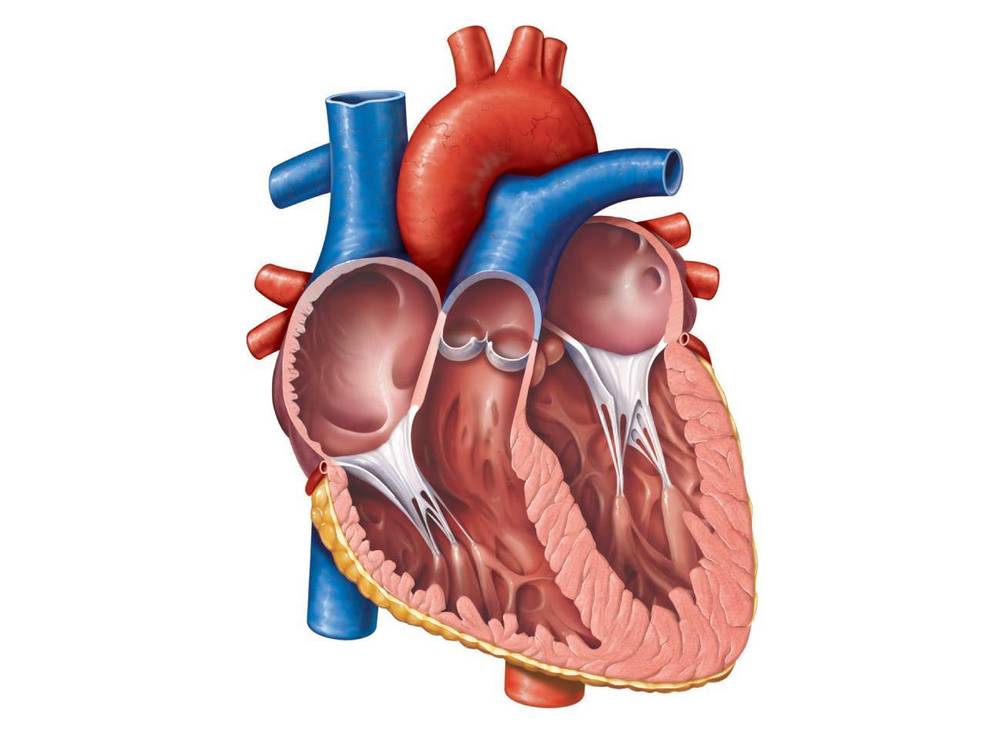
- AAorta
- BVena Cava
- CPulmonary artery
- DPulmonary vein
- ELEFT
- FRIGHT
- GLeft atrium
- HRight atrium
- IRight ventricle
- JLeft ventricle
- KPulmonary valve
- LAtrioventricular valve
- MAortic valve
- NApex
- OCoronary artery
30Arteries have a [blank_start]thick[blank_end] muscular layer which can be constricted and dilated to control the volume of blood passing through them. They have a thick [blank_start]elastic[blank_end] layer which helps to maintain blood pressure by stretching and [blank_start]recoiling[blank_end]. The overall thickness of the artery help to prevent [blank_start]bursting[blank_end]. There are no [blank_start]valves[blank_end].
- Athick
- Bthin
- Celastic
- Drecoiling
- Ebursting
- Fvalves
31Veins have a [blank_start]thin[blank_end] muscular layer which can [blank_start]constrict[blank_end] to control the flow of blood. They have a thin elastic layer. They have very thin walls since the pressure is [blank_start]lower[blank_end] and means they can be flattened easily to aid the flow of blood. There are valves throughout which ensure the blood doesn't flow [blank_start]backwards[blank_end].
- Athin
- Bthick
- Cconstrict
- Dlower
- Ehigher
- Fbackwards
- Gforwards
32Splicing removes the introns from pre-mRNA.
- ATrue
- BFalse
33The region of tRNA that is complementary to a codon on mRNA is called an [blank_start]anti-codon[blank_end].
- Aanti-codon
34During meiosis, the chromosome number [blank_start]halves[blank_end] and [blank_start]4[blank_end] haploid cells are are genetically [blank_start]different[blank_end] are produced.
- Ahalves
- B4
- Cdifferent
35Crossing over occurs during meiosis [blank_start]1[blank_end]
- A1
36Mutagenic agents increase the [blank_start]rate[blank_end] of mutations.
- Arate
37What is the amino acid sequence for this sequence of mRNA
UUC AGC GCG UAA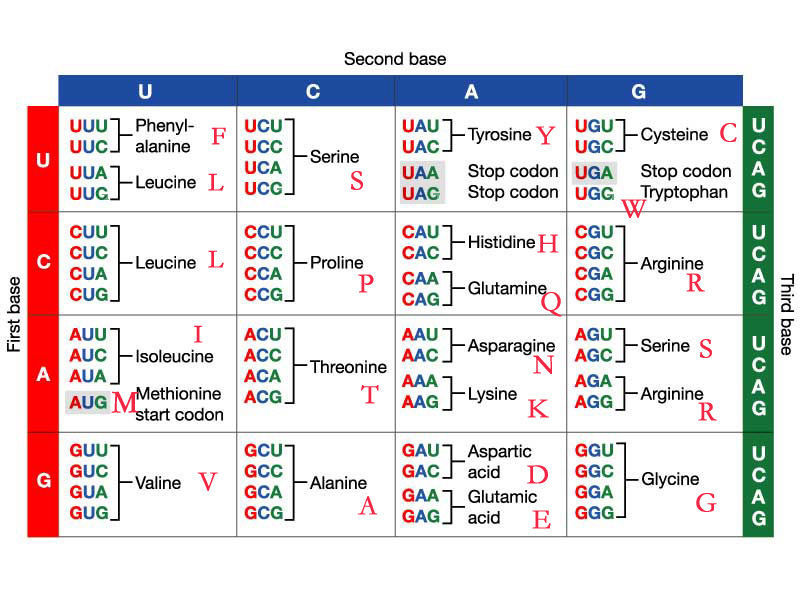
- AAlanine, Serine, Alanine, Stop codon
- BAlanine, Arginine, Alanine, Stop codon
- CLeucine, Arginine, Alanine, Tyrosine
38A genetic bottleneck will [blank_start]reduce[blank_end] genetic diversity. It is an event which causes a big [blank_start]reduction[blank_end] in the population so will reduce the number of [blank_start]alleles[blank_end]. The survivors will reprodue and the larger population is created from [blank_start]a few[blank_end] indiviuals.
- Areduce
- Bincrease
- Creduction
- Drise
- Ealleles
- Fa few
- Gmany
39Directional selection favours individuals with characteristics at the [blank_start]extremes[blank_end] of the population whereas stabilising selection favours individuals in the [blank_start]middle[blank_end] of the range when the environment [blank_start]isn't[blank_end] changing much.
- Aextremes
- Bmiddle
- Cisn't
- Dis
40Complete the table for the species: Ceyx azureus
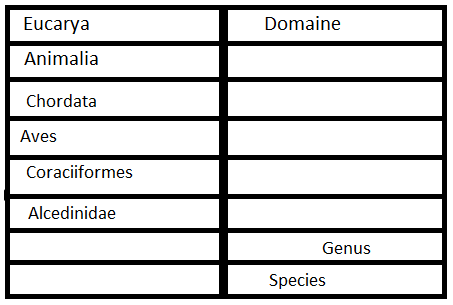
- AKingdom
- BPhylum
- CClass
- DOrder
- EFamily
- FCeyx
- Gazureus
Information
- Description
- A-Level Biology Quiz on AQA AS Biology Questions, created by Alex Lyes on 10/06/2017.
- Author
- Alex Lyes
- Language
- English
- Views
- 547
- History
- Created on 10 Jun 2017 · updated on 11 Jun 2017
- Tags
- Rating
- 4.0 out of 5 · 1 rating Rate this quiz