
38209105
Description

Flashcards by Sadie Blum, updated more than 1 year ago

|
Created by Sadie Blum
about 3 years ago
|
|
| Question | Answer |
| Physical Properties of Soil | color, texture, structure |
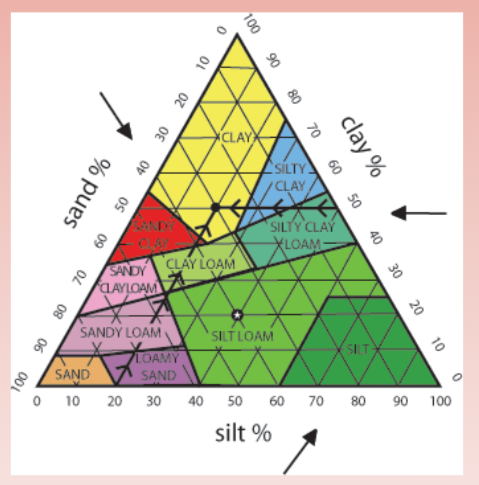
| Why is soil texture important? | Determines aeration, soil pore space, soil drainage. Affects soil workability. Influences nutrient holding capacity |
| What causes the formation of soil particles? | Weathering |
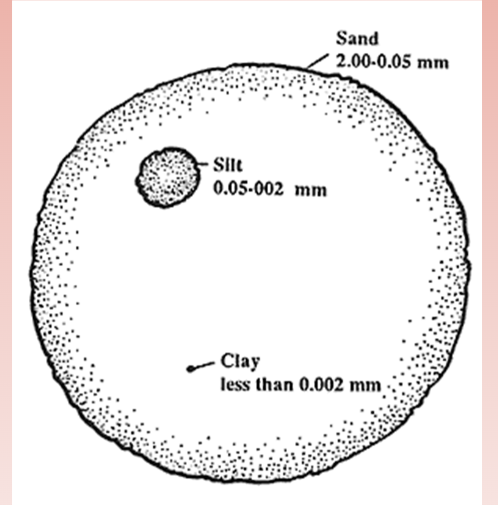
| Regarding soil size determination, give the size range of the following: sand, clay, silt. | Sand~2.00-0.05mm ; Silt~0.05-0.002m ; Clay~ less than 0.002mm |
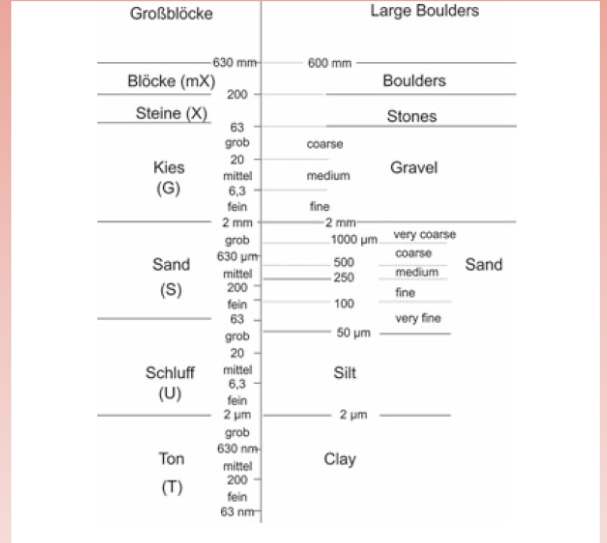
| European and American nomenclature differs…How? What is a similarity? | European uses logrithmic scale, but both consider clay to be ≤2um |
| Describe the chart: what is the difference between the fractions of the left to the right side? | Classification of particle size fractions. German is on the left side and American nomenclature is on the right. |
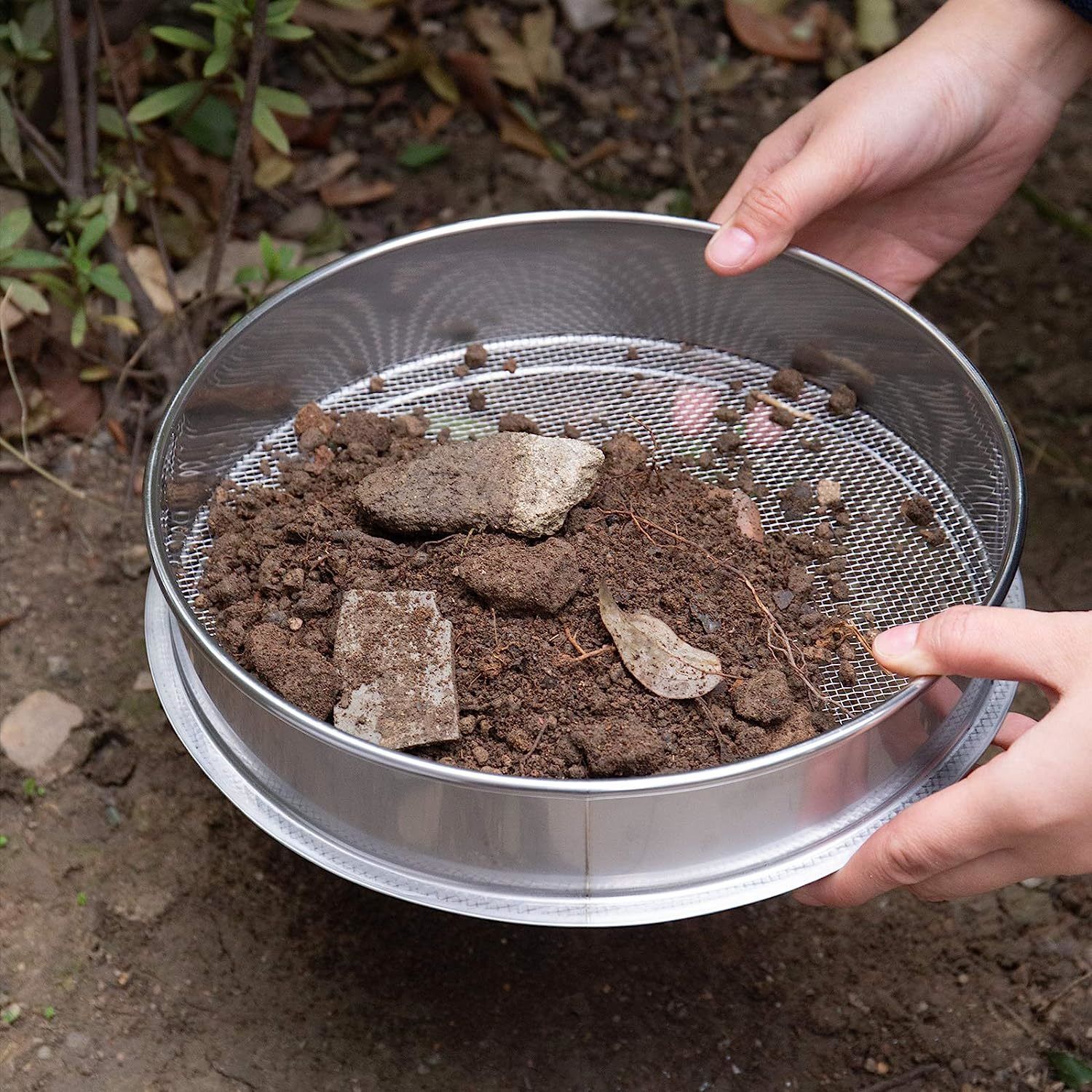
| What are the two ways to determine soil texture? | 1. sieves 2. sedimentation |
| What is a sieve? | often used to separate large particles (gravelly soils) |
| O.M. can be removed by... | H2O2 |
| Soluble salts may be removed by ____ (they inhibit dispersion) | water |
| Carbonates may be removed by... | HCl |
| ____ _____ is used to break up aggregates (sodium hexametaphosphate) | dispersing agents |
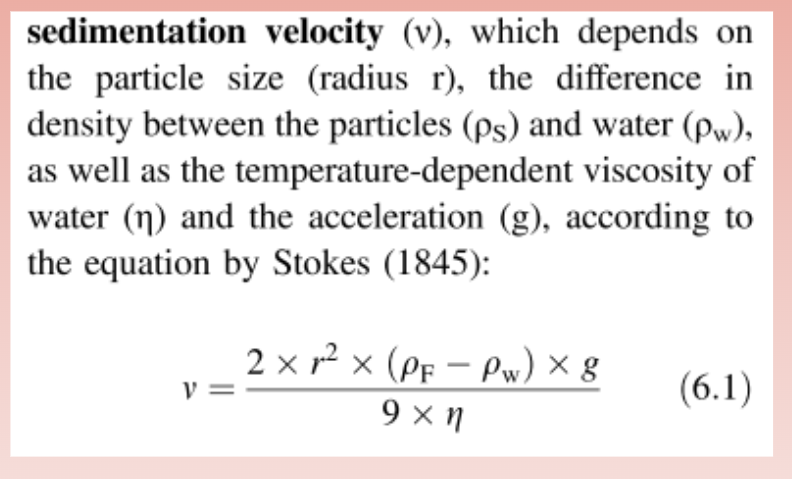
| Who made up Stokes Law? | George Gabriel Stokes |
| In the analysis of sedimentation, Stokes Law is used. What is stokes law? | |
| What is the finger test? | Determining soil texture by feel |
| As particles become smaller, the deviation from perfect sphere becomes more critical. deviation from spherical shape increases ..... | surface to volume ratio |
| Access to surfaces on clay particles may be impeded by: | *organic matter *films of weathered minerals *formation of micro-aggregates |
| What is important to note about packing of particles? | particles cannot pack 110% even with extremely fine particle size |
| What is pore space? | volume not occupied by particles |
| What is a matrix? | particles + pore space |
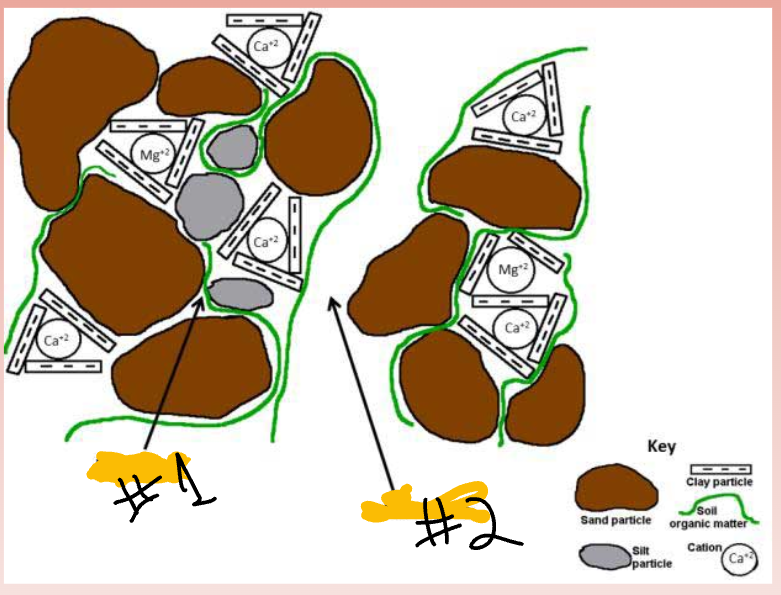
| What is 1 pointing to? | Microphage |
| What is 2 pointing at? | Macrophage |
| what is a contact point? | where particles touch |
| the more contact points, the ____ the soil strength. | higher |
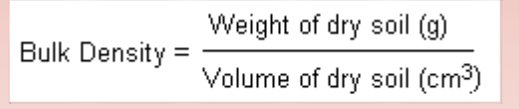
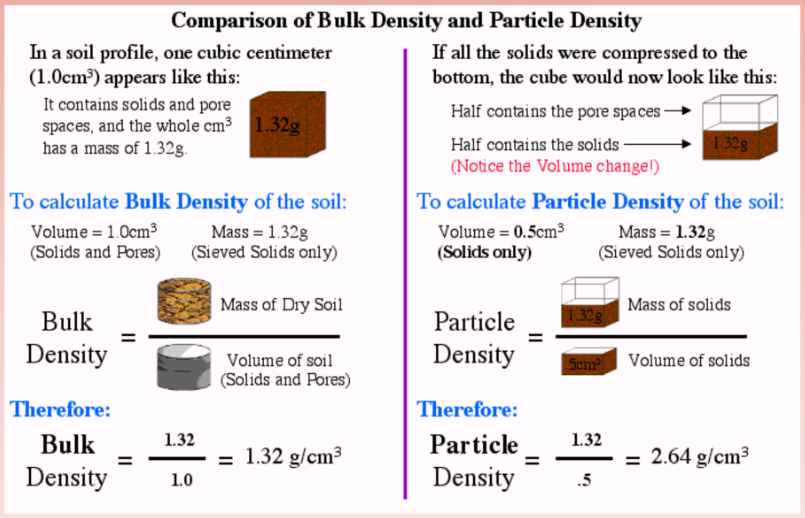
| What is bulk density? | the mass per unit bulk volume of soil that has been dried to a constant weight at 105 °C |
| a soil with a mass of 50 grams after being oven-dried has a volume of 30 cm3 What is bulk density? | 50 g/30 cm3 = 1.67 g/ cm3 |
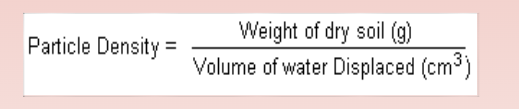
| What is particle density? | the mass per unit volume of soil particles |
| What are some differences between bulk density and particle density? | |
| What is soil porosity? | percentage of soil that is pore space or voids |
| Average soil has porosity of | ~50% |
| Pores are filled with.... | air or water (depending on moisture content) |
| What is soil permeability? | the ease with which air, water, or plant roots penetrate or pass through soil |
| Clayey soils can have ____ total porosity than sand and still be ____ permeable than sand since the pores are small. | greater; less |
| Ideally, ____ particles should have highest density | clay |
| Most soils tend to increase in surface with time. What does this result? | changes in pore space, soil strength, etc. |
| How does human activity affect the soil? | usually compress soils, reducing surface area of particles and reducing pore space |
| Water typically adheres to clay particles due to | high polarity |
| amount of water adhering will impact _____/____ of soil matrix | swelling/ shrinkage |
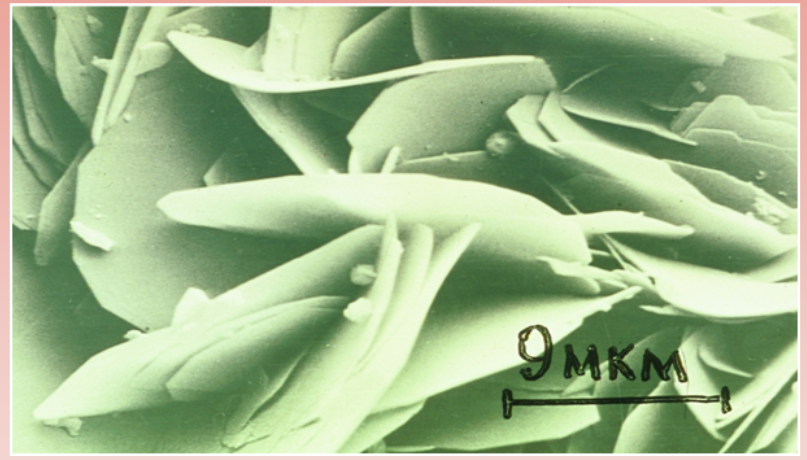
| Flocculated vs. dispersed particles | dispersed=particles unattached to one another flocculated= particles clumped together |
| Why is flocculation important? | water moves mostly in large pores between aggregates. Also, plant roots grow mainly between aggregates. |
| Most clay particles have a ____ electrical charge. Like charges repel, so clay particles repel one another. | negative |
| _____ can make clay particles stick together (flocculate). | Cations |
| What is an example of a poor flocculator? | sodium |
| What are examples of good flocculators? | Calcium and Magnesium |
| Explain Flocculating Power of Cations | Cations in water attract water molecules because of their charge, and become hydrated. Cations with single charge and large hydrated radii are poorest flocculators. |
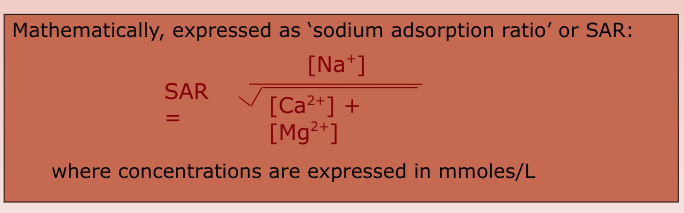
| What does SAR stand for? | Sodium Adsorption Ratio |
| explain electrical conductivity | Ions in solution conduct electricity, so total amount of soluble soil ions is estimated by measuring electrical conductivity (EC) of soil water extract. |
| Soil particles will flocculate if concentrations of (Ca2+ + Mg2+) are ____ relative to concentration of Na+ | increased |
| _____ _______ (dispersion and flocculation) depends on the balance (SAR) between (Ca2+ and Mg2+) and Na+ as well as the amount of soluble salts (EC) in the soil. | aggregate stability |
| Soil particles will disperse if concentrations of (Ca2+ + Mg2+) are _____ relative to concentration of Na+ | decreased |

Want to create your own Flashcards for free with GoConqr? Learn more.