
Mind map
Case study: Somerset Levels, west of england
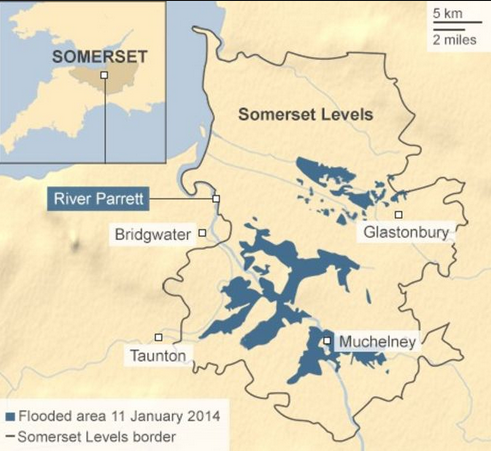
Map content
Case study: Somerset Levels, west of england
Where are the Somerset Levels?
- Located near Cornwall/ Deveon, in the south west of England
- It is near Bristol
- It is between quantock hills and Mendip hills
- The river parrette runs through it
- Some of the Somerset Levels is on the coast
- Somerset levels are in the east of somerset
- Some of the Somerset Levels is on the coast
- The river parrette runs through it
- It is between quantock hills and Mendip hills
- It is near Bristol
- Located near Cornwall/ Deveon, in the south west of England
Why is it such a unique landscpae?
- Covers an area of 650km
- It is a flat landscape, the heighest is 8km
- Historically it was drained for agricultural purposes
- Thousands of years ago it was it was covered by the sea
- The romans built agricutural saea defences
- In the 17th centuary the dutch created ditches to drain the land
- The area is vulnerable to bothe river and tidal flooding
- There is fertile farmland on the floodplain
- The area is vulnerable to bothe river and tidal flooding
- In the 17th centuary the dutch created ditches to drain the land
- The romans built agricutural saea defences
- Thousands of years ago it was it was covered by the sea
- Historically it was drained for agricultural purposes
- It is a flat landscape, the heighest is 8km
- Covers an area of 650km
What were the causes of the flood?
- Physical causes
- In January 2014 there was a total rainfall of 183.8mm of rainfall which was 200% higher than the average
- Prolonged rain, hurricane-force wind speeds& tidal surges caused widespread flooding
- It was a lowland area so was prone to flooding
- From mid-December 2013 to mid-Febuary 2014 there were 12 major storms, which ment the ground was saturated and could not absorbe anymore water so it flooded
- High tides and storm surges from the Bristol channel prevented water from getting into the sea
- Storms were caused by a powerful jet stream (narrow band of very strong wind currents that circle the globe svereal Km above earth) driving low-pressure into the system and storms across the atlantic
- The storms were the worst in the UK in 20 years and caused the river Parrett and tone to flood
- Storms were caused by a powerful jet stream (narrow band of very strong wind currents that circle the globe svereal Km above earth) driving low-pressure into the system and storms across the atlantic
- High tides and storm surges from the Bristol channel prevented water from getting into the sea
- From mid-December 2013 to mid-Febuary 2014 there were 12 major storms, which ment the ground was saturated and could not absorbe anymore water so it flooded
- It was a lowland area so was prone to flooding
- Prolonged rain, hurricane-force wind speeds& tidal surges caused widespread flooding
- In January 2014 there was a total rainfall of 183.8mm of rainfall which was 200% higher than the average
- Human causes
- Building were developed on floodplains, below sea level
- There was a change in farming practice- from grassland to maize, this means the land was less able to retain water, it ran over the surface rather than being absorbed
- The river was not dreged properly for 20 years (involves digging up weeds, mud and rubish from the river bed), that ment that the River Parette was blocked and could carry less water than it should be able to, a river should be dregged every 5 years but this costs £4 million
- People brlieve that if the river had been dregged the extent of the flood wouldn't have been as bad/
- Farmers warned the government about the need to dredge the river byt they didn't listen
- People brlieve that if the river had been dregged the extent of the flood wouldn't have been as bad/
- The river was not dreged properly for 20 years (involves digging up weeds, mud and rubish from the river bed), that ment that the River Parette was blocked and could carry less water than it should be able to, a river should be dregged every 5 years but this costs £4 million
- There was a change in farming practice- from grassland to maize, this means the land was less able to retain water, it ran over the surface rather than being absorbed
- Building were developed on floodplains, below sea level
- Physical causes
What were the effects of the flooding
- Social
- 600 homes affected
- Villages such as Muchelney were completely cut off
- Journey times were made longer as roads were inaccessible
- Villages such as Muchelney were completely cut off
- 600 homes affected
- Economic
- The finical cost to the Somerset economy was between £82 million and £147 million
- Businesses lost trade
- Mnay of the livestock had to be moved out of the area and sold
- Businesses lost trade
- The finical cost to the Somerset economy was between £82 million and £147 million
- Environmental
- 6900 hectares of agricultural land was underwater for a month
- Chemicals from farmlands and sweage were put into the water supply
- Natural England reported that the floods seemed to have little impact on the wildlife
- Chemicals from farmlands and sweage were put into the water supply
- 6900 hectares of agricultural land was underwater for a month
- Social
How did different stake holders respond to the flood in the short term and thre long term?
- Short term responses
- Giant pumps were brought from the Netherlands
- The royal marines were deployed to help people in cut off villages
- Environmental agency instslled 62 pumps (working 24 hours a day) to remove 1.5 million tones of water- they were borrowed from the Netherlands
- Police increased patrols
- Environmental agency instslled 62 pumps (working 24 hours a day) to remove 1.5 million tones of water- they were borrowed from the Netherlands
- The royal marines were deployed to help people in cut off villages
- Giant pumps were brought from the Netherlands
- Long term responses
- Remove silt and weeds from the river bed, which reduces run-off
- Repair the 50 defences across Somerset that were in need of repair (e.g.pumps, floodgates)
- Could farmers be paied to keep flood water on their land?
- National management: A 20 year flood plan was made which included: dredging the river, repairing damaged flood banks,making pumps permenant, building a tidal barrier (similar to the one on the Thanmes)
- Could farmers be paied to keep flood water on their land?
- Repair the 50 defences across Somerset that were in need of repair (e.g.pumps, floodgates)
- Remove silt and weeds from the river bed, which reduces run-off
- Short term responses
Should the Somerset Levels be allowed to return to a natural wet land?
- If it was to return to a natural wet land it would mean there wouldn't be a problem with flooding.
- Many MP's don't want this and invested a lot of money in defences as they have houses there
- If it was to return to a natural wet land it would mean there wouldn't be a problem with flooding.
Facts...
- Happened in Jnauary 2014
- 65 million cubed of flood water covered 65km
- The River Tone and Parrett flooded
- Muchelney was completely surronded by water
- The River Tone and Parrett flooded
- 65 million cubed of flood water covered 65km
- Happened in Jnauary 2014
Images and files in the map
Information
- Description
- - Geography (UK environmental challenges) Mind Map on Case study: Somerset Levels, west of england, created by Isobel Temple on 20/11/2017.
- Created by
- Isobel Temple
- Views
- 387
- Rating