
Description


|
Created by samyajahangir
almost 11 years ago
|
|
Page 1
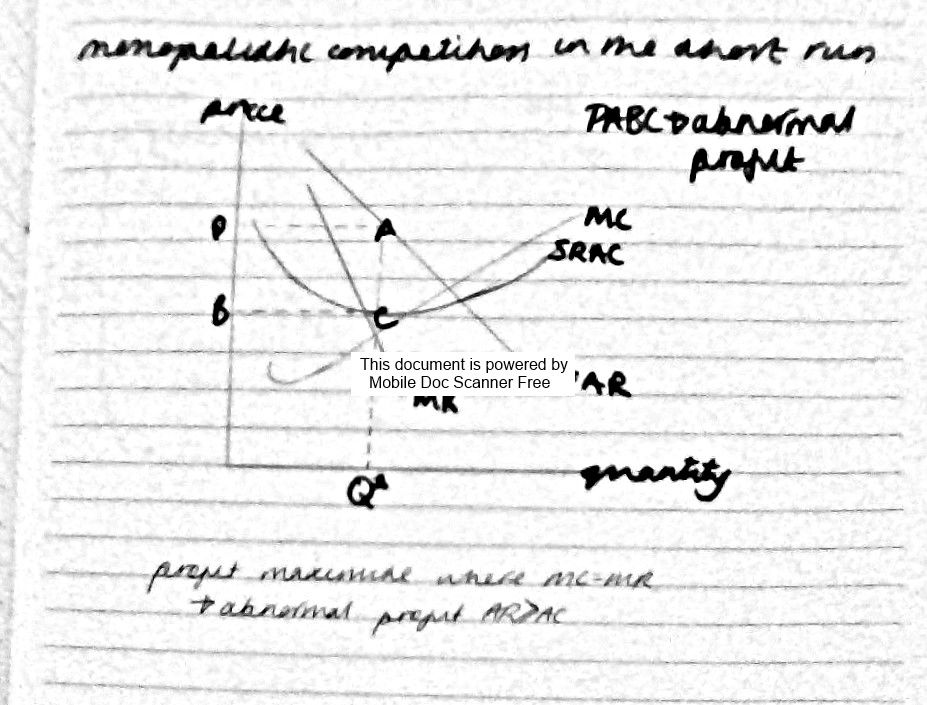
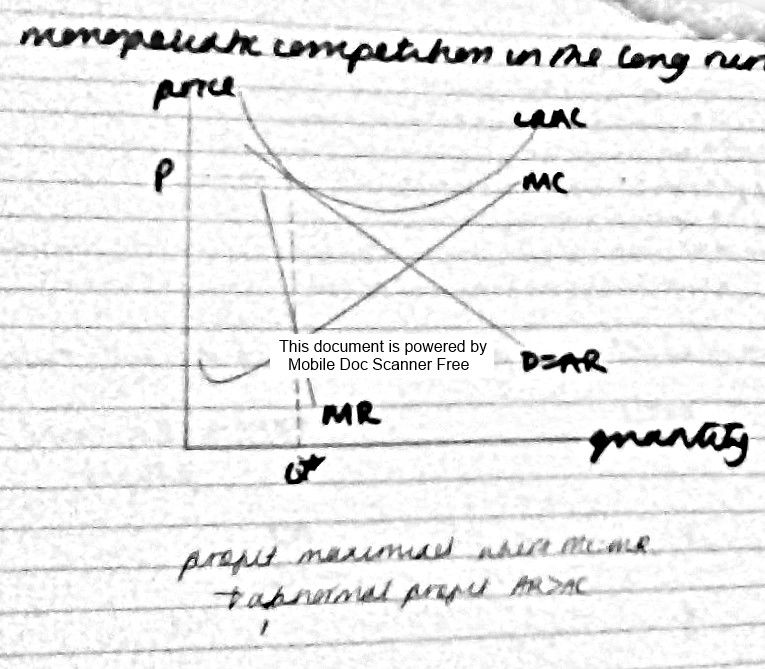
CHARACTERISTICS OF MONOPOLISTIC COMPETITION Large number of small firms The firms seek to maximise profits where MC=MR Firms possess some ability to set price Products are differentiated Abnormal profit only in the SR - LR (normal profit - AC=AR) Low barriers to entry and/or exit
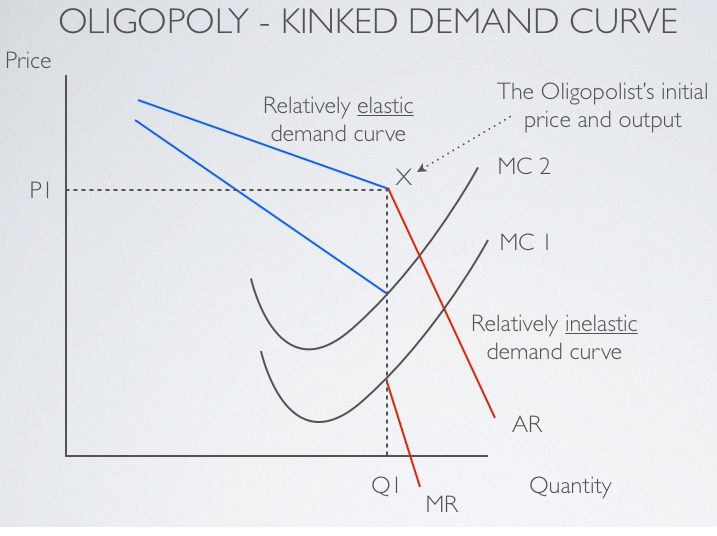
CHARACTERISTICS OF AN OLIGOPOLY Dominated by a small number of large firms (high concentration) - largest 4/6 firms may have 60%+ market share Significant barriers to entry and/or exit Firms may/may not be profit maximisers (MC=MR) and may seek to maximise sales (AC=AR), or to maximise sales revenue (MR=0) If abnormal profit is sought then its available in both the SR and the LR Evidence of price rigidity - shown by the kinked demand curve Potential for collusion - firms decide and agree to increase prices and restrict output (exert monopoly power). This is illegal - increases revenue Potential for price wars - damages firms - decreases revenue Existence of non price competition - due to price rigidity firms will differentiate their products/services to compete on a basis other than price Interdependency - mutual reliance
ALTERNATIVE OBJECTIVES OF FIRMS It would seem that all firms should operate at a level of output where MC=MR and profits are maximised but this doesn't always occur. There is a number of reasons for this:- In practise it may be difficult to identify this output. It is also likely to be very difficult to calculate their marginal cost and their marginal revenue. Instead the firms may simply work out the cost per unit and add on a profit margin in order to determine the selling price ST profit maximising may not be in the LT interest of the company Large abnormal profits may attract new entrants into the industry making existing firms vulnerable High profits may damage the relationship between the firm and its stakeholders such as consumers and the workforce Profit maximisation may not appeal to the management who may have different objectives High profits may trigger action by the firms rivals and it could become a target for takeover Because of these problems in maximising profit there are other objectives which firms might adopt which are more practical in nature. The main ones are:-Sales revenue maximisation - (where MR=0) Might be consistent with increasing/sustaining market share eg in a recession Higher revenues and market share can dissuade entrants to a market in the long run Higher sales encourages exploitation of economies of scale Sales maximisation - (AC=AR) Maximising sales by volume Might also be consistent with increasing/sustaining market share Increasing output beyond the point where AC>AR would result in a firm making a loss Satisficing About achieving a minimum acceptable level in term of both revenues and profit It is about satisfying stakeholders and making sufficient gains Managerial objectives These may conflict with objectives of other stakeholders Managers may act to maximise their own utility at the expense of others
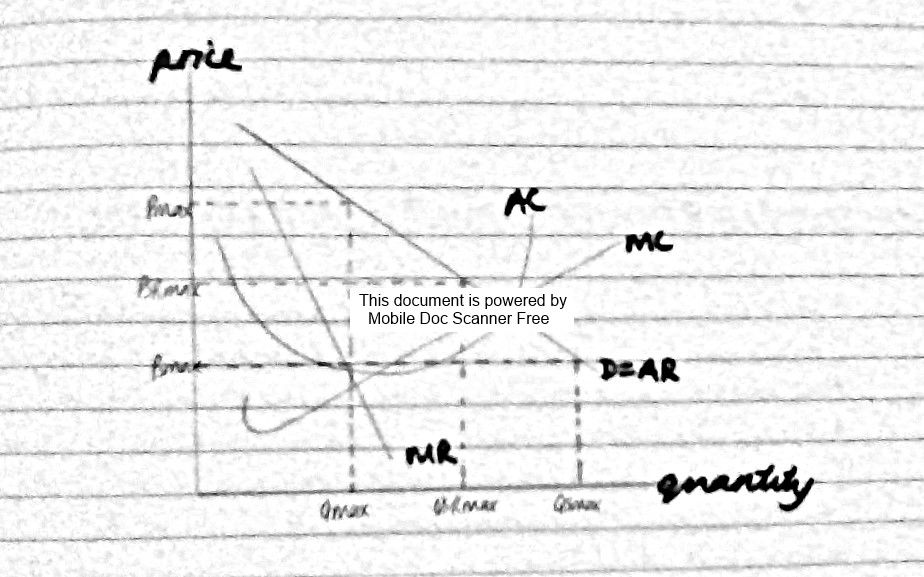
FIRMS OBJECTIVES: PROFIT MAXIMISATION When MR=MCThe output which gives the maximum distance between TR and TCThe objective assumes that the owners control the management of the business Also requires sufficient and accurate knowledge of cost and revenue conditions in the market so that the MR and MC can be found (Real world limitations + Hard to achieve)QUESTIONING THE AIM IF PROFIT MAXIMISATION Insufficient information on cost and demand Short term objectives eg survival, VS long term objectives eg profit maximisation Range of non-financial business objectives Responses to changing market decisions eg a recession Motivations of managers may differ from shareholders - want dividends based on profit THE DIVORCE BETWEEN OWNERSHIP AND CONTROL The majority of shareholders in a quoted company cant exercise day to day control over managers Managers have different motivations than owners There are some constraints on managerial behaviour as shareholders eventually expect to make returns on their investment Managers may want to maximise their own utility from being in charge of a business CONFLICTING OBJECTIVES?Employees High wages Good working conditions Job security Career progression Managers High salaries Company valuation Power Prestige/status Perks Shareholders Good dividends - ie income from capital Growth in share valuation - capital gain Different stakeholders in the company want different thingsHUGO SIMON - THE SATISFICING PRINCIPLE

In taking a decision no business can process all the factors affecting the marketing of a product in the hope of maximising profits - don't have perfect information Most businesses tried to make a decision that was "good enough" This theory is known as "bounded rationality"
Want to create your own Notes for free with GoConqr? Learn more.