
Description


|
Created by Riya Sehgal
over 8 years ago
|
|
Page 1
IGNEOUS ROCKS
FORMATIONWhen magma rises through the crust, it cools and solidifies. During the cooling process, crystallization takes place in magma/lava to form minerals. The aggregate of minerals forms igneous rocks.
CLASSIFICATIONIntrusive igneous rocks e.g Granite formed inside the crust slow cooling process large crystals coarse-grained Extrusive igneous rocks e.g Tuff formed at the earth's surface fast cooling process small crystals fine-grained
**Granite = well-jointed -> easily eroded****Tuff = made by volcanic ash**
SHAPING THE LANDFORM OF HONG KONGIgneous rock is the most important rock type in HKVolcanic (extrusive) rocks : more resistant-->form highest summits; rugged, angular topography (e.g Tai Mo Shan)Intrusive igneous rocks (mainly granite) : less resistant--> form lower hills; give rise to a lower, more rounded topography with weathering profile and tors (e.g Castle Peak)
GRANITE dominant rock in HK well-jointed less resistant to erosion deeply weathered soil profile
EXAMPLES1. Intrusive igneous rocks a. Castle Peak
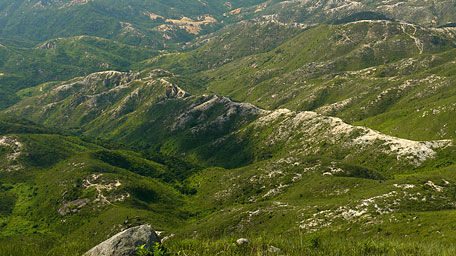
badland has seriously eroded areas long process from surface runoff on bare ground because of granite : many joints -> easily eroded
2. Extrusive igneous rocksa. Tai Mo Shan
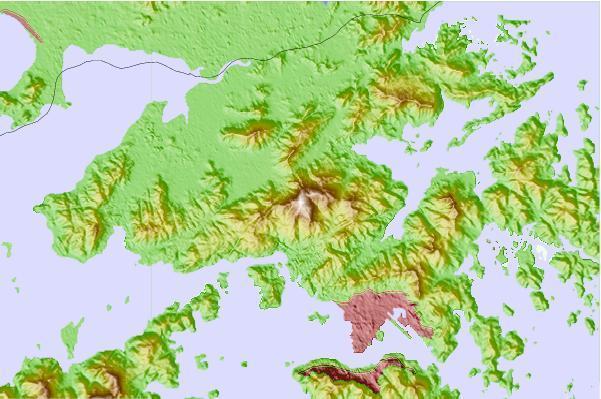
highest peak in HK (957m high) made of tuff: hard, resistant to weathering -> allows mountain to be strong,stable and maintain its height.
b. High Island Reservoir
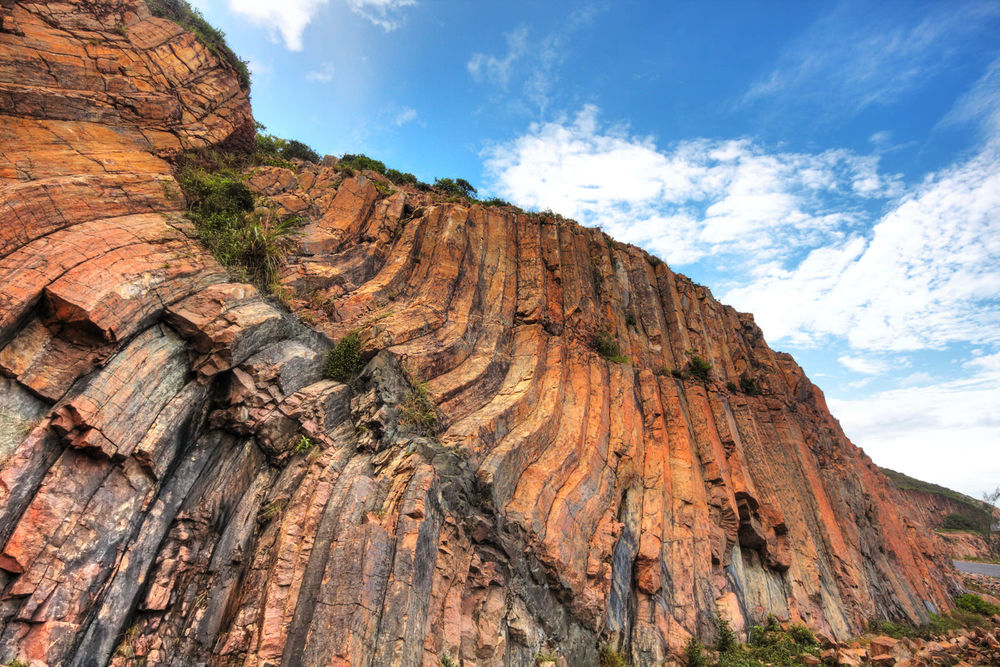
rhyolitic, tuff hard, resistant to weathering hexagonal columnar joints
HEXAGONAL COLUMNAR JOINTS FORMATIONIt is formed when lava or volcanic ash with a specific mineral composition is cooled rapidly during extrusive vulcanicity. The lava contracts uniformly towards the centre and forms the hexagonal columnar structure.
Want to create your own Notes for free with GoConqr? Learn more.