
Quiz
Astronomy Practice Quiz
Create a free account to finish this quiz
Save your progress and see your final score.
Already have an account? Sign in
Questions in this quiz (23)
1Earth's rotation takes about 365 days.
- ATrue
- BFalse
2Select the best answer for what causes day and night.
- AEarth's rotation on its axis
- Bsolar and lunar eclipses
- Cthe tilt of the Earth's axis
- DEarth's revolution around the sun
3One complete revolution of Earth around the sun takes about one season
- ATrue
- BFalse
4Select the best answer(s):
Earth has seasons because:- AEarth's axis is tilted causing the sun to shine more directly on one portion of the Earth and less on another.
- Bthe Earth is closer to the sun at different times of the year
- Cthe tilt of the axis causes the sun's rays to strike the Earth with more intensity at certain times of the year.
- Dthe temperature of the sun is different during certain times of the year
- Ewhen the Earth is tilted towards the sun, there is more sunlight for longer periods of time.
5What causes a solar eclipse?
- Athe sun must be directly between the Earth and the moon.
- Bthe moon must be directly behind the Earth
- Cthe moon must be directly between the Earth and the sun
- DEarth must be directly between the sun and the moon.
6Ocean tides are mainly caused by differences in how much the moon's gravity pulls on different parts of the Earth.
- ATrue
- BFalse
7What caused maria to form on the moon's surface?
- Ameteoroid impacts
- Blava flows
- Cice flows
- Doceans
8The moon is about the same diameter as Earth.
- ATrue
- BFalse
9_________________ attracts all objects to each other.
- Afriction
- Bgravity
- Cmass
- Dinertia
10Because the moon rotates once for each revolution around Earth, you see some phases more than others.
- ATrue
- BFalse
11Why does the temperature of the moon and other planets vary greatly from day to night?
- AThey have no gravity.
- BThey have ice rings.
- CThey have dust storms.
- DThey have no atmosphere.
12When a meteoroid enters the Earth's atmosphere, it produces a streak of light called a comet.
- ATrue
- BFalse
13Select the best answer(s).
Life exists on Earth because:- Athere is an atmosphere to protect our planet
- BWater is plentiful and essential to life
- Cthe Earth's proximity to the sun prevents us from getting too hot and too cold.
- Dthere are mountains on Earth.
14What does the diagram depict?
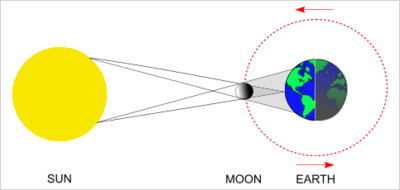
- ALunar Phases
- BSolar Storm
- CLunar Eclipse
- DSolar Eclipse
15Satellites are NOT a natural object in our solar system.
- ATrue
- BFalse
16Space is so large we must use special units of measurement called:
select the best answer(s)- AAU's or Astronomical Units
- Bnone of the choices are correct
- CLight Years
17The four planets closes to the sun are:
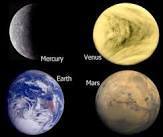
- Agenerally warmer than the other planets in the Solar System
- Bcalled the "Terrestrial" planets
- Crocky and dense
- Dcalled the inner planets
18Which is NOT true about the outer planets?
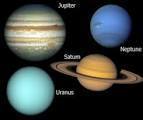
- AThey are called the "gas" giants
- BTheir orbits around the sun take longer.
- CThey are rocky and dense
- DThey are colder than the inner planets.
19During the Northern Hemisphere's winter the days are much longer and the nights are shorter.
- ATrue
- BFalse
20All objects in our Solar System revolve around Earth.
- ATrue
- BFalse
21All objects in our Solar System revolve around the sun.
- ATrue
- BFalse
22Jupiter is the largest object in the Solar System.
- ATrue
- BFalse
23Our solar system contains 7 planets, comets, asteroids and other galaxies.
- ATrue
- BFalse
Information
- Description
- Science quiz over astronomy.
- Author
- cbruner
- Language
- English
- Views
- 851
- History
- Created on 12 May 2015 · updated on 1 Apr 2019
- Tags
- Rating
- 4.1 out of 5 · 11 ratings Rate this quiz