
Quiz
Astronomy Practice Quiz
Erstelle ein kostenloses Konto, um dieses Quiz zu beenden
Speichere deinen Fortschritt und sieh dir dein Endergebnis an.
oder mit deiner E-Mail registrieren
Schon ein Konto? Anmelden
Fragen in diesem Quiz (23)
1Earth's rotation takes about 365 days.
- ARichtig
- BFalsch
2Select the best answer for what causes day and night.
- AEarth's rotation on its axis
- Bsolar and lunar eclipses
- Cthe tilt of the Earth's axis
- DEarth's revolution around the sun
3One complete revolution of Earth around the sun takes about one season
- ARichtig
- BFalsch
4Select the best answer(s):
Earth has seasons because:- AEarth's axis is tilted causing the sun to shine more directly on one portion of the Earth and less on another.
- Bthe Earth is closer to the sun at different times of the year
- Cthe tilt of the axis causes the sun's rays to strike the Earth with more intensity at certain times of the year.
- Dthe temperature of the sun is different during certain times of the year
- Ewhen the Earth is tilted towards the sun, there is more sunlight for longer periods of time.
5What causes a solar eclipse?
- Athe sun must be directly between the Earth and the moon.
- Bthe moon must be directly behind the Earth
- Cthe moon must be directly between the Earth and the sun
- DEarth must be directly between the sun and the moon.
6Ocean tides are mainly caused by differences in how much the moon's gravity pulls on different parts of the Earth.
- ARichtig
- BFalsch
7What caused maria to form on the moon's surface?
- Ameteoroid impacts
- Blava flows
- Cice flows
- Doceans
8The moon is about the same diameter as Earth.
- ARichtig
- BFalsch
9_________________ attracts all objects to each other.
- Afriction
- Bgravity
- Cmass
- Dinertia
10Because the moon rotates once for each revolution around Earth, you see some phases more than others.
- ARichtig
- BFalsch
11Why does the temperature of the moon and other planets vary greatly from day to night?
- AThey have no gravity.
- BThey have ice rings.
- CThey have dust storms.
- DThey have no atmosphere.
12When a meteoroid enters the Earth's atmosphere, it produces a streak of light called a comet.
- ARichtig
- BFalsch
13Select the best answer(s).
Life exists on Earth because:- Athere is an atmosphere to protect our planet
- BWater is plentiful and essential to life
- Cthe Earth's proximity to the sun prevents us from getting too hot and too cold.
- Dthere are mountains on Earth.
14What does the diagram depict?
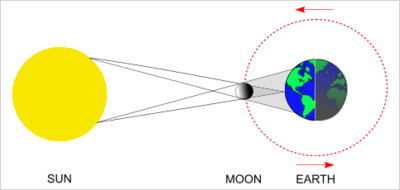
- ALunar Phases
- BSolar Storm
- CLunar Eclipse
- DSolar Eclipse
15Satellites are NOT a natural object in our solar system.
- ARichtig
- BFalsch
16Space is so large we must use special units of measurement called:
select the best answer(s)- AAU's or Astronomical Units
- Bnone of the choices are correct
- CLight Years
17The four planets closes to the sun are:
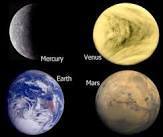
- Agenerally warmer than the other planets in the Solar System
- Bcalled the "Terrestrial" planets
- Crocky and dense
- Dcalled the inner planets
18Which is NOT true about the outer planets?
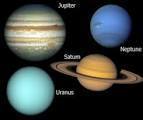
- AThey are called the "gas" giants
- BTheir orbits around the sun take longer.
- CThey are rocky and dense
- DThey are colder than the inner planets.
19During the Northern Hemisphere's winter the days are much longer and the nights are shorter.
- ARichtig
- BFalsch
20All objects in our Solar System revolve around Earth.
- ARichtig
- BFalsch
21All objects in our Solar System revolve around the sun.
- ARichtig
- BFalsch
22Jupiter is the largest object in the Solar System.
- ARichtig
- BFalsch
23Our solar system contains 7 planets, comets, asteroids and other galaxies.
- ARichtig
- BFalsch
Informationen
- Beschreibung
- Science quiz over astronomy.
- Autor
- cbruner
- Sprache
- English
- Aufrufe
- 850
- Schlagwörter
- Bewertung
- 4,1 von 5 · 11 Bewertungen Bewerte dieses Quiz