
12429235
Description

Flashcards by issy boydell, updated more than 1 year ago

|
Created by issy boydell
almost 8 years ago
|
|
| Question | Answer |
| what is a plateau? | an area of fairly high level ground |
| what is a fjord? | inlets with steep sides/cliffs |
| what is an inlet | a small arm of the sea/lake/river |
|
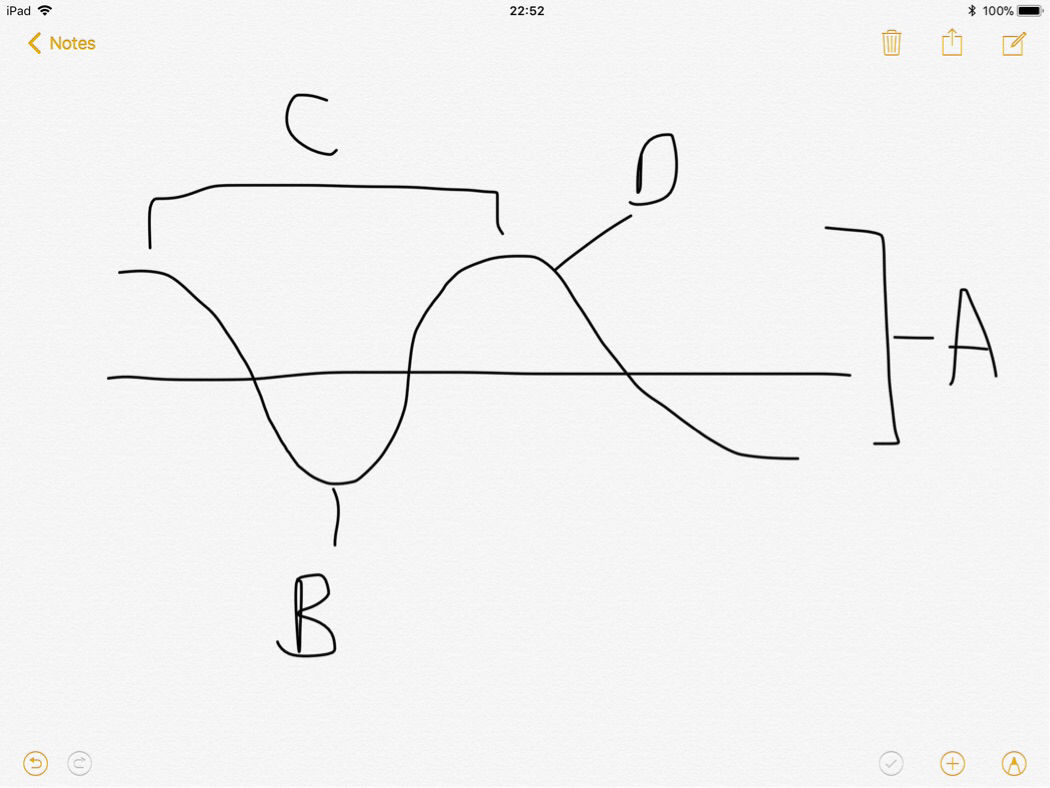
What are A, B, C & D
Image:
Mobile upload (image/jpeg)
|
A waveheight B trough C wavelength (from crest to crest) D crest |
| Constructive waves Swash is... | Strong |
| Constructive waves Backwash is... | Weak |
| Constructive waves Wave frequency is... | Low |
| Constructive waves As wave approaches beach... | It loses energy |
| Constructive waves Beach is... | Gently sloping/built up |
| Constructive waves Shape of wave... | Wavelength is long, height is low |
| Constructive waves Created in... | Calm conditions |
| Constructive waves Overtime, beach is... | Wide and flat |
| Destructive waves Swash is... | Weaker |
| Destructive waves Backwash is... | Stronger(takes material from beach away with it) |
| Destructive waves Wave frequency is... | High |
| Destructive waves As wave approaches beach... | It breaks on beach with force and scours the beach |
| Destructive waves Beach is... | Eroded |
| Destructive waves Shape of wave... | Short and high shape |
| Destructive waves Created in... | Stormy conditions |
| Destructive waves Overtime, beach is... | narrow/steep with eroding headlands |
| What is weathering | The breaking down of rock in situ |
| What are the 3 types of chemical weathering | Carbonation Oxidation Hydrolysis |
| What is carbonation | Carbonic acid in rainwater comes into contact with limestone and reacts with calcium carbonate in thr rock to form calcium bicarbonate. This forming holes in the rock. |
| What is oxidation | Oxygen and water break down rock, in iron rich rocks a rusty coloured surface |
| What is hydrolysis | Acidic rainwater causes rock to rot, producing clay and solvable salts |
| What are the 2 types of mechanical weathering | Freeze-thaw Salt-weathering |
| What is freeze-thaw | Water fills on cracks in rocks then freezes overnight, expanding and putting pressure on rock. Water thaw a and contracts. This repeats until rock breaks |
| What is salt weathering | Salty water hits cliff face and gets into cracks. Water may evaporate, but the salt will crystallise and expand, putting pressure on the rock. Repeats until rock breaks |
| What are the 3 mass movements | Rock fall Sliding Slumping |
| What is rockfall | Where bare, well-jointed rocks are prone to freeze-thaw. This results in rock on vertical cliff faces loosing contact with the cliff so fall to bottom, where the y collect as a “scree-slope” |
| What is sliding | Where rain infiltrates the soil and percolates into permeable rock. When this rock is saturated it slips along straight slip plain, maintaining contact all the way. It only occurs on steep cliffs with straight slip planes |
| What is slumping | Where water percolates from soil to permeable rock,which becomes saturated, putting weight on thin impermeable layer beneath, creating cracks. The permeable rock slides along this surface and collects at bottom as a hummocky toe. |
|
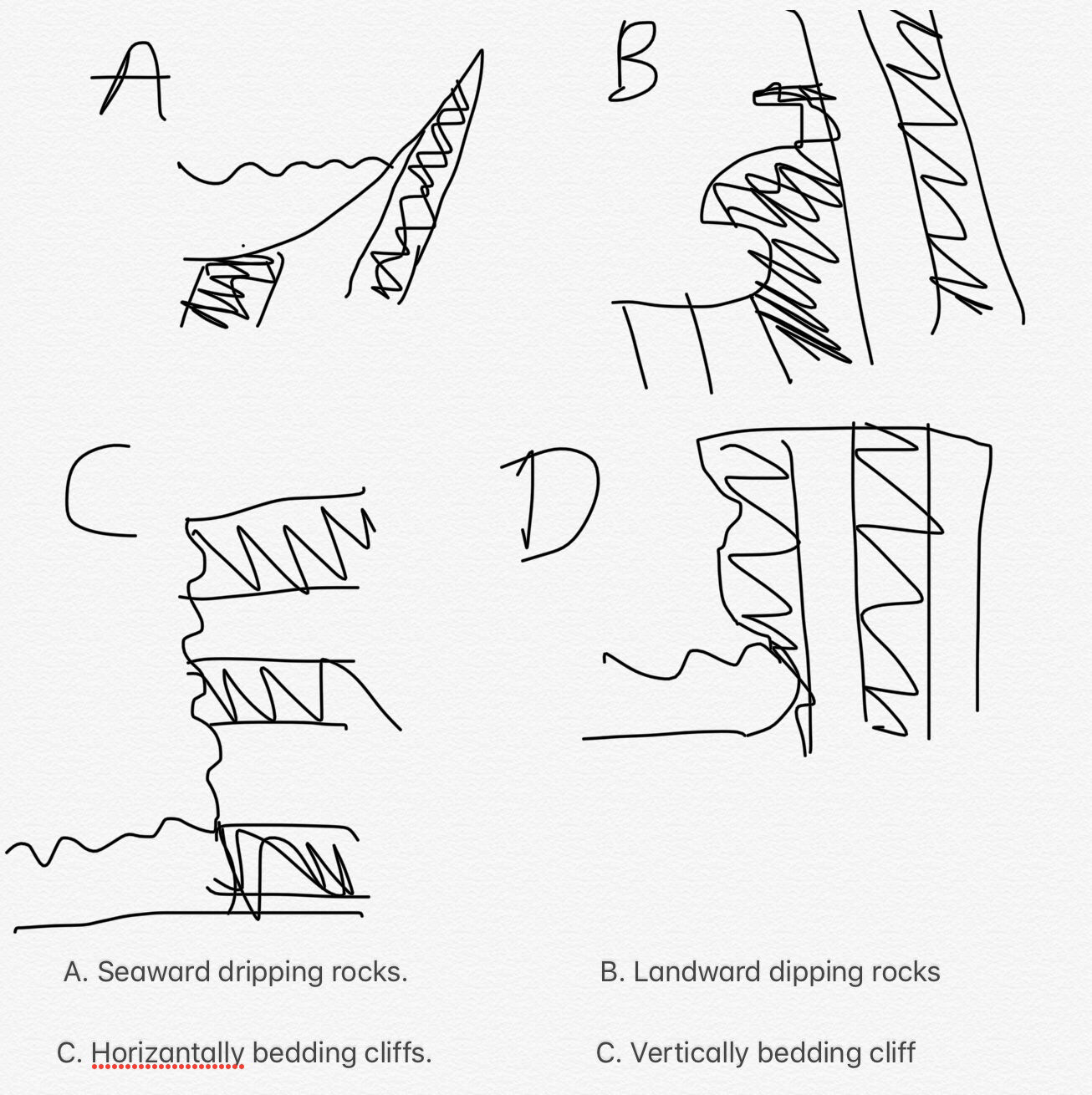
Are these concordant or discordant
Image:
Mobile upload (image/jpeg)
|
A. Concordant B. Concordant C. Discordant D. Concordant |
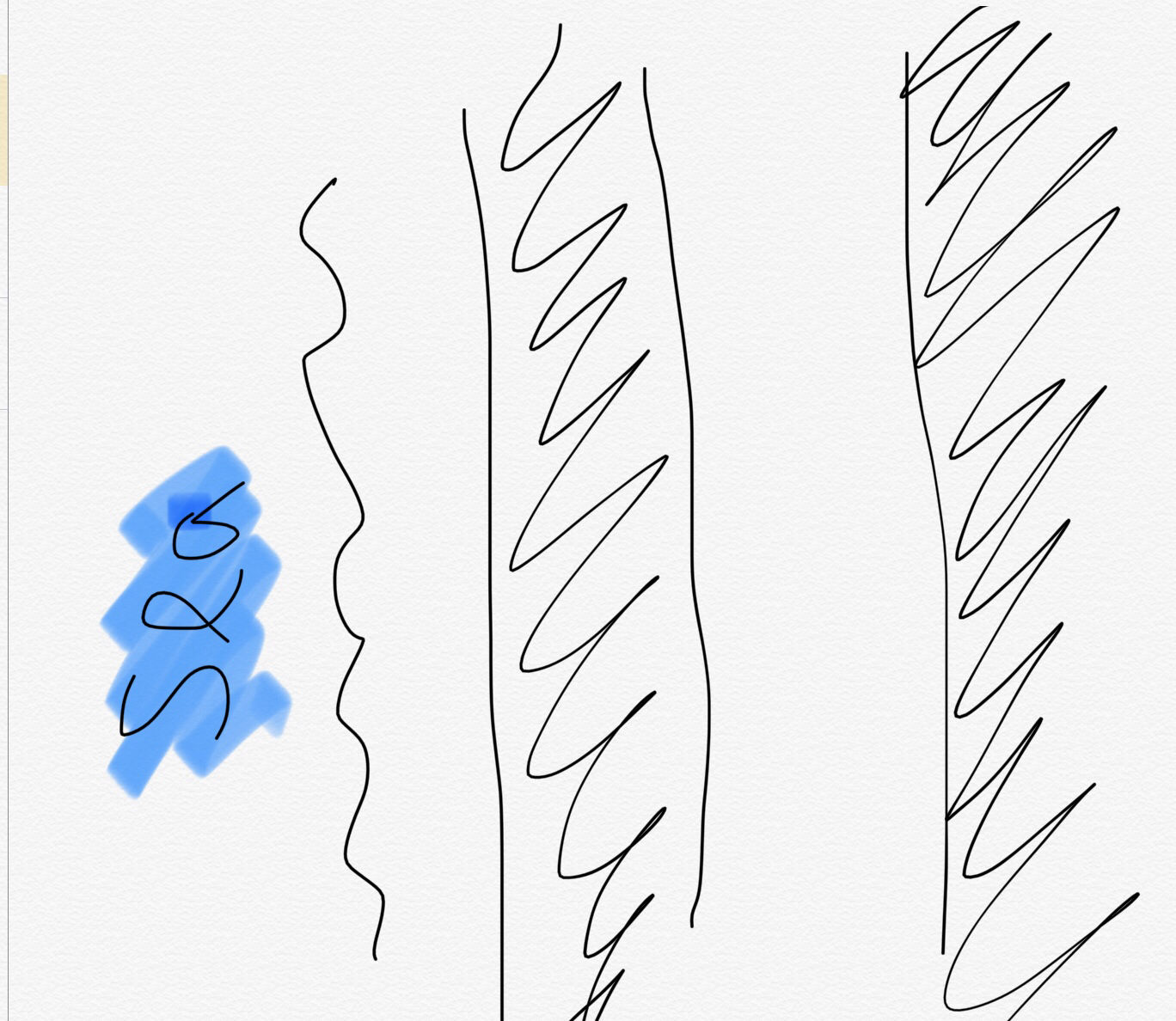
| What is concordant |
Where there is the same rock all the way along the coast
Image:
Mobile upload (image/jpeg)
|
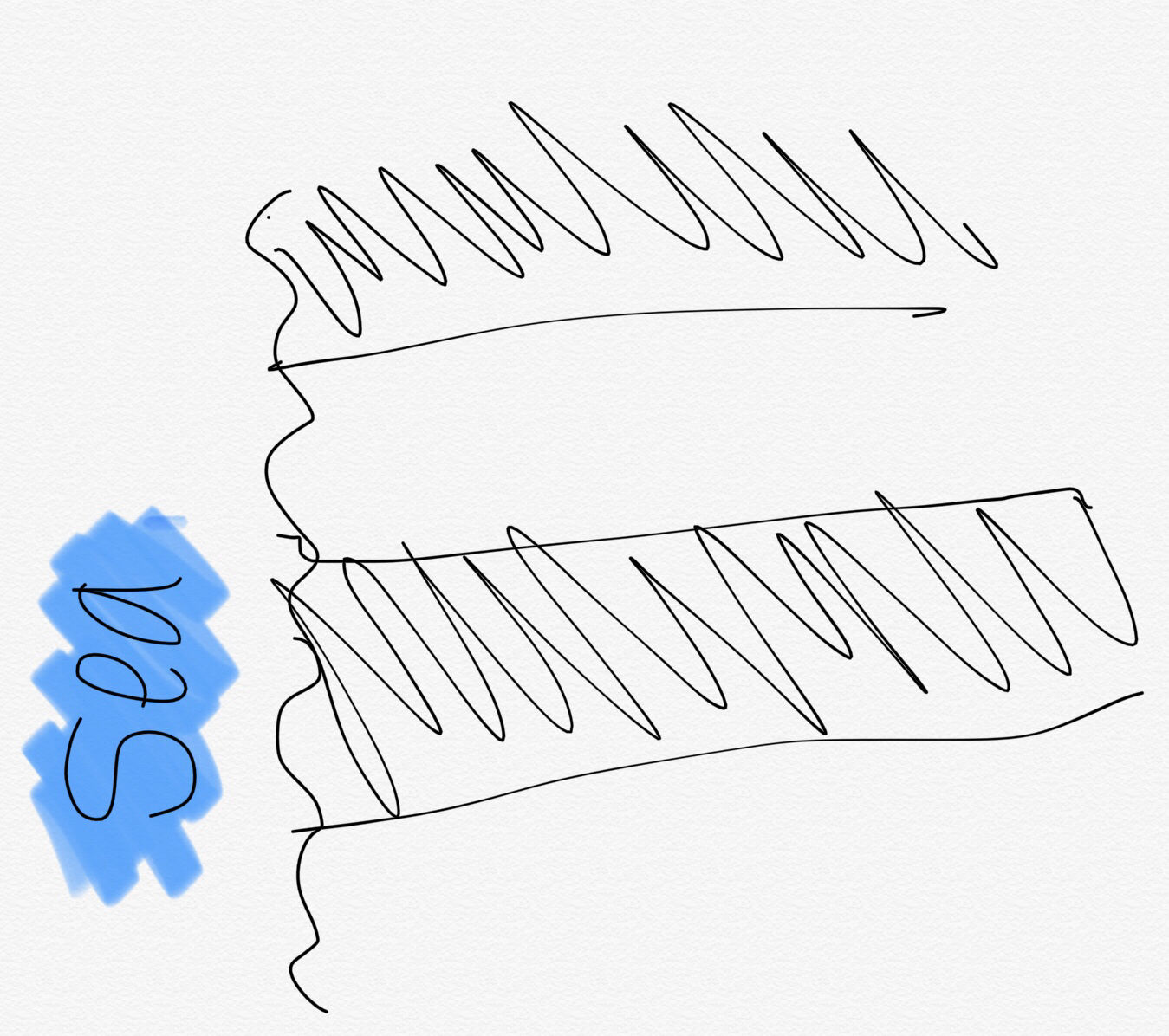
| What is discordant |
Where there are different rocks alternating along the coast
Image:
Mobile upload (image/jpeg)
|
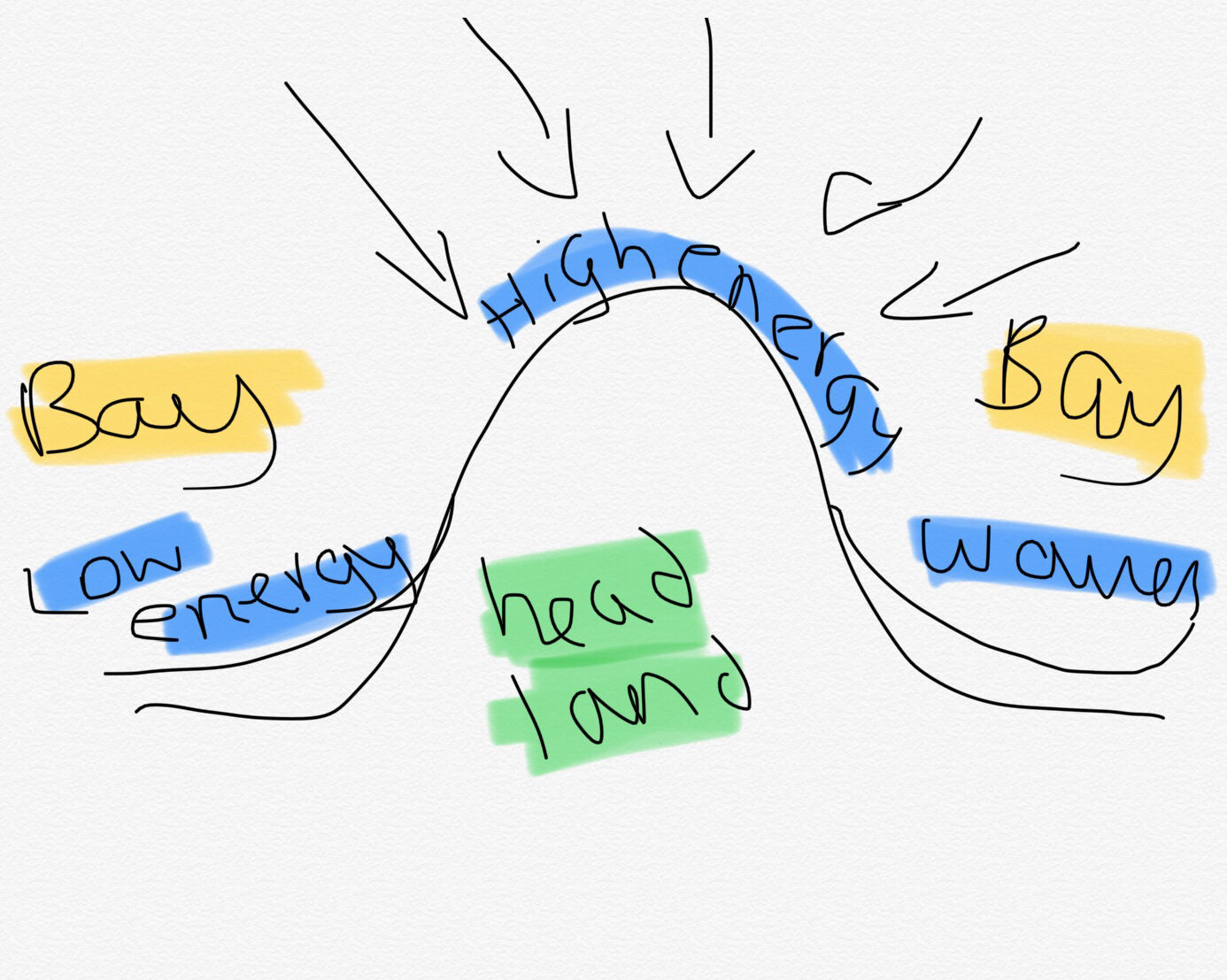
| What is wave refraction |
Where the waves approaches the coast in a straight line. As it reaches the headland first it slows and builds in height, whereas the rest of the wave front carries on onto the bays and therefore bends to take on shape of thr coastline. This directs all waves energy towards headland
Image:
Mobile upload (image/jpeg)
|
| Dorset coastline What rock is A, B, C,D | A. Clay and sands(soft) B. Chalk(hard) C. Clay and sands(soft) D. Limestone(hard) |
| Explain how a stump is formed | First a joint fault/bedding plane causes a crack in the rock, which is then widened by highly concentrated wave energy or high tide and hydraulic action, forming a notch. This process repeats until it is a cave. Next, abrasion, attrition and solution widen the cave into a sea arch. The arch is widened until it can't support its own weight, so it falls through, forming a stack. The bottom of the stack is eroded until it falls over, leaving a stump |
| How are wave-cut notches formed | original cliff slopes toward sea. Freeze that weathering weakens rock. Marine erosion is concentrated between high and low watermark. Hydraulic action and abrasion erode base creating a wave-cut notch |
| How are wave-cut platforms formed | as cliff retreats, former base of old cliff is left as a wave-cut platform. It will be continuously smoothed by shingle grinding over it in places, elsewhere it may become encrusted with barnacles/covered algae. Joints will be enlarged by hydraulic action |
| how are cliffs formed | continued erosion causes rocks to break away and collect at base of cliff. Destructive waves remove this material. The section of cliff above notch is un supported and eventually notch gets enlarged to the point that it can't hold its own weight. It falls and the resulting steep drop is called a cliff |
| how are beaches formed | material eroded by rivers,from cliffs, or picked up from the sea is transported by longshore drift. Waves are constructive and have limited energy so material is deposited in sheltered areas e.g., bays. Beaches can grow with constructive waves and shrink with destructive waves. |
| how are spits formed | longshore drift transports material in a zig-zag past the bend in coastline(e.g. headland/river mouth). Deposition occurs (when there's constructive waves at the bend and material builds up away from coast into sea until a long ridge of sand/shingle is created. If there's a wind direction change , the spit can develop a recurved (hooked) end. The area behind spit is protected from waves, so lots of deposition occurs, creating a salt marsh/mud flat over time. If this area becomes dry, sand dunes can develop |
| Sand Dunes name 3 characteristics | gentle slope on windward side, crests, unstable, steep slip slope on sheltered lee ward slope |
| Sand Dunes describe transportation of sand along dune | sand is blown up windward slope until critical value point where it slips down leeward slope |
| Sand Dunes For a sand dune to form, what is needed | a large, flat, dry beach, lots of sediment, large tidal range, onshore wind (to move sand), an obstacle e.g. driftwood (to trap sand) |
| Sand Dunes how is sand transported | suspension(1%) - sand picked ip and carried by wind saltation(95%) - grains of sand bounce along in wind creep(41%) - sand grains collide with each other and push each other along |
| Hard engineering Explain how a sea wall (recurved) works | recurved face rotates wave backwards so that some energy is reflected back to sea. This impedes the next wave, reducing its energy and erosive power . Essentially, it is a concrete barrier which absorbs the wave's energy |
| hard engineering-sea walls what are pros and cons | pros: don't disadvantage other areas, make people feel safe, last a long time, stops erosion cons: restricts access to beach, expensive (£5000/m), require constant maintenance, look ugly, unnatural |
| Case study : Swanage to Poole Harbour Describe thee geology/geological structure? | Along the South coast it is concordant hard limestone, and on the indented coast it is disconcordant with layers of hard and soft rock where soft rocks are creating bays and hard rocks creating headlands. |
| Case study : Swanage to Poole Harbour Describe where it is locally/ Nationally ? | Southwest of Bournemouth, West of Isle of Wight. Swanage is the large town on the Isle of Purbeck A peninsula in Central South England, South of Dorset. |
| Case study : Swanage to Poole Harbour Why has sediment been deposited at Swanage Bay | Wave refraction at the headlands led to low energy environment in the bay where deposition can occur (with constructive waves) |
| Case study : Swanage to Poole Harbour Why does beach not form along the coastline from Ballard point towards The Foreland? | It is a headland, so it is a high energy environment with destructive waves and wave refraction, so erosion is happening, not deposition, so a beach can form. |
| Case study : Swanage to Poole Harbour What is the stack called at the end of the Foreland? | Old Harry (054825 grid reference) |
| Case study : Swanage to Poole Harbour What are the names of the 3 headlands South of the Foreland? | Ballard Point, Peverill Point, Duriston Head |
| Hard engineering:-Explain how groynes work? | They are wooden/ stone structures built into the foreshore that create a larger beach by trapping sediment transported by longshore drift . They're built at right angles to the beach and spaced at regular intervals |
| Hard engineering:-Explain how groynes work: Pros? | Pros- larger beach, more space for activities and tourists attracted. Relatively cheap (£5000 each), they act as a windbreak. |
| Hard engineering:-Explain how groynes work: Cons? | Cons- Makes it harder to walk along beach, safety concern- deep water on one side, shallow water on other. Surfers may collide into them. Only last 40 years (if well maintained). They have to be replaced. Expensive , unattractive and restricting movement of longshore drift which means beaches downdraft is starved of sediment. |
| Hard engineering:- Explain what rock armour is? | Tonnes of boulders and barriers that trap wave energy |
| Hard engineering:- Explain what rock armour is? Pros | pros: Can't be moved by destructive waves, relatively cheap- £1000-£3000/ meter, quick to build, natural resources, last 120 years, look nicer than other hard engineering . Blends in more. |
| Hard engineering:- Explain what rock armour is? Cons | cons: Makes beach less accessible, seaweed can cause slip hazards, rocks could be unstable, sometimes local rocks aren't used. Litter can be trapped in between rock. |
| Hard engineering:- Explain how a Gabion works? | They are rocks held in containers that reduce the rate of erosion by dissipating the waves energy when water enters the gabion. Last 20-25 years (cheapest hard engineering.) |
| Hard engineering:- Explain how a Gabion works? Pros | pros: Cheap £110/ meter. Easily constructed, covered in vegetation,, prevents landslides (placed in front of cliff) |
| Hard engineering:- Explain how a Gabion works? Cons | cons: Can be dangerous for people and animals ( e.g. birds feet trapped), need regular maintenance, which is more expensive when gabion becomes covered in vegetation. |
| Soft engineering:- Explain how Beach nourishment works? | Replacement of lost sediment by beach recharge (taken from bay and placed on beach) or beach recycling ( taken from down and drift area which is building up sand and returning it updrift. Makes a nourished beach which means fewer waves reach back of beach so more wave energy is absorbed and dissipated by beach. |
| Soft engineering:- Explain how Beach nourishment works? Pros | Pros- Wider beach equals more space for beach users, attracts tourists, protects beach from flooding, reduces sea wall maintenance costs, cheap, often uses volunteers, blends in, creates new habitats. |
| Soft engineering:- Explain how Beach nourishment works? Cons | Cons. donor beach restricted for weeks, high costs ( £300,000 to hire dredger) has to be checked twice a year. |
| Soft engineering:- Explain what sand dune regeneration is? | The artificial regeneration of sand dunes which act as a physical barrier between sea and land. |
| Soft engineering:- Explain what sand dune regeneration is? Pros | Pros: Popular area for picnics/ walking areas, protect land behind them, helps maintain habitats of rare wildlife. |
| Soft engineering:- Explain what sand dune regeneration is? Cons | cons: No guarantee that they'll work, they are fenced off which may deter public and tourists, expensive systems have been put in place to protect planted areas. |
| Soft engineering:- Explain how beach reprofiling works? | The artificial reshaping of a beach using exiting beach material. In winter the beach is lowered by destructive waves. after winter storms, bull dozers move shingle back up the beach. |
| Soft engineering:- Explain how beach reprofiling works? Pros | Pros: Protects area behind beach, cheap compared to hard engineering. looks natural. |
| Soft engineering:- Explain how beach reprofiling works? Cons | Cons: During reprofiling beach has restricted access, major reproofing is expensive, steep high crested beach can be unattractive to tourists. |
| Soft engineering:- What is coastal realignment? | Creating a new, engineered position of the coastline (This involves moving the coasting boundary inland). Its done by making a breach in the existing sea defences so the sea can inundate the land and create intertidal habitats. |
| Soft engineering:- What is coastal realignment? Pros | Pros: Cheaper in the long term, managed retreat, designed to conserve/ enhance natural environment. new species of birds are often recorded on new mud flats. |
| Soft engineering:- What is coastal realignment? Cons | Cons: relocation of people causes distress and disruption, short term costs are high (relocation costs) habitats of coastal birds would initially decline. |
Want to create your own Flashcards for free with GoConqr? Learn more.