
4758993
Description

Mind Map by kcantrell10, updated more than 1 year ago
|
|
Created by kcantrell10
almost 10 years ago
|
|
The nervous system
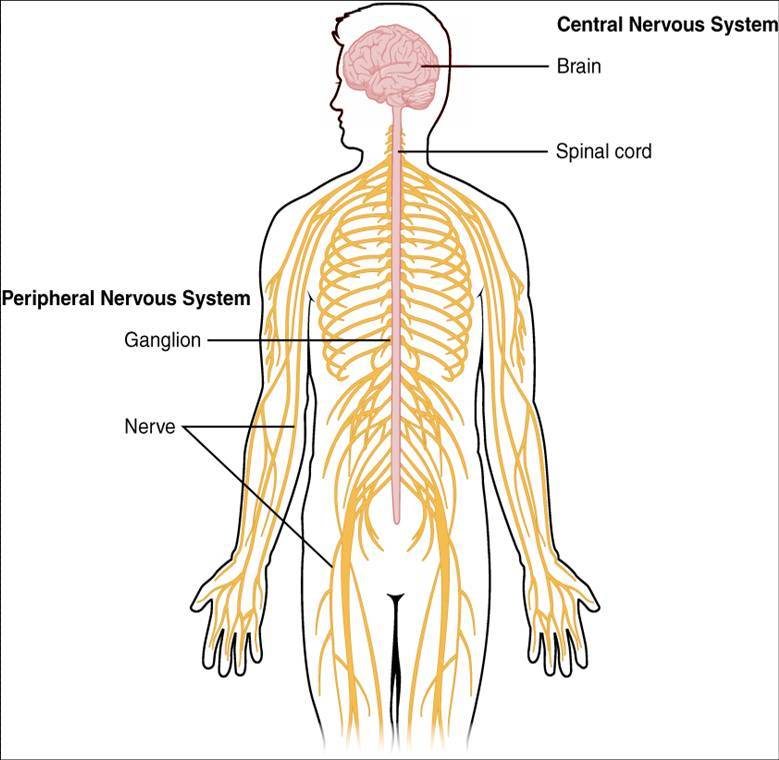
- It is divided into the Central Nervous System (CNS)
and the Peripheral Nervous System (PNS).
- CNS: consists of the brain and the spinal cord. This is
where all the complex processing of information is done
and decisions are made.
- PNS: consists of the ganglion and nerves.
It brings information from the CNS and
transmits this information to the
muscles and glands.
- CNS: consists of the brain and the spinal cord. This is
where all the complex processing of information is done
and decisions are made.
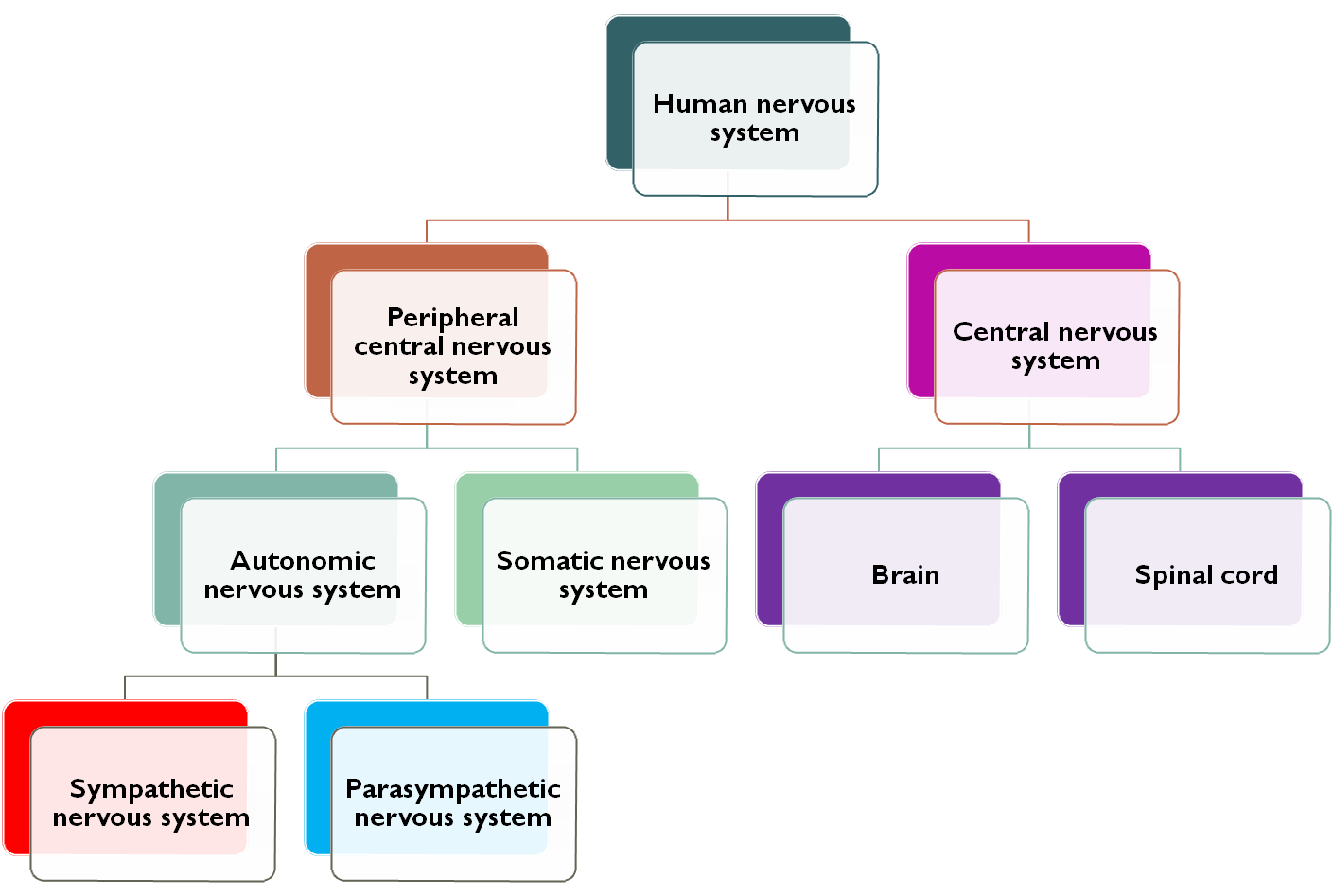
- The organisation of the human nervous sytem
- Human nervous system
- Peripheral central nervous sytem
- Autonomic nervous
system
- Sympathetic nervous
system
- Parasympathetic
nervous system
- Sympathetic nervous
system
- Somatic nervous
system
- Autonomic nervous
system
- Central nervous system
- Brain
- Central hemisphere
- Cerebellum
- Brain stem
- Central hemisphere
- Spinal cord
- Brain
- Peripheral central nervous sytem
- Human nervous system
- The brain is the center of awareness. It is divided into
two hemispheres. The cortex is more developed in
humans than in all other animals.
- The spinal cord is an extension of the brain.
It transports messages to and from the
brain to the peripheral nervous system. It is
also responsible for reflexes.
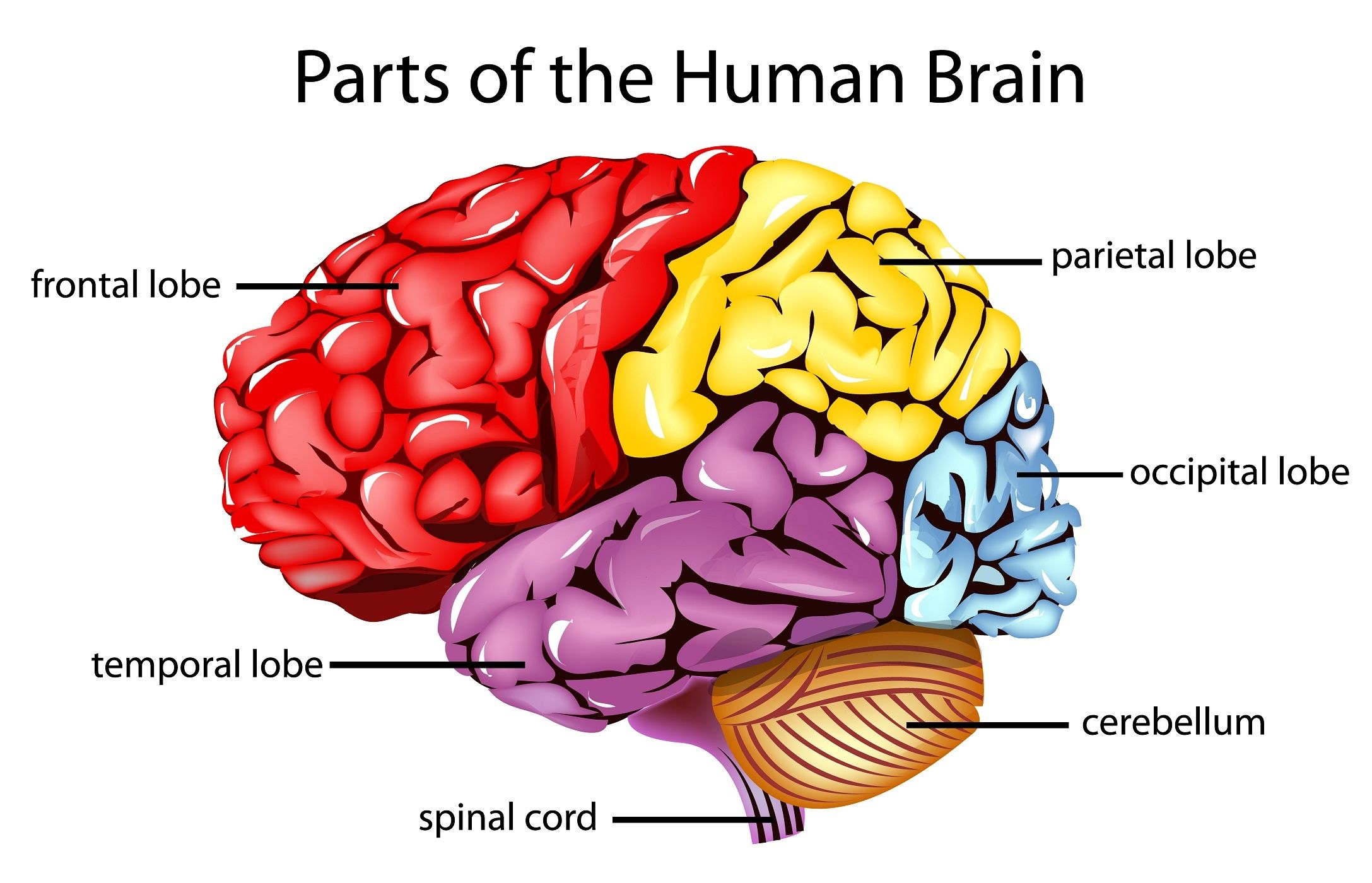
- The parts of the brain are: the frontal lobe, the parietal lobe, the occipital lobe,
the temporal lobe, the spinal cord and the cerebellum.
- Somatic Nervous System (SNS): receives information from the senses and transmits it to
the CNS. It also transmits information from the CNS to direct movement of muscles.
- Autonomic Nervous System (ANS): responsible for vital functions such as heart beat, breathing,
digestion. It transmits information to and from the internal body organs such as the liver and the lungs.
It operates automatically, involuntarily.
- The sympathetic nervous system stimulates
function like digestion. It is involved in 'the
fight or flight response'.
- to make homeostasis.
- to make homeostasis.
- The parasympathetic nervous system
slows functions like digestion. It is
involved in 'the fight or flight response'.
- The two systems interact
- The two systems interact
Media attachments
Want to create your own Mind Maps for free with GoConqr? Learn more.