
Quiz
Approaches Quiz- Psychology (A2)
This quiz has question types that open in the usual player.
Questions in this quiz (18)
1Which researcher investigated the psychodynamic approach?
- AFreud
- BRogers
- CBaddeley
- DSkinner
- EPavlov
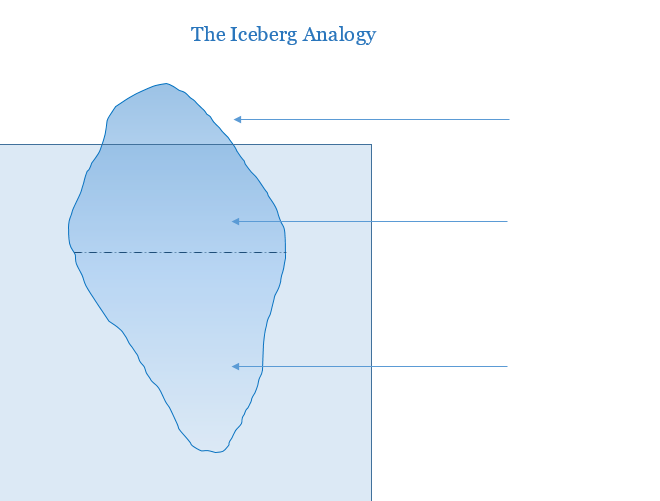
2Label the image below of an iceberg with the correct terms for Freud's iceberg analogy
- AConscious
- BUnconscious
- CPreconscious
- DSubconscious
- EConscience
- FUnconscience
- GPreconscious
- HSubconscious
- IUnconscious
- JConscience
- KUnconscience
- LPostconscious
- MPostconscious
- NUnconscious
- OPreconscious
- PConscious
- QSubconscious
- RConscience
- SUnconscience
- TPostconscious
- UConscious
3Conscious: the information we [blank_start]are aware of[blank_end] in the present moment
Preconscious: thoughts and feelings which we may become aware of during dreams or [blank_start]Freudian slips[blank_end] (e.g. calling teacher 'mum' instead of 'miss')
Unconscious: the [blank_start]majority[blank_end] of our mind. It stores all of our [blank_start]instinctive drives[blank_end] that have a significant effect on our behaviour and personality. It also represses [blank_start]traumatic[blank_end] memories (including, according to Freud, those experienced based on the Oedipus and Electra theory of childhood incestuous thoughts)- Aare aware of
- Bare not aware of
- Crepress
- DFreudian slips
- EPavlovian slips
- FFreud's slippers
- GSkinner's slips
- Hmajority
- Iminority
- Jinstinctive drives
- Kcurrent thoughts
- Lconscious feelings
- Mconscious drives
- Ntraumatic
- Ohappy
- Puseful
4Freud describes personality as a tripartite, meaning there are 3 parts:
1. The id: this part operates on our [blank_start]pleasure[blank_end] principle and is based on [blank_start]unconscious[blank_end] drives and instincts. It develops at [blank_start]childbirth[blank_end], and is characterised by a need for immediate gratification.
2. The ego: the ego mediates between the id and the superego. It operates on the [blank_start]reality[blank_end] principle and develops at around [blank_start]2 years old[blank_end]. The main way in which it reduces the conflict between the id and the superego is by using [blank_start]defence[blank_end] mechanisms.
3. The superego: this part operates on the [blank_start]morality[blank_end] principle and forms at about [blank_start]5 years old[blank_end]. It is our internalised sense of [blank_start]right and wrong[blank_end], and it punishes the ego for wrongdoing via guilt.- Apleasure
- Breality
- Cmorality
- Dsurreality
- Eobscurity
- Freality
- Gsurreality
- Hobscurity
- Imorality
- Jpleasure
- Kmorality
- Lreality
- Mobscurity
- Nsurreality
- Opleasure
- Punconscious
- Qconscious
- Rchildbirth
- S2 years old
- T5 years old
- U2 weeks old
- V2 years old
- W5 years old
- X16 years old
- Y2 weeks old
- Zdefence
- AAoffense
- ABattack
- AC5 years old
- AD2 years old
- AE2 weeks old
- AF16 years old
- AGright and wrong
- AHrespect
- AIblack and white
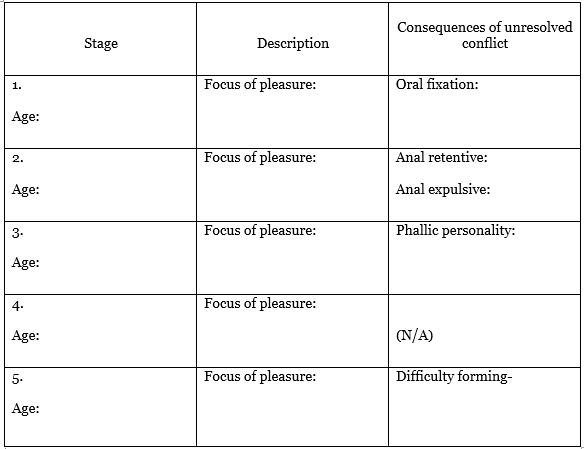
5Fill in the blanks of the diagram of Freud's psychosexual stages, including the stage, age, description, and consequences of unresolved conflict
- AOral
- BAnal
- CPhallic
- DLatent
- EGenital
- F0-1
- G1-3
- H3-5
- I5- puberty
- Jpuberty onwards
- Kmouth
- Lanus
- Mgenital area
- NN/A- repressed
- OConscious sexual desires
- Psmoking
- Qsarcasm
- Rperfectionist
- Sthoughtless
- Tnarcissist
- Usometimes homosexual
- Vheterosexual relationships
- Wfriendships
6Defence mechanisms for the [blank_start]ego[blank_end]
1. Repression: forcing a [blank_start]traumatic[blank_end] memory out of the conscious mind
2. Denial: Refusing to acknowledge some aspect of [blank_start]reality[blank_end]
3. Displacement: Transferring feelings from the [blank_start]true[blank_end] source of a distressing emotion to [blank_start]a substitute[blank_end] object- Aego
- Bid
- Csuperego
- Dtraumatic
- Ehappy
- Fchildhood
- Gfunny
- Hold
- Ireality
- Jdeath
- Kabnormality
- Lfantasy
- Mtrue
- Nfalse
- Oa substitute
- Pthe same
7Name two advantages of the psychodynamic approach
- AGood explanatory power
- BEasy to generalise (use of case studies)
- CCan be easily falsified
- DPractical application
8Name four disadvantages of the psychodynamic approach
- ALacks explanatory power
- BUnfalsifiable
- CThe case studies were too subjective
- DThe case studies were too objective
- EPsychoanalysis can be harmful
- FToo deterministic
- GLacks determinism
9The humanistic approach believe in [blank_start]subjectivity[blank_end] and [blank_start]self[blank_end]-determination. In essence, all humans are [blank_start]unique[blank_end], and should be treated as such; trying to fit people into categories is [blank_start]unnatural[blank_end]. This approach is therefore classed as a [blank_start]person[blank_end]-centred approach.
- Asubjectivity
- Bobjectivity
- Cself
- Dsocial
- Egroup
- Fpsycho
- Gunique
- Hthe same
- Iunnatural
- Jnatural
- Kperson
- Lgroup
10Self-actualisation: the [blank_start]innate[blank_end] desire to grow [blank_start]psychologically[blank_end] and fulfil one's potential. This is classed as a '[blank_start]growth[blank_end] need' on Maslow's hierarchy of needs.
- Ainnate
- Bacquired
- Cpsychologically
- Dphysiologically
- Egrowth
- Fdeficiency
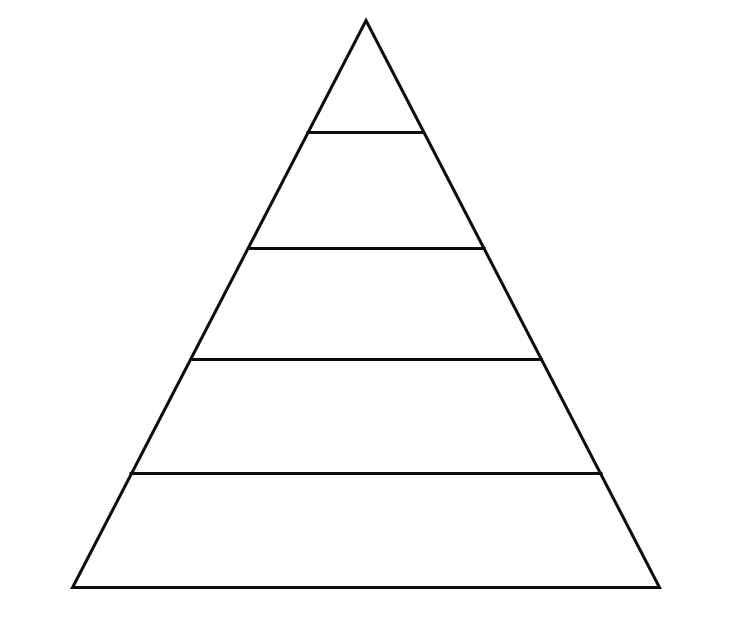
11Label Maslow's hierarchy of needs (see explanation for examples)
- APhysiological needs
- BBiological needs
- CSafety needs
- DInsecurity needs
- EBelonging/love needs
- FHatred/passion needs
- GEsteem needs
- HEstimation needs
- ISelf-actualisation
- JSelf-realisation
12In Maslow's hierarchy of needs, there are 4 [blank_start]deficiency[blank_end] needs (physiological, safety, belonging/love, esteem). In order to move up the hierarchy, you must [blank_start]satisfy[blank_end] each need. For example, you cannot satisfy the safety need if the physiological need isn't satisfied. There is also a [blank_start]growth[blank_end] need, self-actualisation, which is achieved when [blank_start]all[blank_end] needs are satisfied. People in extreme poverty and privation often can't satisfy their physiological needs, let alone self-actualise. This can lead to [blank_start]restlessness[blank_end] and [blank_start]dissatisfaction[blank_end].
- Adeficiency
- Befficiency
- Cgrowth
- Dsatisfy
- Edissatisfy
- Fgrowth
- Gstrength
- Hactual
- Iall
- J3
- Ksome
- Lrestlessness
- Mrestfulness
- Ndissatisfaction
- Osatisfaction
13Characteristics of a self-actualised person
1. Good perception of [blank_start]reality[blank_end]
2. Can [blank_start]accept[blank_end] themselves and others as they are
3. [blank_start]Problem[blank_end]-centred, not ego-centred
4. [blank_start]Appreciative[blank_end] of life experiences
5. Have [blank_start]peak[blank_end] experiences
6. Maintain profound [blank_start]relationships[blank_end]
7. [blank_start]Creative[blank_end]
8. [blank_start]Independent[blank_end]- Areality
- Babnormality
- Csurreality
- Daccept
- Ereject
- FProblem
- GSelf
- HAppreciative
- IHateful
- Jpeak
- Kdepressing
- Lrelationships
- Mrivalries
- NCreative
- OUnimaginative
- PIndependent
- QDependent
14Which researcher investigated humanistic therapy?
- AFreud
- BMaslow
- CRogers
15Rogers claimed that, in order for a person to self-actualise, their view of themselves must be [blank_start]congruent[blank_end] to their ideal self (the person they want to be). If the gap between the self and the ideal self is too [blank_start]large[blank_end], [blank_start]incongruence[blank_end] occurs, and [blank_start]negative[blank_end] feelings of self-worth ensue.
For example, if Person A's ideal self is a mechanic with 2 kids and a happy relationship with their partner while living in the UK, but their current self is unemployed with no kids or relationship and they live in Antarctica, incongruence would occur.- Acongruent
- Bincongruent
- Cdifferent
- Dlarge
- Esmall
- Fincongruence
- Gcongruence
- Hnegative
- Ipositive
16Rogers created [blank_start]client[blank_end]-centred therapy to [blank_start]reduce[blank_end] the gap between the self and the ideal self for clients. He found that many adult experiences, such as low self-esteem, are the result of early childhood experiences and a lack of [blank_start]unconditional[blank_end] love on their parents' part. Because of this, Rogers aimed to provide his clients with unconditional [blank_start]positive[blank_end] regard. This meant the atmosphere of the therapy was warm and [blank_start]non-judgemental[blank_end], and the client is encouraged to discover their own solutions.
- Aclient
- Bgroup
- Cself
- Dego
- Ereduce
- Fincrease
- Gunconditional
- Hconditional
- Ipositive
- Jnegative
- Knon-judgemental
- Ljudgemental
- Manalytical
17Name two advantages of the humanistic approach
- ABelief in holism increases validity
- BPositive approach
- CGood application to all cultures
- DEasy to test
18Name three disadvantages of the humanistic approach
- AUntestable concepts
- BCultural bias
- CNegative approach to humanity
- DToo reductionist
- ELimited application
Information
- Description
- AQA Psychology Psychopathology quiz for A2/A Level. For approaches such as behaviourism, cognitive approach, SLT and biological approach from AS, see the 'Approaches Quiz- Psychology (AS)' Covers all new topics in the AQA Psychology textbook, including researchers, evaluations and theories. Made for my own benefit, so not all questions will help you out, but feel free to use. Click 'Review All Answers' at the end to see explanations and expansions of answers.
- Author
- Grace Fawcitt
- Language
- English
- Views
- 2,876
- Tags
- Rating
- 4.8 out of 5 · 6 ratings Rate this quiz